
Customer Trust: How to Build Brand Trust & Earn Loyalty

Robin Joseph
Senior Security Consultant

Ever notice how you wouldn’t lend money to someone you don’t trust? Your customers feel the same way about spending with your brand. Trust isn’t fluff or marketing jargon — it’s the backbone of every transaction. When customers trust you, they buy. When they don’t, they walk away.
The numbers tell the story. 81% of customers won’t do business with a brand they don’t trust. Emotions matter more than logic. Forty-one percent of customers stick with brands because of emotional connection, not features or price. Positive experiences build trust like compound interest: each interaction stacks on the last, making consistency a secret weapon.
Break that trust, and the consequences hit fast. Forty percent stop buying immediately. Seventy-five percent won’t share personal data with untrusted brands. The gap between what leaders think and what customers feel is costing real money — trust comes first, everything else follows.
What is Customer Trust and Why Does It Matter?
Customer trust is the belief that your brand will deliver on promises — consistently, honestly, and with care. It’s what convinces someone to hit “buy” instead of walking away. Without trust, even the best products or services struggle to find a home.
Trust shapes perception. Product quality, brand reputation, and customer experience are the pillars. 67% of shoppers say product value defines trust, 63% won’t compromise on brand reputation, and 54% call customer experience the ultimate dealbreaker. Beyond metrics, trust is emotional. People buy from brands that make them feel safe, understood, and valued.
The impact on your bottom line is huge. Companies with high trust levels can generate up to 400% more shareholder value. Trust drives recommendations, repeat business, and bigger purchases. In short: earning trust isn’t optional — it’s the foundation that turns casual buyers into loyal advocates.
Why Building Brand Trust is Critical for Business Success
Trust isn’t optional. It’s the difference between businesses that thrive and those that barely survive. Each trusted interaction builds on the last, creating growth that competitors can’t easily replicate. Trust drives loyalty, repeat business, and long-term stability, giving brands a foundation that goes beyond products, pricing, or features.
Increased Customer Retention and Loyalty
67% of consumers say they must trust a brand before buying — not just prefer to trust. Trusted customers deliver three to five times the lifetime value of those who don’t. They buy more often, try additional products, and stay loyal even when competitors offer better deals. Retaining customers costs far less than acquiring new ones. High-trust companies enjoy stronger growth, lower churn, and predictable revenue streams — because trust is what helps build customer loyalty over time.
Positive Word-of-Mouth and Reputation
Trust turns customers into advocates. Ninety-two percent of consumers trust recommendations from friends and family over advertising, and 83 percent across 60 countries trust people they know. Trusted customers leave reviews, share content, and recommend your brand without prompting. Word-of-mouth fueled by trust carries immense weight because people rely on other people’s opinions far more than on brand messaging.
Higher Conversion Rates and Revenue Growth
Trust directly impacts the bottom line. Adding trust signals can boost conversions by up to 20%. Real-world examples show measurable results: Holabird Sports saw a 21.3% revenue increase, and Decor Steals achieved 17% more revenue per visitor. Customers pay 15–30% more for brands they trust. Trust reduces uncertainty, justifies higher prices, and makes premium positioning viable.
Competitive Advantage in your Market
Trust creates competitive moats that rivals cannot cross quickly. Products, pricing, and technology can be copied, but not years of consistent, reliable behavior. Trusted brands retain customers during market downturns, withstand competitive threats, and build loyalty that competitors can’t easily break. When trust is firmly established, features and prices matter far less, giving companies a lasting edge and long-term resilience.
Understanding the Foundations of Consumer Trust
Four pillars support every trusted brand. Miss one, and everything collapses. Get them right, and trust stops being luck — it becomes deliberate, measurable, and powerful, creating a foundation that drives lasting customer confidence and loyalty.
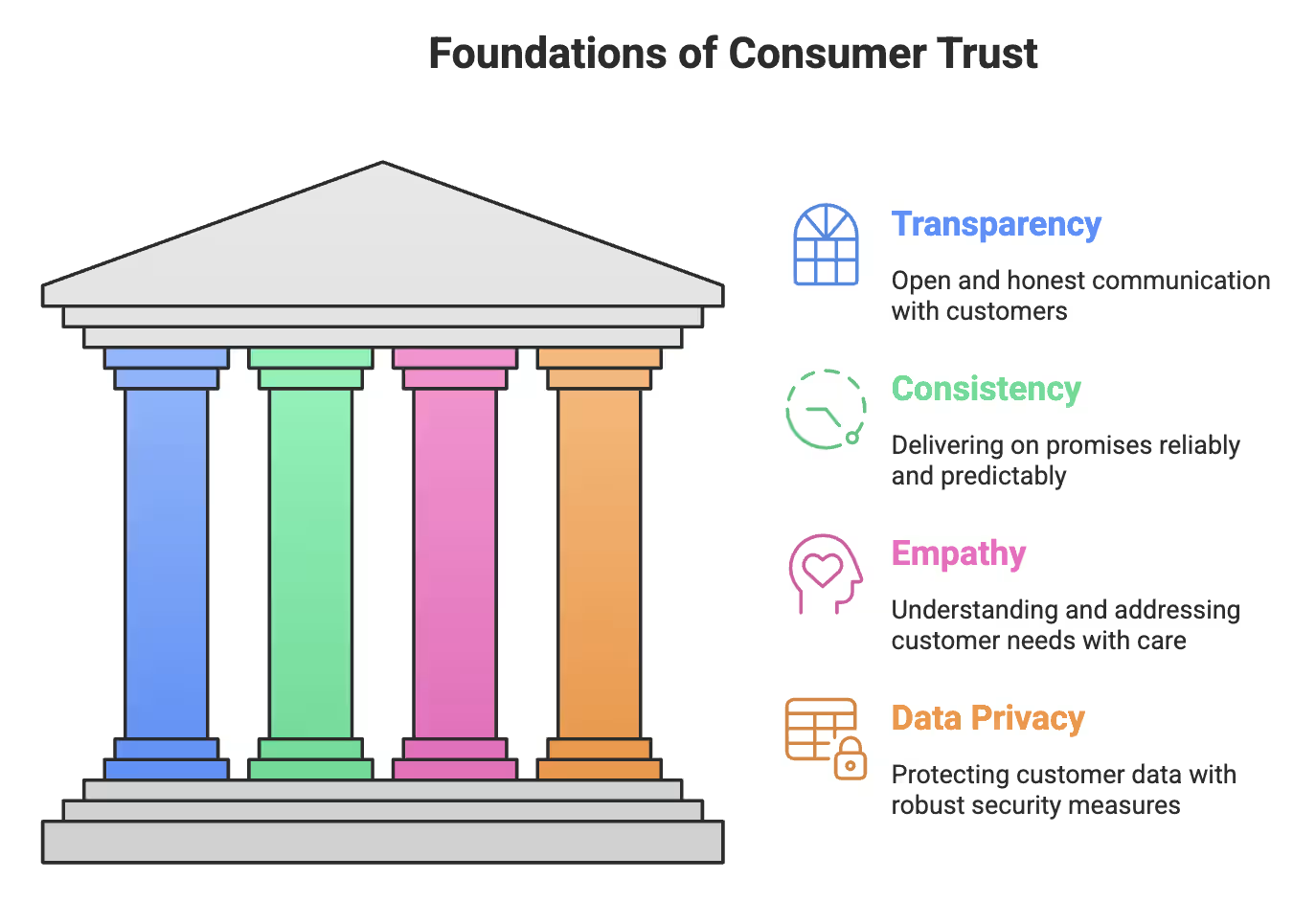
Transparency and Honest Communication
Openness is critical for trust. 86% of leaders say transparency boosts workforce trust, and 94% of shoppers choose brands that demonstrate honesty. Being upfront works immediately — telling customers their order is delayed instead of making excuses shows integrity. Vague explanations, corporate speak, or shifting blame frustrate customers and quickly erode trust. Consistently practicing honesty is essential to build customer confidence, strengthen loyalty, and create long-term relationships.
Consistency in Delivering Promises
Consistency matters more than isolated brilliance. McKinsey found measuring satisfaction across entire customer journeys predicts overall satisfaction 30% better than single touchpoints. Maximizing journey consistency boosts satisfaction by 20%, revenue by 15%, and reduces service costs by 20%. Banks in the top quartile for consistent experiences earned 30% more trust than bottom-quartile banks. Predictable, reliable interactions build emotional confidence and create a secure foundation that keeps customers loyal over time.
Empathy and Customer-Centric Approach
Empathy is no longer optional. During COVID-19, 83% of people expected genuine brand empathy, and that expectation continues today — reinforcing that building trust in customers starts with understanding how they feel. Seventy percent of buying experiences depend on how customers feel they’re treated. The top 10 companies in Harvard Business Review’s Global Empathy Index doubled in value compared to the bottom 10. Meanwhile, 61% of consumers have left companies for competitors who treated them better, proving empathy directly drives loyalty and long-term growth.
Data Privacy and Security
One privacy breach can destroy years of trust instantly. With 94% of customers unwilling to buy from companies that don’t protect data, brands must act responsibly. Compliance matters, but transparency matters more.
- 80% of consumers prefer buying from companies that protect personal information
- 95% report that privacy benefits exceed costs
- 78% of customers share more data with trusted companies
Seventy-three percent say clear, easy-to-understand privacy policies increase trust. Speak human, not legalese, to build loyalty and gain competitive advantage.
How to Build Customer Trust: Proven Strategies
You know trust matters. Everyone does. But building trust with customers takes more than good intentions — it requires consistent action.
The real question is: what are you actually going to do about it?
Here are six strategies that work. No fluff. No theory. Just practical steps that build trust with real customers.
Deliver Exceptional Customer Service
Your service quality isn’t just service — it’s your brand in action. Companies excelling in customer experience outperform laggards by 80% in revenue growth. Speed matters: chat responses under 60 seconds and emails under an hour separate winners. Customers want to be remembered. Chewy sent flowers and a condolence note when a customer’s dog died. That’s being human.
Be Transparent about your Offerings and Limitations
Stop overpromising. Be honest about your limits. Customers prefer knowing delivery may take 5–7 days rather than “2–3 days” and waiting in uncertainty. Offer worst-case, best-case, and likely scenarios. Show real data, even if it makes you look bad. Clients can handle rough months, but not being misled. Transparency builds credibility faster than any marketing pitch.
Share Customer Reviews and Testimonials
Nine out of ten shoppers trust reviews as much as personal recommendations. Products with five reviews are 270% more likely to sell than those with none. Display reviews prominently — front page, product pages, social media. Verified buyer badges boost purchase odds by 15%. Customers’ voices matter more than marketing copy, and social proof builds trust marketing alone cannot.
Ask for and Act on Customer Feedback
Many businesses fail here: they ask for feedback, then ignore it. Only 30% act on collected feedback. Close the loop. Show customers what you heard and what you’re changing because of it. When suggestions influence product updates, customers feel like partners, not respondents. Engagement transforms trust into loyalty.
Create Seamless Experiences across all Platforms
Seventy-five percent of customers want consistent experiences across channels. Seventy-three percent will switch brands if they don’t get it. Conversations should move from email to chat without repeating the story. Omnichannel customers spend 4% more in-store and 10% more online than single-channel customers. Make interactions seamless. Make them simple.
Invest in your Team and Empower Employees
Happy employees create happy customers. Give customer-facing teams authority to solve problems without escalating every issue. When Comcast equipped agents with AI tools trained on real-time data, resolution times improved 10%. Your team knows what customers need. Trust them to deliver it, and watch customer confidence grow.
Building Trust with Clients through Relationship Management
Strong client relationships don’t happen by accident. Building trust with your clients means consistently showing up, communicating clearly, solving problems quickly, and proving you care about outcomes — not just invoices.
Connect on Preferred Communication Channels
Meet clients where they are. Ninety percent prefer texting, and when you use their chosen channel, 69% buy more while 66% become loyal advocates. Companies using multiple channels see 90% higher retention — but only when the experience is consistent. Seventy-nine percent expect the same service everywhere, and 45% want conversations after business hours. If clients must repeat themselves or wait for office hours, trust quietly erodes.
Personalize Interactions and Experiences
Personalization is table stakes. Seventy-six percent buy more from brands that tailor experiences, 78% return because of it, and 82% say it influences their brand choice at least half the time. What do they really want? Don’t make them repeat information. Offer proactive help when things go wrong. Know their history before they explain it again. It’s not complex — it’s respect.
Take Ownership when Problems Arise
Mistakes happen. Ownership builds loyalty. When companies take responsibility, 86.7% of customers generate positive word-of-mouth. Lead with empathy and make the issue yours, even if it technically isn’t. Replace excuses with clear solutions and focus on what you can fix immediately. Customers may forget the mistake itself — but they will always remember how you stepped up and handled it.
Develop Long-Term Partnerships
Trust doesn’t stop at the signature. Stay visible with milestone check-ins and thoughtful follow-ups. Use your CRM to remember important details and bring them up later — it shows clients they matter. Share helpful insights between conversations so value continues beyond the sale. You’re not simply closing deals — you’re building relationships that turn satisfied clients into loyal, long-term advocates.
Measuring and maintaining customer trust and loyalty
You can’t improve what you don’t measure. Customer trust appears in renewals, referrals, and repeat purchases — signals smart brands track and act on consistently.
Track customer satisfaction scores
CSAT measures how customers feel right after interacting with you. Calculate it by dividing satisfied customers (ratings of 4 or 5) by total responses and multiplying by 100. The industry average is around 78%, and anything above 70% is considered strong. Measure it after purchases, onboarding, and support calls. Since 88% of organizations rely on CSAT as a primary metric, it serves as an early warning system when trust begins to decline.
Monitor Net Promoter Score (NPS)
NPS measures loyalty with one question: How likely are you to recommend us? Customers rate you from 0–10 and fall into three groups:
- Promoters (9–10): Loyal advocates.
- Passives (7–8): Satisfied but easily swayed.
- Detractors (0–6): Unhappy and at risk of churning.
Subtract detractors from promoters to calculate your score (–100 to +100). Anything above 60 is excellent and signals strong retention and brand advocacy.
Analyze customer retention metrics
Retention reveals whether trust is lasting. Existing customers spend 67% more than new ones, and acquiring new buyers costs five to twenty-five times more than keeping current ones. Monitor retention and churn closely because lost customers often signal broken trust. When customers renew and expand, it’s proof your experience matches your promises.
Continuously improve based on insights
Data only creates value when it drives action. Build dashboards your team reviews consistently. If NPS or CSAT dips, investigate immediately. Identify patterns in feedback, fix recurring friction points, and double down on what works. Continuous measurement ensures improvements stick — and prevents small trust gaps from becoming major churn risks.
Earn Customer Trust and Make It Last
Trust isn’t a campaign you launch and forget. You can’t buy it, force it, or fake it. Building customer trust takes consistent effort — through your actions, communication, and the experiences you deliver every day.
Here’s the reality: while 90% of business leaders believe customers trust their brand, only 30% actually do. Forty percent of consumers have walked away from companies they didn’t trust. Rebuilding trust is even harder — most won’t return after mistakes, no matter the fixes.
So what works? A study of 15,000 consumers highlights three strategies: keep your promises, deliver consistent experiences, and put people first. Show customers that they matter more than profits.
Trust is like your reputation: it takes years to build but can vanish instantly. Seventy-five percent of consumers say trust influences buying decisions. Invest in it daily, measure it, and protect it fiercely. Your customers are watching — what will you show them?
Take control of compliance, reduce risk, and build trust with UprootSecurity — where GRC bridges the gap between checklists and real breach prevention.
→ Book a demo today