What Is a Trust Center and Why Your Business Needs It in 2026

Robin Joseph
Senior Security Consultant
Ever wondered why your sales team spends weeks hunting down security documents while high-value deals sit frozen?
Your prospects aren’t waiting. They expect proof of your security posture instantly. Today’s buyers scrutinize vendors before contracts are drafted, and transparency shapes purchasing decisions from the very first interaction.
Security reviews no longer happen at the end of the sales cycle. They define it. When compliance reports live in inboxes, policies hide in shared drives, and certifications require manual follow-ups, friction becomes inevitable. You’re not losing deals because you lack security. You’re losing them because proof isn’t accessible.
Modern companies need a faster, cleaner way to demonstrate credibility. Centralized, self-serve access to security and compliance information is becoming the baseline expectation. Without it, momentum fades, trust weakens, and competitors with clearer security narratives quietly close the deals you worked hard to win.
What Is a Trust Center?
A trust center is a centralized digital hub where organizations publish and manage their security, compliance, and privacy information.
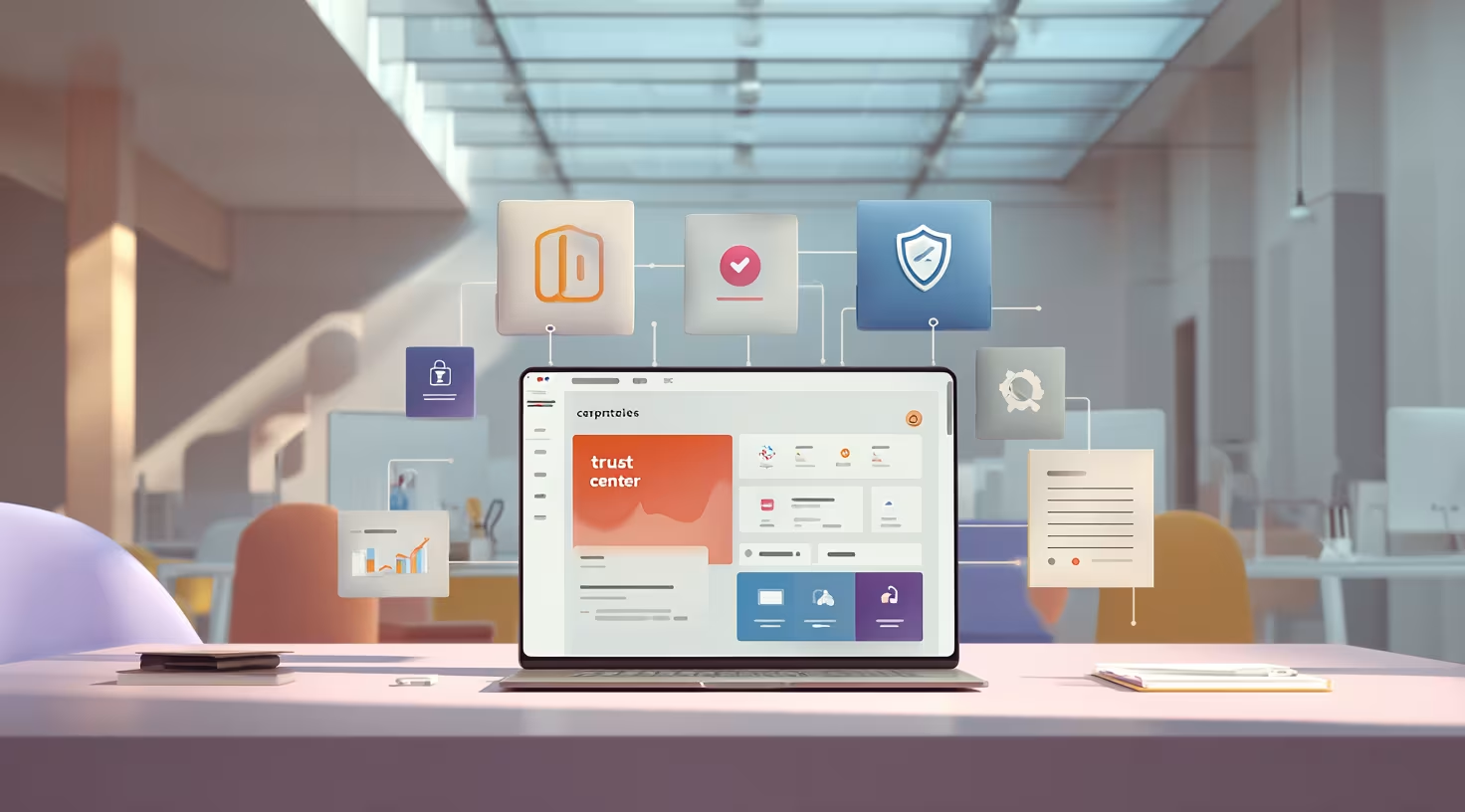
Think of it as your company’s public-facing security portal — a single, verified source of truth. It brings together compliance certifications, audit reports, security policies, data processing agreements, and vendor disclosures in one structured location.
But a trust center isn’t just a static webpage filled with downloadable PDFs. Modern trust centers are dynamic and continuously updated, often connected to live security controls and monitoring systems. They reflect your current posture, not last quarter’s documentation.
Externally, buyers, procurement teams, and legal departments use a trust center to conduct due diligence efficiently. Internally, security and compliance teams use it to manage documentation and reduce repetitive requests. When built correctly, a trust center removes friction, speeds up decisions, and turns transparency into a measurable advantage.
Why Your Business Needs a Trust Center
Enterprise buyers verify before they commit. If your security documentation isn’t instantly accessible, momentum slows and doubt grows. A trust center replaces hesitation with clarity, helping you lead with answers instead of reacting — and turning transparency into measurable sales confidence.
Accelerates Sales Cycles and Deal Closures
Security reviews now sit in the critical path of enterprise sales. When reports are scattered across inboxes and internal systems, your team pauses while documents are gathered manually. Prospects wait. Energy fades. Competitors gain ground.
A trust center restores speed. Certifications, audit summaries, and policies are available on demand, allowing procurement and legal teams to evaluate security in parallel with commercial discussions. Deals move forward without unnecessary pauses, and security becomes structured instead of disruptive.
Reduces Security Team Workload
Every serious opportunity triggers the same requests: questionnaires, policy confirmations, audit evidence. It’s repetitive work that pulls security teams away from improving actual controls.
A centralized trust center changes that workflow. Buyers self-serve the majority of what they need through controlled access. Sales share one link instead of chasing attachments. Your security team spends less time responding — and more time strengthening resilience.
Builds Customer Confidence Through Transparency
Trust today is earned through visibility. Buyers want proof that your security practices are real, documented, and consistently maintained.
A well-designed trust center signals operational maturity from the first interaction. Certifications are visible. Policies are structured. Governance is documented. Instead of defending your practices under pressure, you demonstrate readiness upfront — and that confidence carries through the entire relationship.
Meets Rising Compliance Expectations
Compliance expectations aren’t slowing down — they’re intensifying. Static PDFs shared over email don’t satisfy modern due diligence anymore. Buyers expect proof that standards are actively maintained, not achieved once and archived.
A trust center centralizes certifications, renewal timelines, and live control evidence in one visible hub. It proves compliance is continuous. And when consistency is visible, credibility stops being claimed — and starts being earned.
Core Components of an Effective Trust Center
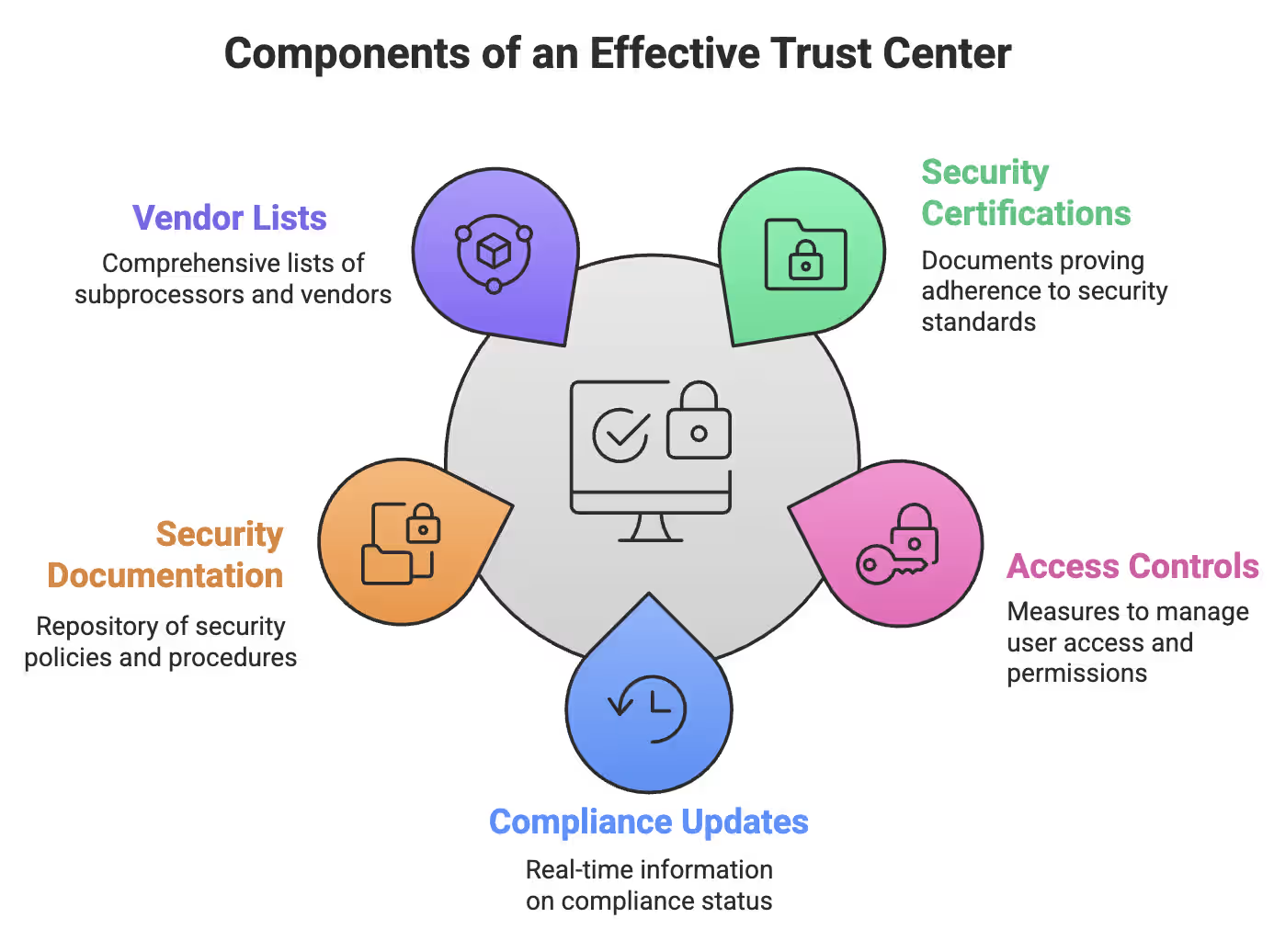
An effective trust center doesn’t just display documents. It anticipates scrutiny, removes friction, and delivers structured proof exactly when buyers need it.
Security Certifications and Audit Reports
Your certifications page can’t be a logo graveyard. Buyers expect real proof — downloadable SOC 2 Type II reports, ISO 27001 certificates, and relevant attestations like HIPAA or FedRAMP — without jumping through hoops.
Go beyond the basics. Include executive summaries of penetration tests, AI governance standards like ISO 42001, and cloud privacy certifications such as ISO 27018. Make everything current, clearly dated, and easy to access. When documentation is visible and structured, credibility increases instantly.
Access Controls and NDA Management
This is where weak trust centers collapse. Manual NDA collection and email-based approvals slow deals and create unnecessary legal friction.
Serious platforms automate NDA workflows and integrate with CRM and legal systems. Offer tiered access: public overviews for casual visitors, gated reports for verified partners. Log every request. Track every download. Control access without creating bottlenecks.
Real-Time Compliance Status Updates
Static PDFs are snapshots. Buyers want live signals that prove your standards are actively maintained, not archived after an audit closes.
Display active controls, monitoring results, certification renewal timelines, and upcoming audit schedules in one visible dashboard. Real-time updates show operational discipline. When compliance is continuously visible, confidence increases — and security reviews move forward without unnecessary friction.
Security Documentation Repository
Your trust center should operate like a structured security library, not a cluttered file cabinet hidden behind email requests.
Centralize assurance reports, core policies, incident response plans, business continuity documentation, data processing agreements, and privacy disclosures like GDPR and CCPA. Keep everything organized, searchable, and current. When documentation is easy to navigate, due diligence becomes faster — and trust builds naturally.
Subprocessor and Vendor Lists
Third-party transparency matters more than ever. Buyers need clarity on who handles their data and where it resides.
Publish a detailed subprocessor list outlining services performed, locations, and data responsibilities. Clear vendor disclosure reduces compliance friction and addresses sovereignty concerns early. When nothing is hidden, confidence compounds — and scrutiny becomes easier to pass.
What to Include in Your Trust Center
Structuring your trust center isn’t about uploading every internal document. It’s about deciding what’s public, what’s gated, and how much depth buyers need to move forward with confidence.
Public-Facing Security Information
Your public section should establish credibility without exposing sensitive details. Display active certifications like SOC 2 and ISO 27001 with clear issuance dates. Provide high-level overviews of encryption standards, infrastructure providers, and backup practices.
Publish your subprocessor list with defined vendor roles and data responsibilities. Include security contact details and a responsible vulnerability disclosure process. Keep it clean. Keep it controlled. Transparency builds trust — oversharing creates risk.
Gated Compliance Documentation
Some materials require verification before access. Behind an NDA wall, place detailed audit reports, complete policy libraries, and technical documentation used during formal evaluations.
Include architectural diagrams, data flow summaries, standardized questionnaires like CAIQ or SIG, and penetration test summaries that demonstrate rigor without exposing vulnerabilities. Use watermarking and time-bound access links to maintain control. Smart gating protects both your organization and your prospects.
Dynamic Security Metrics and Dashboards
Static reports tell yesterday’s story. Buyers want today’s signal — proof your controls are active right now, not archived after the last audit.
Embed live dashboards showing uptime, incident status, certification renewal timelines, and continuous control monitoring. Real-time visibility demonstrates operational discipline. When security performance is transparent and current, confidence rises — and scrutiny becomes easier to pass.
Frequently Asked Questions
After reviewing thousands of trust centers, the same core concerns surface repeatedly. Buyers want clarity on fundamentals before they proceed:
- Where is customer data hosted?
- How is data encrypted in transit and at rest?
- How are vendors and subprocessors vetted?
- How are backups handled and tested?
- Can customer data be deleted upon request?
- Do you maintain formal vulnerability management and regular policy reviews?
Answer these clearly and upfront. When common concerns are resolved early, reviews move faster — and confidence builds naturally.
Incident Response Communications
Your trust center shouldn’t go silent when incidents happen. It should become your single source of truth.
Publish timely, transparent updates outlining impact, remediation steps, and next actions. Clear communication reduces speculation and reinforces control. Anyone can claim security on good days. The real test comes under pressure — and how you communicate defines lasting trust.
Trust Center vs Traditional Security Documentation
Traditional security documentation drains time through scattered files, endless emails, and version confusion. Trust centers replace that chaos with structure, speed, and controlled transparency.
Self-Service Access Replaces Manual Processes
Manual provisioning doesn’t scale. Every document request interrupts security teams and slows sales cycles. What should take minutes stretches into days of approvals and follow-ups.
A trust center streamlines the process. Buyers request access through structured workflows. Approvals are automated, logged, and tracked. Intelligent controls reduce risky requests while generating clean audit trails for compliance. Automation minimizes human error, accelerates decisions, and frees teams to focus on meaningful security improvements instead of repetitive document sharing.
Automated Updates vs Static PDFs
Static PDFs are outdated the moment they’re downloaded. Certifications renew. Policies evolve. Controls improve. Yet outdated files continue circulating across inboxes and shared drives, creating confusion about what’s current and what’s expired. That uncertainty slows reviews and introduces unnecessary risk.
Trust centers eliminate version-control chaos. Live dashboards display active certifications, renewal timelines, and real-time compliance status in one controlled environment. No guessing which file is latest. No chasing updates. Just accurate, continuously maintained visibility stakeholders can rely on.
Centralized Hub vs Scattered Resources
Traditional documentation lives across sales drives, security folders, and legal archives. Teams waste time searching for the right version, while inconsistencies quietly creep in. Fragmentation slows deals, increases back-and-forth, and creates avoidable risk.
A trust center consolidates everything into a single, access-controlled hub. Buyers self-serve what they need while your team tracks engagement through analytics. One source of truth. Real-time updates. Complete visibility.
Still not convinced? Here’s a quick snapshot showing how trust centers beat traditional documentation every time:
| Feature | Traditional Documentation | Trust Center |
|---|---|---|
| Access | Endless emails, manual approvals | Self-serve, automated, instant |
| Updates | Static PDFs, outdated info | Live dashboards, real-time status |
| Organization | Scattered files everywhere | Centralized, controlled hub |
| Efficiency | Slow, error-prone, frustrating | Fast, streamlined, frees teams |
| Visibility | Hard to track, no audit trails | Full analytics, engagement logs |
| Risk | Confusion, inconsistencies, delays | Accurate, reliable, continuously maintained |
Trust Center Software and Automation Solutions
Trust center platforms vary widely in depth, automation, and purpose. Some prioritize sales acceleration. Others focus on compliance orchestration. The right choice depends on your primary bottleneck.
Security Trust Center Platforms
These platforms are built specifically to reduce security review friction and empower sales teams with structured, controlled transparency.
-
Uproot Security — Centralized compliance documentation with real-time updates and self-service buyer access.
-
SafeBase — Purpose-built trust centers with modern public pages, automated NDA workflows, and centralized document control. Designed to streamline security reviews without manual back-and-forth.
-
SecurityPal — Specializes in fast, accurate questionnaire automation with embedded analytics to track buyer engagement and document visibility.
-
Conveyor — AI-powered responses with high accuracy and browser extensions that auto-complete portal questionnaires, significantly reducing response time.
If your biggest pain point is repetitive questionnaires and sales delays, this category delivers immediate relief.
Vendor Trust Center Options
These platforms bundle trust center capabilities into broader compliance automation ecosystems.
-
Uproot Security — Centralized compliance documentation with real-time updates and self-service buyer access, helping teams reduce manual reviews and accelerate enterprise deals.
-
Secureframe — Uses machine learning to auto-complete questionnaires while maintaining structured compliance oversight.
-
Vanta — Automates access approvals, accelerates customer reviews, and provides real-time dashboards with continuous control monitoring.
Ideal for companies already using compliance automation and wanting integrated trust visibility.
Compliance Trust Center Features
For enterprises navigating complex regulatory environments, compliance depth matters more than surface-level transparency.
-
OneTrust — Enterprise-grade GRC capabilities with extensive customization for large regulatory landscapes.
-
Ithikios — Designed for European organizations aligning with NIS2, DORA, and GDPR, with EU-hosted infrastructure.
For heavily regulated industries, these platforms prioritize governance alignment alongside trust presentation.
Trust Center Automation Capabilities
Integration defines usability. The best trust center platforms connect directly into your existing business workflows, reducing friction instead of adding another tool to manage.
Most integrate with Salesforce, HubSpot, Slack, DocuSign, and Ironclad to automate approvals, NDA flows, document gating, and revenue attribution tracking across teams.
The strongest solutions don’t add operational weight. They quietly remove it, embedding transparency into daily workflows without disrupting how your teams already operate.
Measuring Trust Center Impact and ROI
Want proof your trust center delivers measurable value? Focus on metrics tied directly to time, engagement, and revenue impact — not surface-level activity.
Track Security Review Time Savings
Security reviews that once dragged on for weeks now close in days. What previously took 18 days can shrink to under a week with structured, self-service access. Sales cycles compress. Approvals accelerate. Momentum stays intact.
The downstream effect compounds. Enterprise deal timelines shorten, and security teams reclaim hundreds of hours each quarter. That time shifts from document chasing to strengthening controls and proactive improvements. Faster reviews don’t just reduce friction — they increase capacity across revenue and security functions.
Monitor Customer Engagement Metrics
In today’s fast-moving sales environment, knowing how buyers interact with your security information is critical. Your trust center functions as a buyer intelligence layer:
- Track which prospects request access and when.
- Monitor document views, downloads, and most-accessed certifications.
- Measure time between approval and first interaction.
- Compare self-service completions against reviews requiring manual involvement.
These signals reveal intent, urgency, and hidden bottlenecks inside live deals.
Analyze Efficiency Gains and Business Value
Revenue influence becomes the defining metric. A significant share of enterprise deals interacts with the trust center during evaluation, and structured self-service workflows consistently outperform manual security reviews in win rates and sales velocity.
Manual questionnaire workload drops as buyers find answers independently, reducing back-and-forth across teams. Operational strain decreases, internal bandwidth expands, and deal confidence rises — turning transparency into measurable business impact.
Conclusion: The Business Value of a Trust Center
Your trust center isn’t just another tool in the stack. It transforms security into a competitive advantage. Instead of chasing PDFs, your prospects access what they need instantly, building confidence and accelerating decisions.
The results are tangible: 42% higher win rates, 70–90% faster deal cycles, and 200–400 hours saved per quarter. Deals move faster. Security teams regain bandwidth. Sales teams stop waiting on approvals. Every interaction becomes smoother.
Buyers expect transparency. They want live compliance dashboards, instant certifications, and proof your controls are active — not just completed once and forgotten. Organizations with professional trust centers consistently outpace competitors still stuck in manual reviews, proving trust drives revenue.
Meanwhile, your security team finally focuses on meaningful work. No more answering the same questionnaire repeatedly. No more digging through shared drives. Security becomes strategic, not administrative. A trust center isn’t optional anymore — it’s your secret weapon for growth and credibility.
Build trust, accelerate deals, and simplify how you share compliance evidence with Uproot Security — where your trust portal becomes a competitive advantage.
→ Book a demo today
Risk & Vendor Management