What Is Cybersecurity Culture? A Complete Guide

Robin Joseph
Senior Security Consultant

Ever wondered why some companies get hacked while others stay standing?
After watching organizations scramble post-breach, one pattern keeps showing up. They pour millions into advanced tools, complex dashboards, and layered defenses—then overlook their most powerful line of protection. Not the firewall. Not the SIEM. Their people.
Cybersecurity culture isn’t a buzzword that fades next quarter. It’s the difference between staying secure and becoming tomorrow’s breach headline. Most traditional strategies lean heavily on technology, assuming software will compensate for risky behavior, rushed decisions, or simple human error. It won’t.
Because security isn’t just technical. It’s behavioral. When employees don’t feel responsible for protecting data, even the best systems collapse under pressure. But when security becomes instinct—something people care about, talk about openly, and act on consistently—everything shifts. The strongest defense isn’t your stack. It’s your workforce, aligned and alert.
What Is Cybersecurity Culture?
Cybersecurity culture is the shared mindset that makes security everyone’s responsibility—not just IT’s. It reflects the collective values, attitudes, and everyday behaviors that influence how people manage risk, protect data, and use digital systems across the organization.
On paper, the cybersecurity culture definition sounds polished and strategic. In practice, it comes down to one question: do your people genuinely care about protecting the business? Traditional security says, “Follow the policy.” Cybersecurity culture says, “I’m personally invested in keeping this organization secure.”
Without culture, security stays surface-level. Employees click before thinking. Mistakes are hidden out of fear. Risky shortcuts become normal. Leadership assumes controls are working—until a breach proves they weren’t.
With a strong culture, the script flips. People pause before acting. They question suspicious emails. They report issues early. They suggest safer ways to work. Security stops feeling like friction and starts becoming part of how work gets done—intentionally, consistently, and together.
Why Cybersecurity Culture in Organisations Is a Shared Responsibility
68% of business leaders recognize growing cybersecurity risks. Relying only on IT and security tools isn’t enough. Real resilience happens when every level shares responsibility and a strong cybersecurity culture is actively reinforced across the entire organization.
Role of Executives and Leadership Commitment
Security begins at the top. If executives treat it casually, the rest of the company will mirror that attitude.
- Set the tone for how seriously cybersecurity is prioritized
- Approve budgets that fund real initiatives, not just compliance exercises
- Align security programs with business strategy
- Demonstrate secure behavior in decisions and communication
Without visible leadership commitment, even the strongest tools can fail. When executives lead by example, security moves from policy into practice.
Managers as Cybersecurity Role Models
Middle managers translate strategy into daily behavior. They influence teams more than any memo or training ever will.
- Reinforce secure practices among their teams
- Connect staff to security resources and guidance
- Encourage open conversations about risks and incidents
- Build trust so employees feel safe reporting issues
When managers normalize security conversations, employees stop hiding mistakes. Reporting improves. Risk visibility increases. Culture strengthens.
IT and Security Teams as Enablers
Security isn’t just IT’s job, but these teams provide structure and expertise.
- Create actionable policies and training programs
- Collaborate with business units instead of blocking them
- Balance operational continuity with risk mitigation
- Promote awareness and continuous improvement
Strong alignment between IT and security leadership ensures protection without sacrificing productivity.
Every Employee’s Impact on Information Security Culture
Frontline employees are the first line of defense against phishing, social engineering, and insider risk.
- Apply best practices consistently
- Report suspicious activity promptly
- Participate meaningfully in training
When employees feel safe to report issues, risks are caught early. Shared responsibility makes security part of everyday work, not just IT’s job.
Core Elements of a Strong Cybersecurity Culture Framework
Want to build a security culture that actually works? Most organizations throw a single training session at employees and call it a day. Then they wonder why their culture collapses the moment someone gets a clever phishing email.
The key is a framework—a system where every element supports the others, making security feel natural instead of forced.
These are the core elements of a strong cybersecurity culture framework:
- Clear Policies and Guidelines
- Employee Training and Awareness Programs
- Open Communication and Incident Reporting
- Recognition and Rewards for Secure Behavior
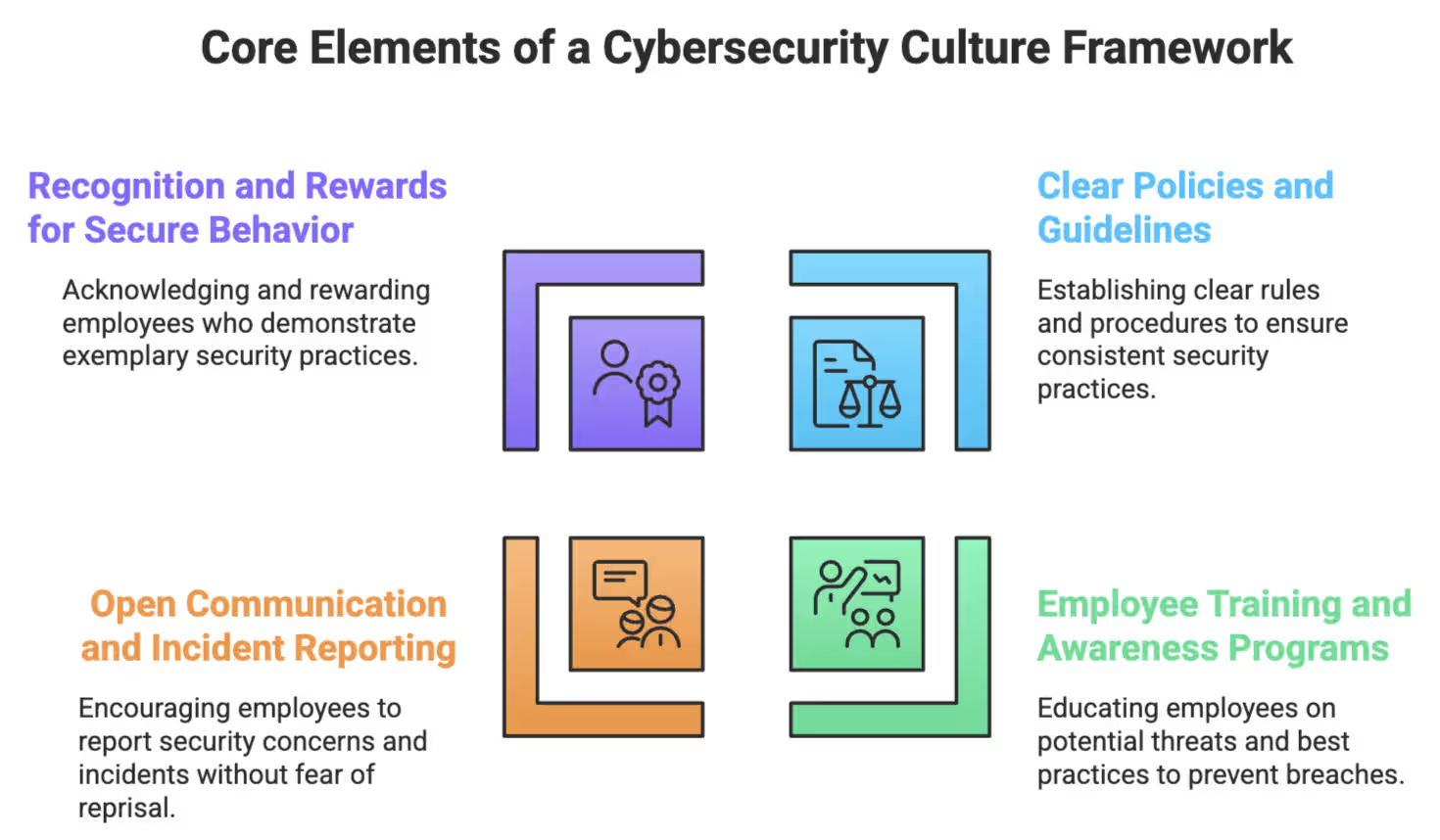
Let’s break down each of these.
1. Clear Policies and Cybersecurity Culture Guidelines
Policies are more than documents—they’re the blueprint for safe behavior, technology use, and processes.
- Cover the essentials: passwords, data protection, remote work protocols
- Be crystal clear: employees shouldn’t need a law degree to understand them
- Update regularly: threats change, and so should policies
- Explain the “why,” not just the “what”
Policies guide behavior and set expectations, but only if people understand and trust them.
2. Employee Training and Cybersecurity Awareness Programs
Security training and cybersecurity culture and awareness programs aren’t a one-time checkbox—they’re ongoing habits. They keep security top-of-mind and build real skills.
- Make it interactive and role-specific: each team gets what matters to their work
- Use realistic scenarios: employees face threats they could actually encounter
- Focus on ownership: people feel part of the solution, not just following orders
Effective training turns employees into proactive security champions and reduces risky behavior.
3. Open Communication and Incident Reporting
Fear kills culture; trust builds it. Open communication ensures risks are caught early.
- Foster a no-blame environment where mistakes become learning opportunities
- Keep employees informed about security threats, incidents, and updates
- Make reporting suspicious activity easy, safe, and recognized
When communication flows freely, employees speak up, threats are mitigated faster, and security becomes everyone’s responsibility.
4. Recognition and Rewards for Secure Behavior
People repeat what is recognized and rewarded. Positive reinforcement strengthens long-term security habits.
- Publicly acknowledge employees who spot phishing attempts or report risks
- Offer team-based incentives for high compliance and safe behavior
- Celebrate security wins during regular meetings or events
Rewarding good practices motivates employees to stay vigilant, creating a culture where secure behavior becomes natural and consistent.
Creating a Culture of Cybersecurity at Work
Talk is cheap. You know what cybersecurity culture looks like, but building it requires rolling up your sleeves and taking action. There are no shortcuts—just proven steps that turn security-aware employees from a nice-to-have into your reality.
Integrating Cybersecurity into Onboarding
A new hire’s first day sets the tone for everything that follows. Skip security briefings, and you’re saying, “Cybersecurity can wait.” Lead with it, and you declare it non-negotiable.
- Mandatory cybersecurity training before any system access
- Sign-offs on policies and non-disclosure agreements
- Essentials on threat identification, data protection, and password hygiene
Onboarding isn’t just policy training—it signals that protecting the organization is part of everyone’s job from day one.
Making Security Part of Daily Operations
Treating security as an add-on kills culture. It works best when integrated into everyday workflows.
- Build security checkpoints into project management and approval processes
- Embed protective measures directly into tools employees use daily
- Design controls that support work instead of blocking it
When security feels natural, people follow it naturally. When it’s extra work, it gets skipped.
Encouraging Shared Responsibility Across Teams
Cybersecurity isn’t IT’s job alone—it touches every department and workflow. Shared ownership keeps risks visible and accountable.
- Security teams collaborate with other departments instead of acting in isolation
- Establish clear accountability for processes and vendor checks
- Leadership models secure behavior—executives following rules encourage the rest
When ownership is shared, security becomes everyone’s responsibility, not just IT’s.
Using Gamification, Simulations, and Phishing Tests
Employees don’t learn security from slides alone. Engagement drives retention and action.
- Phishing tests identify risky behavior and improve reporting by 30–50%
- Simulations create realistic scenarios so employees experience threats safely
- Gamification—leaderboards, badges, points—makes learning competitive and fun
- Immediate feedback teaches without shaming
When all three are combined, employees stop dreading training and start actively practicing security, making culture stick.
Your cybersecurity culture begins with the first step you take today—start small, stay consistent, and make security part of everyday work.
Measuring Progress with a Cybersecurity Culture Survey and Maturity Model
You can’t improve what you don’t measure. Yet many organizations just cross their fingers and hope employees “do the right thing.” That’s wishful thinking. Real progress starts with asking the right questions, tracking meaningful metrics, and benchmarking effectively.
Conducting a Cybersecurity Culture Survey
Want to know what’s really happening? Ask your people—but dig deeper than “Did you complete training?”
- Do employees understand basic security concepts?
- How do they feel about security measures?
- What do they do when no one is watching?
- Does leadership genuinely support security?
The best surveys reveal uncomfortable truths about behavior, perceptions, and real engagement.
Using a Cybersecurity Culture Maturity Model
Most organizations overestimate their maturity. The 5-stage model is brutally honest:
- Stage 1: “IT keeps us safe; it’s not my job.”
- Stage 2: “Cybersecurity tells me what to do.”
- Stage 3: “I follow requirements when reminded.”
- Stage 4: “Cybersecurity is everyone’s job.”
- Stage 5: “I proactively improve resilience.”
Reality check: most think they’re at Stage 4—they’re usually at Stage 2. Facing the truth is the first step to improvement.
Key Metrics and KPIs to Track
Click-through rates don’t measure real security. Track what moves the needle:
- Training effectiveness: completion + knowledge retention
- Identity management: strong passwords, 2FA adoption
- Incident reporting: higher reporting = higher awareness
- Behavioral habits: locked screens, clean desks, phishing test results
Metrics are only useful if they guide action. Focus on meaningful measures, identify gaps, and adjust programs accordingly—progress, not perfection, is what builds a strong culture.
Benchmarking Against Industry Guidelines
Learn from others instead of guessing.
- Compare progress against SANS Maturity Model Indicators Matrix
- Set realistic goals based on industry trends and risk profile
- Focus on gradual improvement, not perfection
Culture isn’t about perfect scores—it’s about progress, awareness, and keeping your organization safe. Measure what matters, and you’ll know when your culture is working.
Challenges in Building Cybersecurity Culture in Organizations
Building a strong cybersecurity culture? Buckle up. It’s harder than it looks. Even the best-intentioned programs hit walls that can stop you dead in your tracks. Here’s the real talk about what you’re up against.
Employee Resistance to Change
Your people often see security as a pain. Most measures feel like speed bumps slowing them down, and they’ve got deadlines to hit. The trick isn’t enforcing more rules—it’s showing why it matters to them personally. Share stories of real breaches, involve employees early, and make them part of the solution. When people help build something, they actually want it to succeed.
Human Error and Negligence
Your biggest cybersecurity threat isn’t some hacker in a basement—it’s your own team. Human error causes 95% of breaches, and noncompliance or carelessness accounts for most incidents. People aren’t trying to sabotage you—they’re human. Programs need to recognize this reality, focus on awareness, and make safe behavior easy to adopt, instead of punishing mistakes.
Remote Work and Device Security Gaps
Controlling every device from the office is a thing of the past. Over 30% of devices are outside IT control, and network segmentation is often poor. Work-from-anywhere makes security harder to enforce and increases the attack surface. Without updated policies and adaptable controls, gaps multiply.
Lack of Consistent Reinforcement
Cybersecurity culture isn’t a yearly checkbox. Only about half of companies even bother with training, and many treat it as a one-off. Culture dies when it’s ignored. Threats evolve daily, and your security culture must evolve too. Continuous education, reinforcement, and engagement are non-negotiable if you want your people to stay sharp and proactive.
Real-World Examples, Jobs, and Tools That Strengthen Cultural Cyber Security
Time for some good news. While most organizations struggle with cybersecurity culture, some are absolutely crushing it. Here’s how they’re doing it—and what you can borrow from their playbook.
Cybersecurity Culture Jobs and Internal Champions
The smartest companies turn regular employees into Security Champions Programs instead of hiring armies of experts.
- Volunteers from marketing, HR, accounting, etc., learn security basics and act as team go-to people
- Champions act like fire marshals: they don’t need all the answers, just guidance to keep everyone safe
- Check Point has 15 full-time security staff and 10 champions worldwide—reaching everyone effectively
Empowering people as champions spreads security naturally across teams.
Case Studies from Leading Organizations
Some real-world examples show how organizations make cybersecurity culture stick:
- MongoDB: New CISO prioritized a champions program, avoiding anyone with “security” in their title to get fresh perspectives
- Princeton University: Built a full awareness program with events, online content, Q&A, and celebrated Cybersecurity Awareness Month
- Milwaukee County: Started with nothing. Ran phishing campaigns but used follow-up training instead of punishment, turning results into conversation starters
Real organizations prove that culture programs work when done thoughtfully.
Lessons from Safety Culture in High-Risk Industries
High-risk industries like nuclear power and aviation figured out culture decades ago—and their lessons apply to cybersecurity too:
- Treat suspicious emails like near-misses: investigate and improve, don’t blame
- Make secure choices the easiest choice—like safety gear within reach
- Protect data like radiation: constant awareness, proper procedures, and the right tools
Safety lessons from other industries translate directly to cybersecurity.
Recommended Cybersecurity Culture Books and Resources
Want to dive deeper? These books provide practical strategies and tools for building a strong, people-focused cybersecurity culture:
- Security Culture by Hilary Walton – proven strategies for implementation
- People-Centric Security by Lance Hayden – a complete toolkit for building culture
- The Cybersecurity Playbook by Allison Cerra – lessons from real-world practice
- The Psychology of Information Security by Leron Zinatullin – understand why people act securely
Learning from experts helps you build practical, people-focused security programs that actually stick.
Conclusion: Making Cybersecurity Culture Second Nature
Let’s be honest. Cybersecurity culture isn’t a one-off campaign. It’s messy. It takes consistency. Most companies fail because they treat it like software—install a tool, run a training, check a box. That’s not culture. That’s compliance theater.
Technology alone won’t save you. Human error causes 95% of breaches. Organizations that invest in ongoing, practical training see up to 86% fewer phishing incidents. That’s not luck—it’s culture turning people from the weakest link into the strongest control.
Culture works like muscle. You build it through repetition, reinforcement, and leadership by example. Reporting rates climb 30–50%. Employees speak up earlier. Security stops being a quarterly reminder and becomes a daily habit woven into how decisions get made.
You don’t need a huge budget—just intent and follow-through. Small, consistent actions compound. In today’s threat landscape, culture isn’t optional—it’s your competitive edge. The real risk? Thinking technology alone will protect you.
Strengthen your cybersecurity culture, align with top compliance frameworks, and turn employees into your first line of defense with UprootSecurity.
→ Book a demo today
Continuous Compliance & GRC Ops