Top 5 Secure Alternatives to Delve for Compliance [2026]
Robin Joseph
Senior Security Consultant
![Top 5 Secure Alternatives to Delve for Compliance [2026]](https://s3.us-east-1.amazonaws.com/static-production.uprootsecurity.com/website/strapi-content/uploads/delve_alternatives_2026_2b0ff79510.png)
Delve built its reputation on speed. AI-driven evidence collection, streamlined onboarding, and a compliance process that moves fast enough to keep up with early-stage sales cycles. For early-stage startups closing their first enterprise deal, that speed is genuinely useful.
But speed isn't the only thing that matters when choosing a compliance platform. Some teams need deeper penetration testing coverage than what a bundled grey box scan provides. Others need more framework flexibility, stronger integrations, or a platform that scales as compliance requirements grow beyond that first certification.
In light of recent events, if you're looking for an alternative to Delve that is trustworthy, here are a few worth evaluating.
1. Uproot Security
Best for: Teams that need penetration testing depth alongside compliance
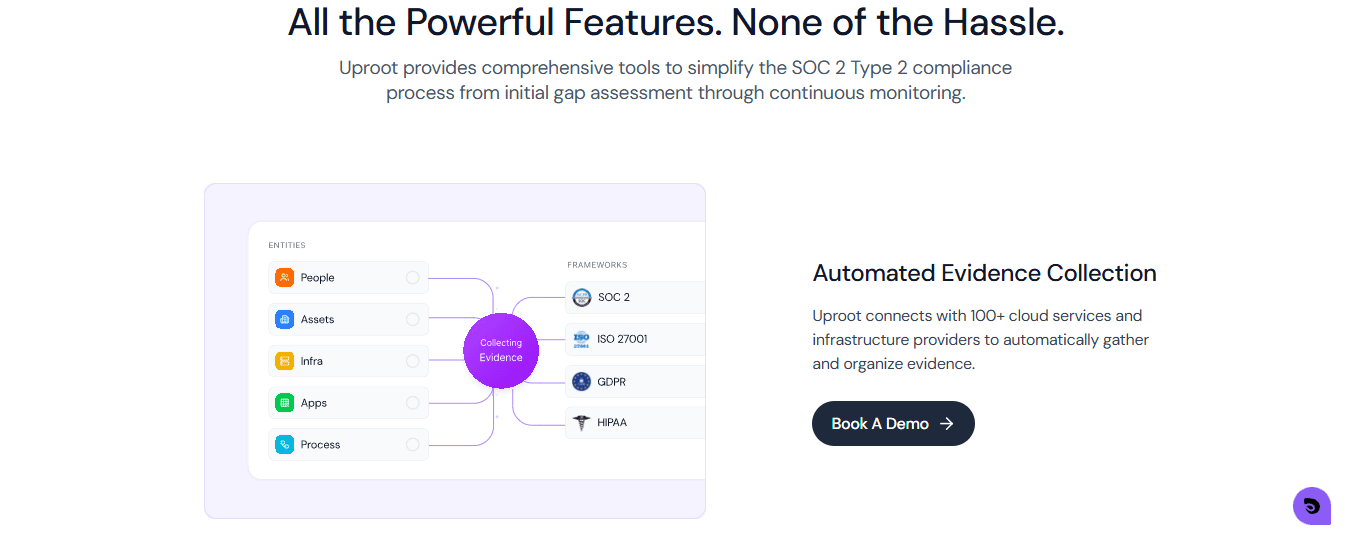
Most compliance platforms treat penetration testing as a line item bundled into the audit package. Uproot Security approaches it differently. The platform is built around dedicated, manual penetration testing by certified security professionals who go deeper than automated grey box scans, covering web applications, APIs, networks, mobile apps, and cloud infrastructure.
Where Delve promises quick compliance, Uproot Security helps you stay secure continuously. That distinction matters if your customers are asking detailed security questions, if you're operating in a regulated industry, or if compliance is just one part of a broader security program you're trying to build.
For teams that want compliance confidence backed by actual security validation rather than audit-ready documentation alone, Uproot Security is worth a serious look.
Ready to see what real penetration testing looks like?
Book your demo with Uproot Security.
2. Vanta
Best for: Startups that need broad framework coverage and a large integration ecosystem
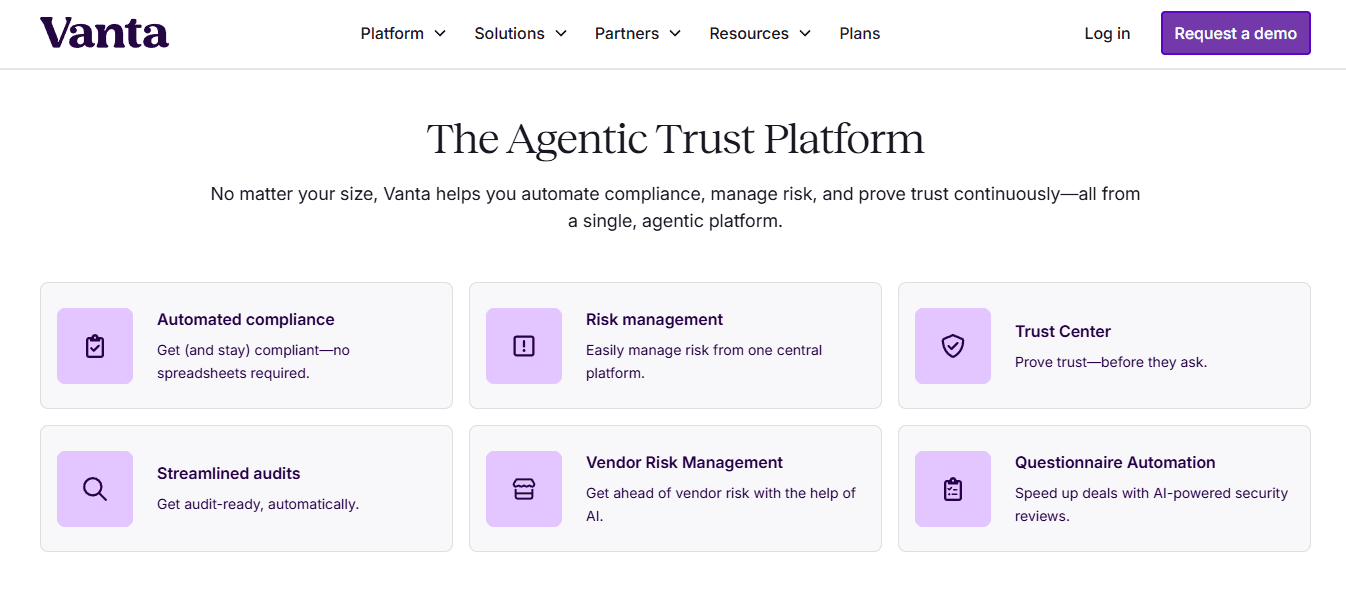
Vanta supports over 35 compliance frameworks including SOC 2, ISO 27001, HIPAA, GDPR, FedRAMP, and NIST, making it one of the most framework-flexible platforms in the market. With over 300 out-of-the-box integrations across cloud providers, HRIS, CRMs, and security tools, it connects to most tech stacks without significant setup effort.
Where Vanta has an edge over Delve is scale. It's better suited for organizations managing multiple frameworks simultaneously, and its Trust Center is particularly strong for enterprise sales cycles where prospects expect polished, on-demand access to compliance documentation.
The tradeoff is cost. Vanta is meaningfully more expensive than Delve, with pricing ranging from around $10,000 annually for early-stage teams to $80,000 or more for larger enterprises with complex needs. Penetration testing is also a separate engagement you budget for independently. For a closer look at alternatives to Vanta and what each one really costs, see our Vanta guide.
3. Drata
Best for: Engineering-heavy teams that want deep automation and real-time control visibility
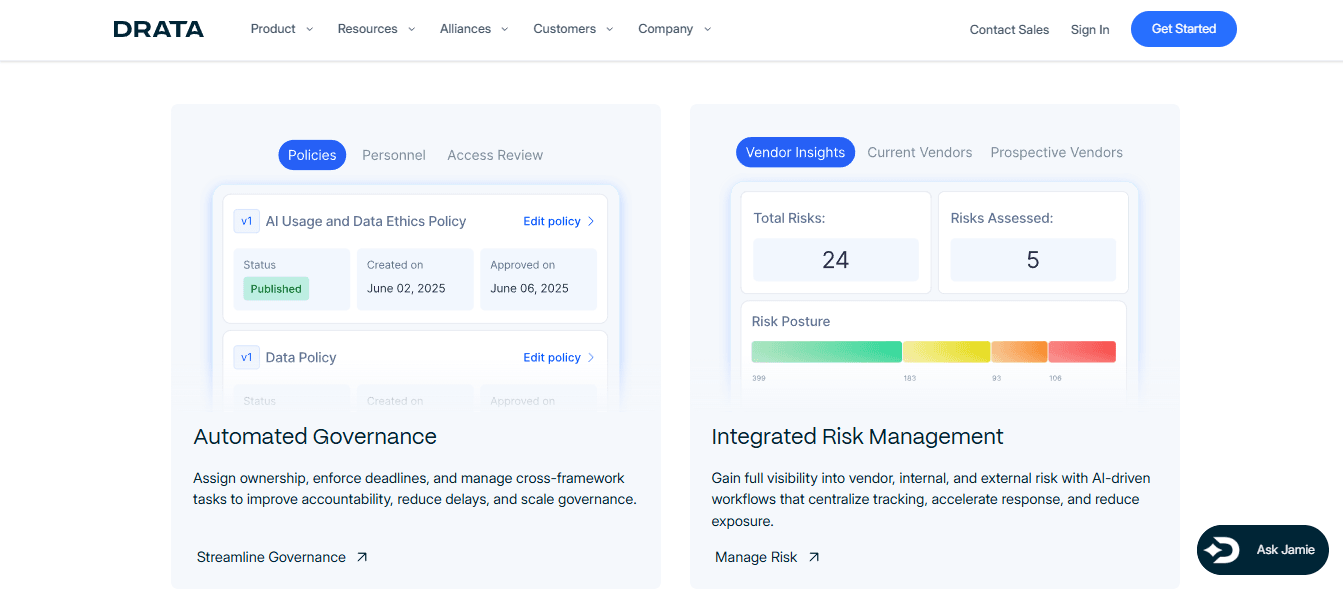
Drata is built for teams that want compliance running tightly alongside their development workflow. It offers over 250 integrations, daily automated control tests, and a real-time audit hub that gives both internal teams and auditors centralized visibility into compliance status.
Compared to Delve, Drata goes deeper on technical automation and is better suited for organizations that have already moved past their first certification and need a platform that can handle multi-framework complexity without significant manual overhead.
Where it falls short is customization. Drata works best when you operate within its workflows. Teams with highly customized governance requirements or non-standard setups often find it less flexible than they need. It's also positioned more toward enterprise and tends to carry a higher price tag than Delve.
4. Scytale
Best for: Teams that want guided compliance with a dedicated expert in their corner
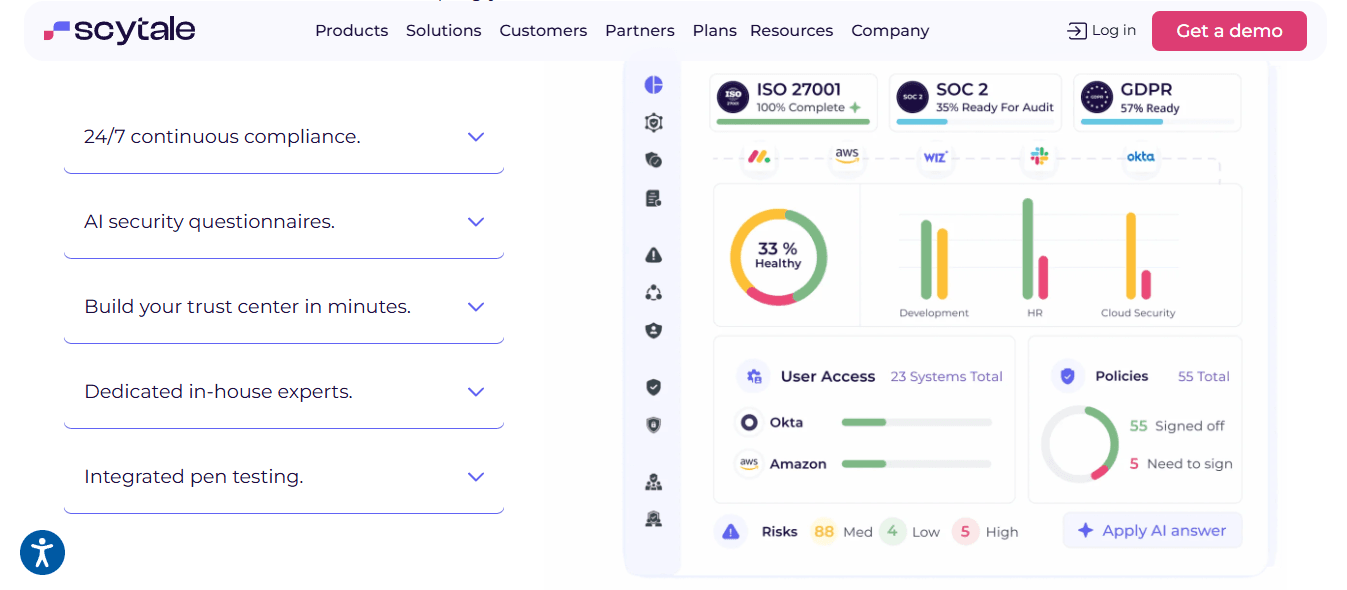
Scytale combines compliance automation with a dedicated compliance expert assigned to each customer. That human layer covers policy creation, gap remediation, and audit readiness, making it a strong choice for teams without an internal GRC function who want more than just a platform to figure out on their own.
It supports SOC 2, ISO 27001, HIPAA, GDPR, and PCI DSS, with cross-framework mapping that reduces duplicate work when managing multiple certifications simultaneously. Continuous control monitoring and automated evidence collection handle the day-to-day compliance maintenance between audits.
Scytale's pricing starts around $7,500 per year for a single framework, with total annual spend typically landing between $10,000 and $25,000 depending on frameworks and add-ons. Like Delve, pricing isn't fully transparent upfront, but it's competitive for the guided approach it offers.
5. Sprinto
Best for: Fast-growing companies managing multiple frameworks at once
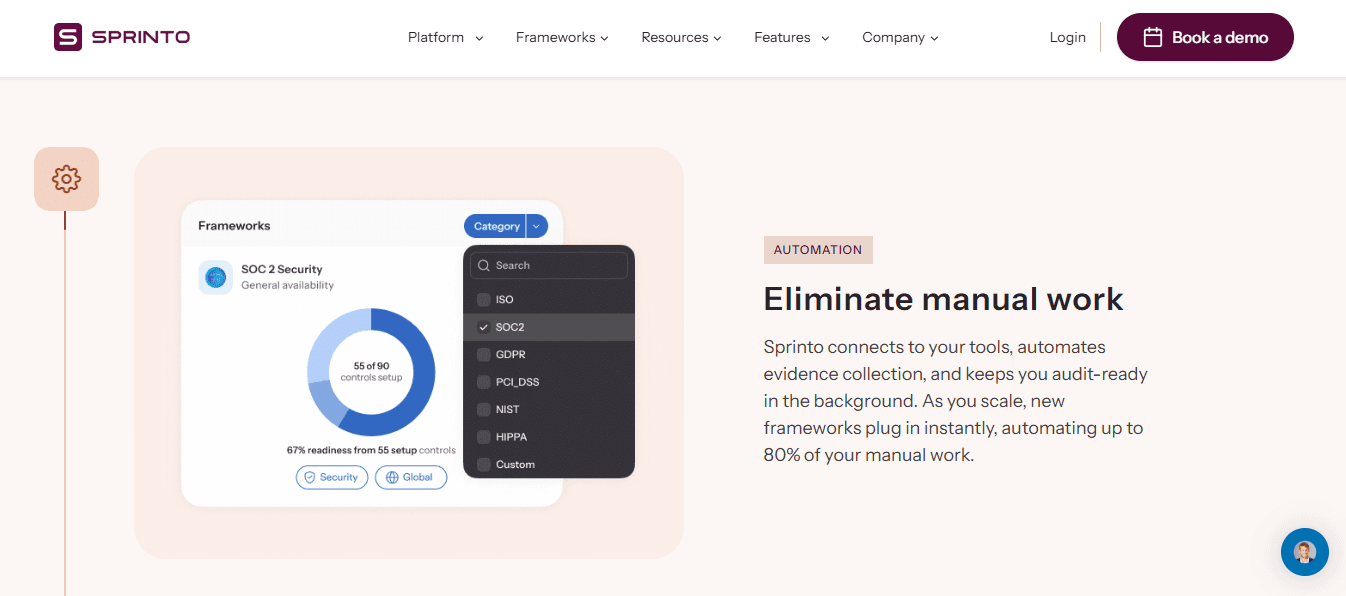
Sprinto is built for cloud-native SaaS companies that need to move quickly across multiple compliance frameworks without scaling their compliance team at the same pace. It supports around 20 frameworks and integrates with over 200 tools, with automated tests running twice daily to keep control status current.
Where Sprinto differentiates itself is in how it handles operational controls, not just technical ones. It automates both sides, which reduces the manual follow-up that teams typically handle themselves on other platforms.
The limitation is that Sprinto works best in relatively standard environments. Companies with heavily customized governance workflows or unique compliance requirements often find the preset framework approach less adaptable than they need.
How to Choose the Right Alternative
The right platform depends on what you actually need from compliance, not just which one gets you certified fastest.
If security depth is the priority and you want real penetration testing alongside your compliance program, Uproot Security fills that gap in a way no pure compliance platform does.
If you need broad framework coverage and a large integration ecosystem as you scale, Vanta is the most flexible option but carries the highest cost.
If you're engineering-led and want deep technical automation tightly integrated with your development workflow, Drata is the stronger fit.
If you want guided compliance with a human expert walking alongside your team, Scytale delivers that without requiring an in-house GRC hire.
If you're growing fast and need to manage multiple frameworks simultaneously without adding headcount, Sprinto is built for exactly that scenario.
Comparison Table
| Platform | Best For | Frameworks | Pentest Depth | Pricing Transparency | Human Support |
|---|---|---|---|---|---|
| Uproot Security | Security-first teams | SOC 2, ISO 27001, HIPAA, PCI DSS | Deep, manual | Yes | Dedicated testers |
| Vanta | Scale and integrations | 35+ | Third-party only | No | Standard |
| Drata | Engineering-led teams | 20+ | Third-party only | No | Standard |
| Scytale | Guided compliance | SOC 2, ISO 27001, HIPAA, GDPR, PCI DSS | Third-party add-on | Partial | Dedicated expert |
| Sprinto | Multi-framework speed | 20+ | Third-party only | No | Guided workflows |
Final Thoughts
Delve works well for what it's designed to do. But compliance automation and security validation are two different things, and most platforms in this space, including Delve, treat penetration testing as an afterthought bundled into an audit package rather than a core part of what they offer.
If you're serious about knowing whether your systems actually hold up under attack and not just whether your documentation satisfies an auditor, that gap matters.
Book a demo with Uproot Security to see what that looks like in practice.
Vendor Evaluation & Alternatives