VAPT: Testing, Audit, Report & Cyber Security Explained
vapt testing, vapt report, vapt meaning, vapt service, vapt audit, vapt in cyber security, vapt solutions, vapt company
Robin Joseph
Senior Security Consultant

Ever wonder if your systems are actually secure—or are you just hoping for the best? Hoping isn’t a strategy, and guessing won’t keep hackers out. That’s where VAPT comes in: Vulnerability Assessment and Penetration Testing. It’s your reality check for cyber defenses.
Most security tools flag potential issues. VAPT goes a step further—it proves what can go wrong if you leave gaps unpatched. Vulnerability Assessment scans relentlessly, spotting every weak point. Penetration Testing puts on the hacker hat, actively exploiting vulnerabilities to show what happens when defenses fail. Together, they give a full picture: breadth, depth, and actionable insight.
It’s not just about finding flaws. VAPT helps you stay compliant with standards by combining automated scanning with expert-led testing to uncover weaknesses across your environment. This balanced approach reduces blind spots and surfaces risks that tools or manual reviews alone often miss. By blending speed with human judgment, VAPT delivers clearer visibility and more accurate results, helping teams focus on vulnerabilities that truly matter.
Your threats don’t rest—neither should your security checks.
What is VAPT in Cyber Security?
VAPT, or Vulnerability Assessment and Penetration Testing, is a structured approach to evaluating an organization’s security posture. It examines networks, applications, APIs, and infrastructure to identify potential weaknesses and prioritize them based on risk, helping teams focus on what matters most.
By combining automated scanning tools with human expertise, VAPT uncovers vulnerabilities that machines alone might miss. This proactive approach provides organizations with a clear picture of their attack surface, allowing them to strengthen defenses before attackers exploit gaps.
Beyond detection, VAPT supports regulatory compliance with widely adopted standards such as ISO 27001 for information security management, PCI DSS for protecting cardholder data, and GDPR for safeguarding personal data. It forms a critical part of modern cybersecurity programs, offering actionable insights, informed decision-making, and a solid foundation for managing security risks across the enterprise.
Understanding Vulnerability Assessment vs Penetration Testing
Before exploring the differences between VA and PT, it’s helpful to understand the VAPT meaning—Vulnerability Assessment and Penetration Testing together provide a complete approach to evaluating security.
Vulnerability Assessment (VA) and Penetration Testing (PT) are often confused, but they serve different purposes. VA identifies potential weaknesses, while PT actively tests how those weaknesses can be exploited. Both are essential for a strong security posture and provide complementary insights into risk.
Vulnerability Assessment (VA)
VA is your broad-stroke security scanner. It finds weaknesses without disrupting systems.
What VA does:
- Runs automated scans against known vulnerability databases
- Covers networks, applications, servers, and endpoints
- Generates detailed reports with CVSS severity scores
- Fast, cost-effective, and ideal for routine checks
VA helps organizations maintain a consistent security baseline. Regular assessments—weekly, monthly, or quarterly—ensure vulnerabilities are identified early. It’s a proactive approach that prevents attackers from exploiting known gaps. Over time, VA helps teams understand patterns of risk and prioritize remediation efficiently.
Penetration Testing (PT)
PT takes security a step further by simulating real-world attacks.
The PT process:
- Pre-engagement planning: define scope, objectives, and rules of engagement
- Intelligence gathering: collect detailed information on targets
- Vulnerability assessment: identify weak spots
- Exploitation: attempt to breach systems safely
- Post-exploitation: assess potential damage and impact
- Reporting: document findings with proof and actionable recommendations
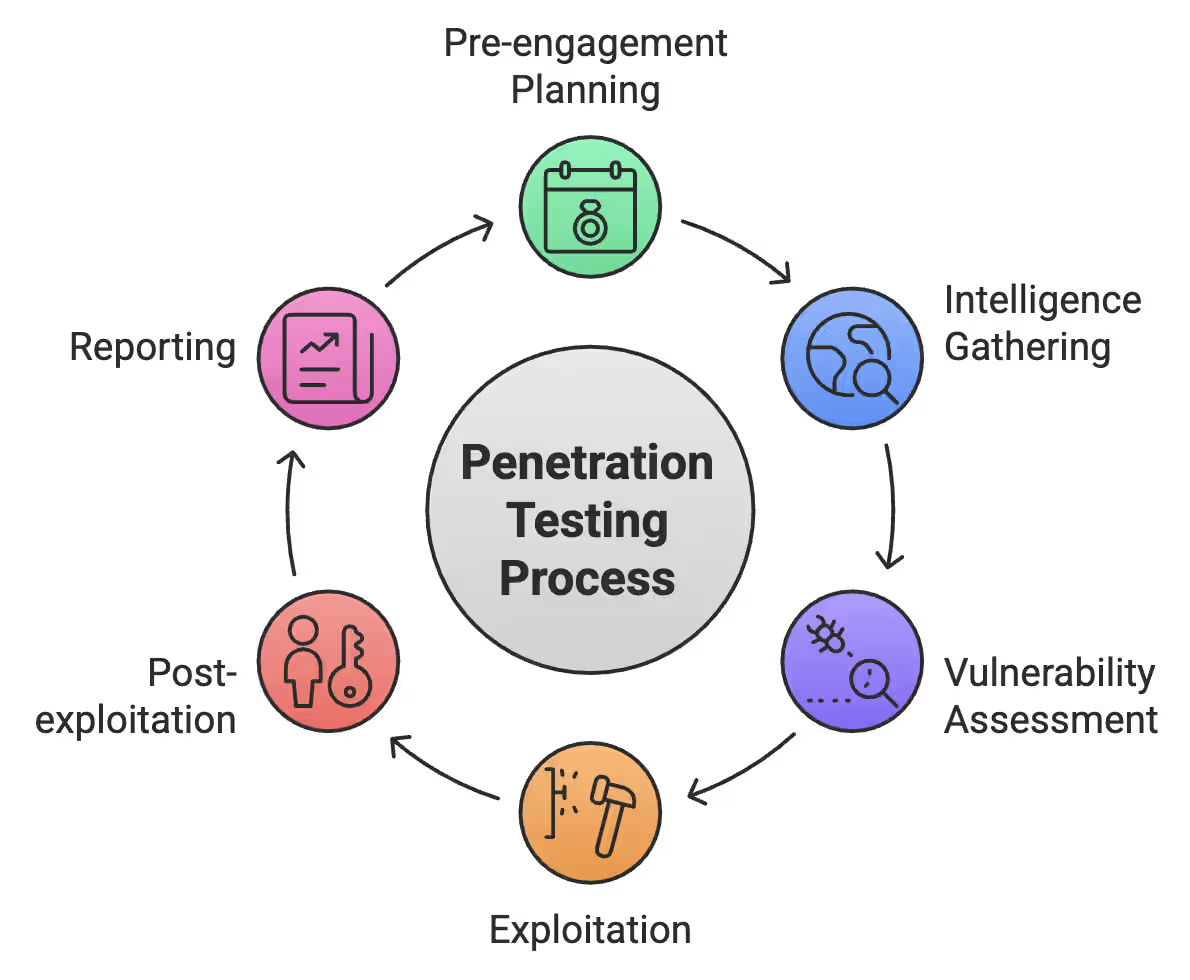
PT is point-in-time testing, focused on vulnerabilities that matter most. It demonstrates actual consequences, validates security controls, and builds awareness across teams. PT also helps organizations understand attack pathways and potential business impact, not just technical gaps.
Deciding Between VA, PT, and Full VAPT
Security isn’t one-size-fits-all. The right approach depends on goals, risk appetite, and compliance needs:
Vulnerability Assessment (VA)
- Routine health checks
- Baseline security
- Large asset coverage
- Cost-effective
Penetration Testing (PT)
- Proof of real-world impact
- Compliance requirements (PCI-DSS, HIPAA, SOX)
- Critical launches or projects
- Security validation
Full VAPT (VA + PT)
- Comprehensive coverage
- Fewer false positives
- Meets strict compliance
- Layered, serious security program
Smart organizations integrate both VA and PT into a continuous, holistic program that uncovers, proves, and remediates vulnerabilities before attackers can exploit them.
Types of VAPT Testing Approaches
The difference between these testing approaches? It’s all about how much your security team knows before hunting for vulnerabilities. Each method simulates a different type of attacker.
Black Box Testing: Simulating External Attacks
Black box testing is exactly what it sounds like. Testers get zero inside information about your systems. They start from scratch, just like real attackers would.
What makes black box testing realistic:
- Testers work blind, with no prior system knowledge
- Rely on external probing and reconnaissance
- Mirrors how actual cyber criminals operate
- Focuses on what outsiders can realistically reach and exploit
This approach shows what external attackers can discover. Approximately 34% of attacks come from insiders, meaning most threats are external and start with zero knowledge. Black box testing reveals exactly what those attackers see.
White Box Testing: In-Depth Internal Security Review
White box testing flips the script. Testers get full access to source code, credentials, documentation, and internal systems.
What white box testing covers:
- Source code review and static analysis
- System configurations and infrastructure setup
- Architecture, data flow, and logic patterns
- Internal APIs and interfaces
This method catches vulnerabilities external testing might miss. Combining static and dynamic analysis significantly reduces the chances of missing critical flaws. White box testing validates whether internal security works as designed, rather than simulating an external attack.
Gray Box Testing: Insider Threat Simulation
Gray box testing sits in between. Testers get some system knowledge—usually what a regular user might see.
Gray box testing focuses on:
- Simulating compromised user accounts
- Testing user-level access controls
- Evaluating privilege escalation potential
- Balancing thoroughness with efficiency
Gray box testing highlights the risks when someone with limited access tries to exploit weaknesses. It bridges the gap between external and internal testing, giving a realistic view of potential insider and partially informed attacker threats.
VAPT Services and Tools
Modern VAPT solutions don’t rely on outdated tools. The security landscape moves fast, and your toolkit needs to keep up. Security teams cover multiple domains, each demanding specialized tools. Here’s what actually works.
Web Application and API Security Testing
Burp Suite sits at the top for a reason. It handles everything from initial reconnaissance to full vulnerability exploitation.
What makes Burp Suite effective:
- Request interception and manipulation that actually works
- Automated scanning (paid version)
- Customizable tests via plugins and scripts
- Clear vulnerability reporting
OWASP ZAP (Zed Attack Proxy) brings serious open-source power to web application security. It catches common vulnerabilities like cross-site scripting and SQL injection and handles API security through OpenAPI/Swagger imports that map endpoints automatically.
- Predefined attack scripts for common vulnerabilities
- Free and open-source
- Ideal for budget-conscious teams
Even with the best tools, success depends on how they’re used. Burp Suite offers polish and power, ZAP delivers open-source flexibility—pick what fits your team, and use it smartly.
Network, Cloud, and Wireless Security Tools
For infrastructure testing, these tools dominate:
-
Nessus: Comprehensive vulnerability scanning, point-in-time analysis, compliance checks (HIPAA, ISO, NIST, PCI-DSS)
-
Metasploit Framework: Open-source platform to exploit vulnerabilities safely, simulate attacks, and test cloud environments
-
Prowler: Cloud-focused security audits and compliance scanning
Each tool addresses a different layer of modern infrastructure, giving a complete view of network, cloud, and wireless security.
Mobile Application Security Testing Tools
Mobile Security Framework (MobSF) is the go-to platform for mobile app VAPT.
MobSF capabilities:
- Static and dynamic analysis of apps
- Source code security evaluation
- Malware detection
- Integration with DevSecOps pipelines via REST APIs
MobSF automates mobile security testing, eliminating manual grunt work and making VAPT audits faster and more reliable.
At the end of the day, tools only matter if the team using them knows how to leverage them effectively. Choose based on actual security needs, not marketing hype.
VAPT Audit Process
Want the real story on VAPT audits? No fluff, no corporate speak—just the process that separates effective security testing from checkbox exercises. VAPT audits give organizations a clear, actionable picture of their security posture and highlight gaps before attackers do.
These are the steps of a VAPT audit:
- Scoping and Planning
- Vulnerability Scanning and Penetration Testing
- Reporting and Rescan
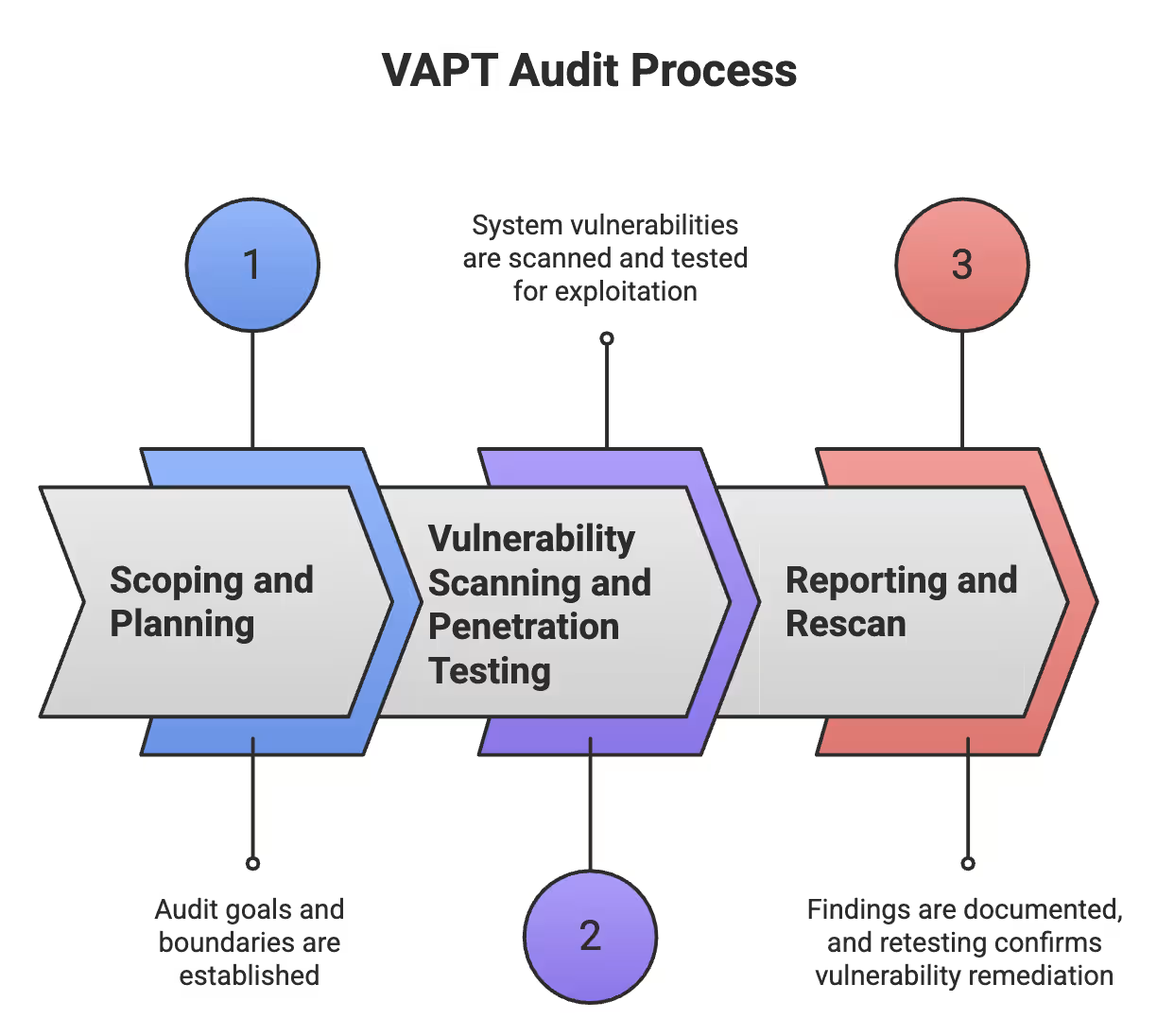
Let’s get into each of these and see what makes them essential.
1. Scoping and Planning the VAPT Audit
Most projects succeed or fail right at the start. Smart organizations nail down exactly what they’re testing and why:
- Define clear boundaries and objectives upfront
- Identify target systems, apps, and networks
- Agree on testing windows to avoid downtime
- Choose the right methodology—OWASP, NIST, or other frameworks
Plan carefully: approximately 67% of security pros say scope creep inflates costs. A well-scoped audit saves time, money, and headaches, and ensures tests produce meaningful, actionable results.
2. Vulnerability Scanning and Penetration Testing
Once planning is done, the detective work begins.
Step 1: Automated scans flag potential security gaps across networks, applications, servers, and endpoints, giving a broad view of weak spots.
Step 2: Human experts verify findings, filter out false positives, and attempt real exploitation to see which vulnerabilities can actually be leveraged.
Post-exploitation testing shows exactly what attackers could do if they got inside. Machines find everything, humans understand what matters—together, that’s where real insight happens.
3. Reporting and Rescan Steps
The final phase turns technical discoveries into actionable business intelligence:
- Score vulnerabilities using CVSS standards
- Executive summaries translate tech-speak for stakeholders
- Provide clear remediation priorities
- Verification testing proves fixes worked
Structured reporting increases efficiency—organizations fix more critical vulnerabilities faster.
VAPT isn’t a one-and-done exercise; quarterly checks for critical systems and annual full audits keep defenses sharp. Continuous reassessment ensures new vulnerabilities are caught early. Threats never stop, and neither should your security testing.
VAPT Report: Key Elements and Usage
Your VAPT report isn’t just another file—it’s the roadmap that shows exactly where your security stands and what needs fixing. Without actionable insights, finding vulnerabilities is pointless. A well-structured report turns raw data into guidance that both executives and technical teams can actually use.
Executive Summary for Stakeholders
Executives don’t need technical jargon—they need the business story:
- Security posture rating: are we exposed or in control?
- Risk assessment explained in plain language
- Vulnerability stats tied to business outcomes
- Timelines aligned with budgets and priorities
This section ensures leadership can quickly grasp risk and make informed decisions.
Technical Vulnerability Breakdown and CVSS Scores
This is where your technical team gets the tools to fix what’s broken:
- CVSS scores to prioritize real risks
- Step-by-step reproduction guides
- Screenshots and logs as evidence
- Clear remediation instructions that actually work
Post-analysis lets teams focus on what matters most—no guesswork, no noise.
Compliance Mapping: ISO 27001, PCI-DSS, HIPAA, SOC2, GDPR
Modern VAPT solutions don’t just flag vulnerabilities—they link each one to the rules you’re actually breaking. Your team immediately sees which regulations could be affected, making audits faster, remediation smarter, and fixes aligned with both risk, compliance priorities, and organizational policies.
Using the VAPT Report for Internal Audits and Security Decisions
Reports aren’t just for filing—they’re your security playbook:
- Rank vulnerabilities by actual risk
- Track progress over time
- Justify security investments
- Support compliance certification
Organizations using structured reports fix roughly 30% more critical vulnerabilities in the first month compared to those treating them as paperwork.
A VAPT report isn’t just a file—it’s your actionable guide to stronger, compliant, and measurable security. It helps teams prioritize fixes, track improvements over time, support audits, and make informed decisions that reduce risk effectively.
Choosing the Right VAPT Company
Not all VAPT companies are created equal. Some will take your money and hand over a fancy report full of false positives. Others will actually help you sleep better at night. The trick is knowing how to separate the real pros from the pretenders.
Evaluating Methodologies: OWASP, PTES, NIST
Ask a provider about their methodology—it reveals everything. The good ones follow proven frameworks:
-
OWASP Testing Guide – Fast, practical, catches the most common web vulnerabilities efficiently.
-
PTES (Penetration Testing Execution Standard) – Thorough and deep, leaving no stone unturned. Ideal when you want every vulnerability discovered.
-
NIST SP 800-115 – Perfect for regulatory compliance and auditors. Checks all the right boxes.
If they mumble about “proprietary methods” or can’t name a standard, run.
Manual vs Automated Testing Capabilities
Here’s what separates amateurs from experts:
-
Manual testing – Humans thinking like attackers. Finds creative, high-impact vulnerabilities scanners often miss. False positives? Almost zero.
-
Automated testing – Fast, broad coverage, runs daily. But predictable, less nuanced.
The best VAPT solutions combine both. Machines cover everything quickly; humans focus on what really matters. Together, they uncover vulnerabilities that otherwise slip through unnoticed, giving a realistic view of actual security risk.
Post-Audit Support and ROI Considerations
This is where true expertise shows. Real pros don’t just drop a report—they stick around to help you fix what’s broken. Look for:
- Clear remediation guidance
- Retesting to confirm fixes work
- Risk scoring to prioritize resources efficiently
- Reports that speak to both IT teams and executives
Security testing isn't a compliance theater. It’s about making your business safer, smarter, and more resilient.
Bottom line: choose a partner, not just a vendor. Someone who guides you, proves results, and helps you stay ahead of real threats—not just check boxes.
Why VAPT Is Critical for Modern Cyber Security
Let’s be real: most organizations treat VAPT like a checkbox—get the audit, tick the box, move on. That’s exactly how you stay exposed. VAPT isn’t just for compliance; it uncovers gaps before attackers do, maps your full digital footprint—networks, apps, APIs—and highlights the vulnerabilities that actually matter.
VA and PT aren’t competitors; they’re partners. VA gives the big picture. PT shows what happens when that picture fails. Together, they provide a clear, actionable reality check for your security posture.
Threats never slow down. Tens of thousands of new vulnerabilities appear every year. One-off tests are like buying a smoke detector and never checking the batteries. Continuous, strategic VAPT is how organizations stay ahead.
Smart teams use VAPT to strengthen defenses, protect their reputation, and build trust. They turn testing into an advantage—because good security isn’t just about avoiding breaches; it’s about operating confidently without looking over your shoulder.
Build trust and stop breaches before they happen with UprootSecurity — where VAPT feeds directly into GRC for security that actually holds up in the real world.
→ Book a demo today
Pentesting & Offensive Security