Most teams don't leave a compliance tool because it stopped working. They leave because passing the audit stopped telling them anything about their security. Here's an honest look at where the two of us differ.
Continuous monitoring across cloud, identity, code and vendors, not a once-a-year snapshot
Every artifact hashed, signed and versioned the moment it lands
An MCP server you can read the permissions of before you connect it
A named owner on your account in your working hours
Compliance frameworks covered: SOC 2 · ISO 27001 · ISO 42001 · HIPAA · GDPR · PCI DSS v4.0.1 · NIST CSF 2.0 · DORA · and 14 more
Not opinions. Every point below traces back to a public source, Sprinto's own pricing page or a verified review.
Evidence filed into a platform should be visible, verifiable and yours. If you can't open it, you can't defend it, and you can't tell what your auditor is looking at.
Every artifact you file is hashed, signed and yours to verify offline, without depending on us to tell you it's real.
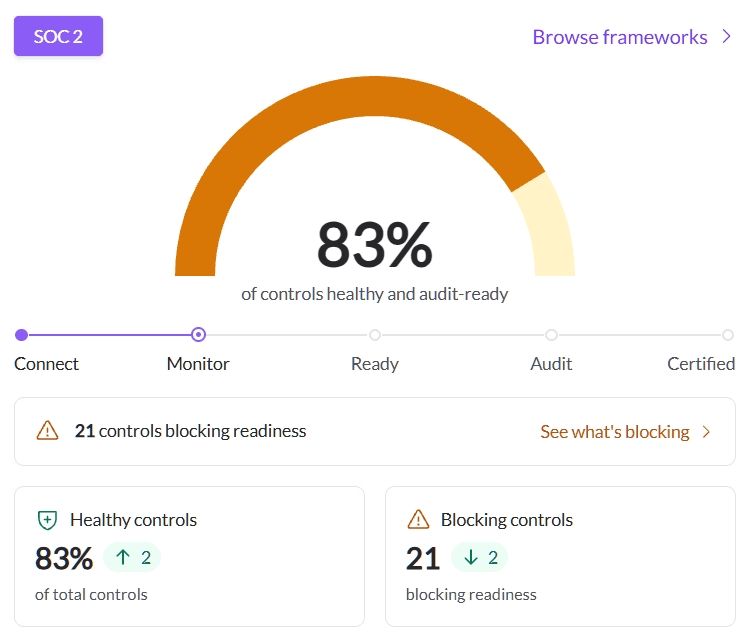
Most compliance platforms tell you what passed a year ago. Uproot runs 1,247 checks across cloud, identity, code, endpoints, data and vendors, most on a 15-minute cycle, so a real gap gets caught in minutes, not months.
86% of drift is auto-resolved with a 14-minute median time to fix, before it becomes an audit finding.
On Sprinto's own published plans, Slack and Teams support and a dedicated success manager sit on the Growth tier. On the entry plan you get email. During an audit, that is the wrong time to be waiting.
"Responses to simple questions take up to two weeks." Verified G2 review of Sprinto
The places the two products actually diverge: automation depth, AI access, and how much of compliance actually runs itself.
| Capability |  UprootSecurity UprootSecurity | Sprinto |
|---|---|---|
| MCP for AI assistants | Yes | Yes |
| MCP write actions | Yes | Yes |
| Automated security controls | ~60–70% automated | Limited |
| Automated vendor management | Yes | Limited |
| Automated risk assessment | Yes | Yes |
| Dedicated team support for US time zone | Yes | Limited |
Where Sprinto is ahead: more frameworks (25+ automated vs 22), more integrations (300+ vs 142), and a larger install base (3,000+ customers, 1,600+ G2 reviews at 4.7/5). We've said so on purpose, you'd find it anyway.
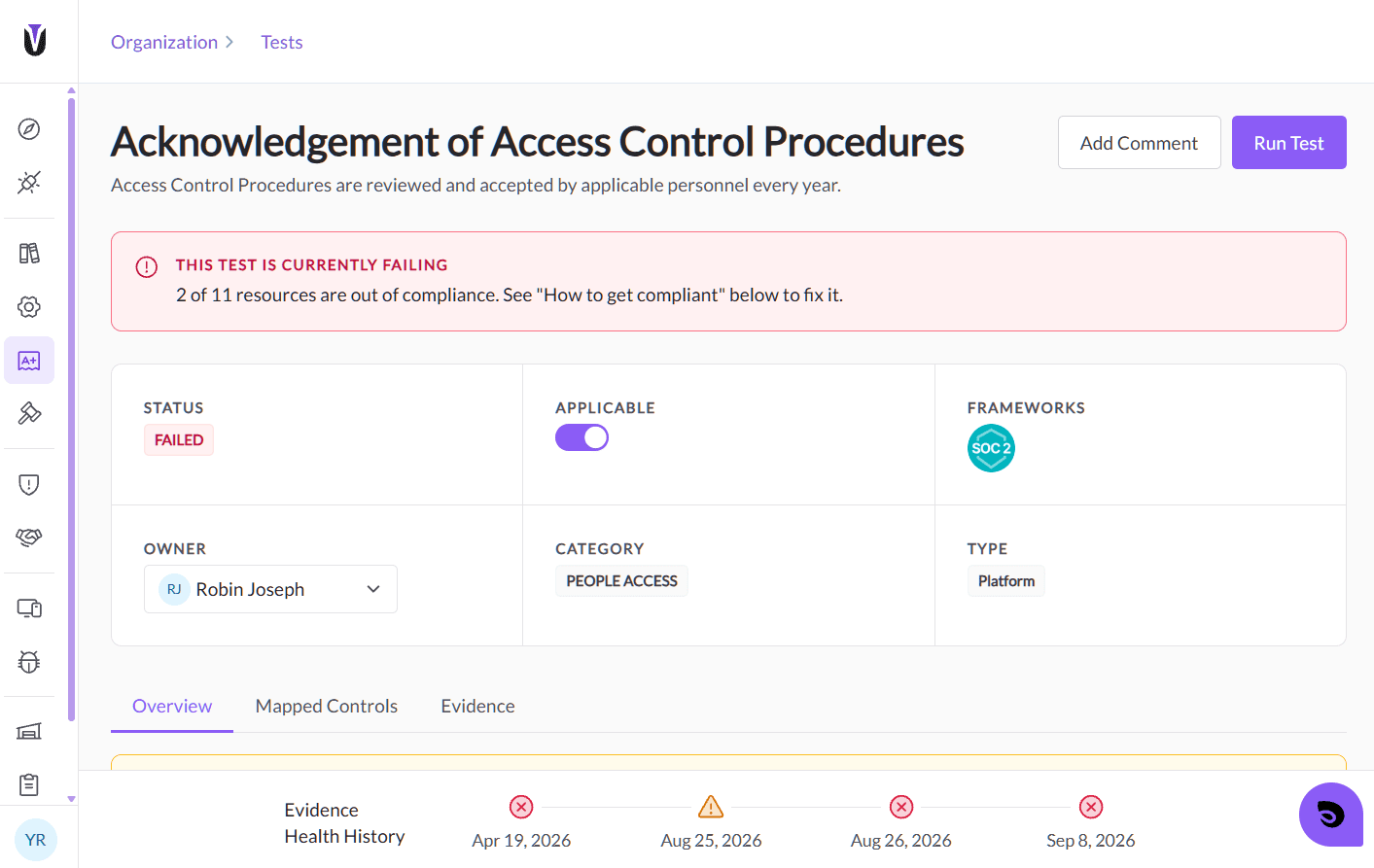
Every artifact is pulled from the system of record, fingerprinted the moment it lands, and sealed. You can check any item yourself and prove it hasn't changed, offline, without us.
sha256 fingerprint at write-time, ed25519 signature, write-once storage
Full version history, retained for your framework's period, typically 7 years
Stale evidence auto-queues a re-pull, so you see it before your auditor does
Export the entire library as a structured archive you own
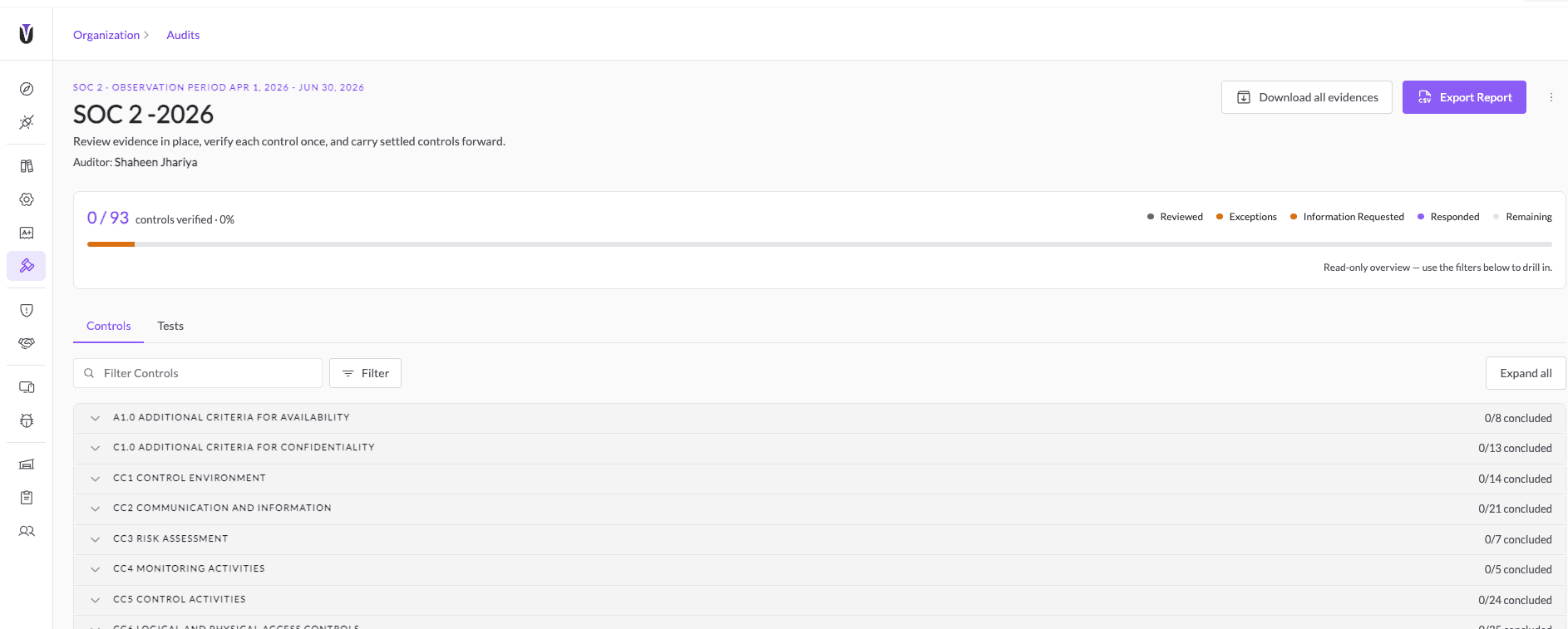
Grant scoped, read-only access to one framework, one period, one control set. It expires on a visible countdown and revokes in one click, and every view your auditor makes is recorded.
Who looked at what, and when, is captured immutably
No write path to your systems, no data export, SSO enforced
Zero email attachments
3 days median fieldwork, down from three to four weeks
Point Claude Code or Cursor at Uproot and let it triage failing tests, file evidence, run vendor reviews and draft policies. Then read exactly what it is and isn't allowed to touch, because we published it.
Reads open to every role. Writes require Owner or Administrator
It cannot delete a test, policy, vendor or risk. That capability does not exist
It cannot reach another organisation or act as a different user
File evidence and the test re-evaluates itself, then you open it and check
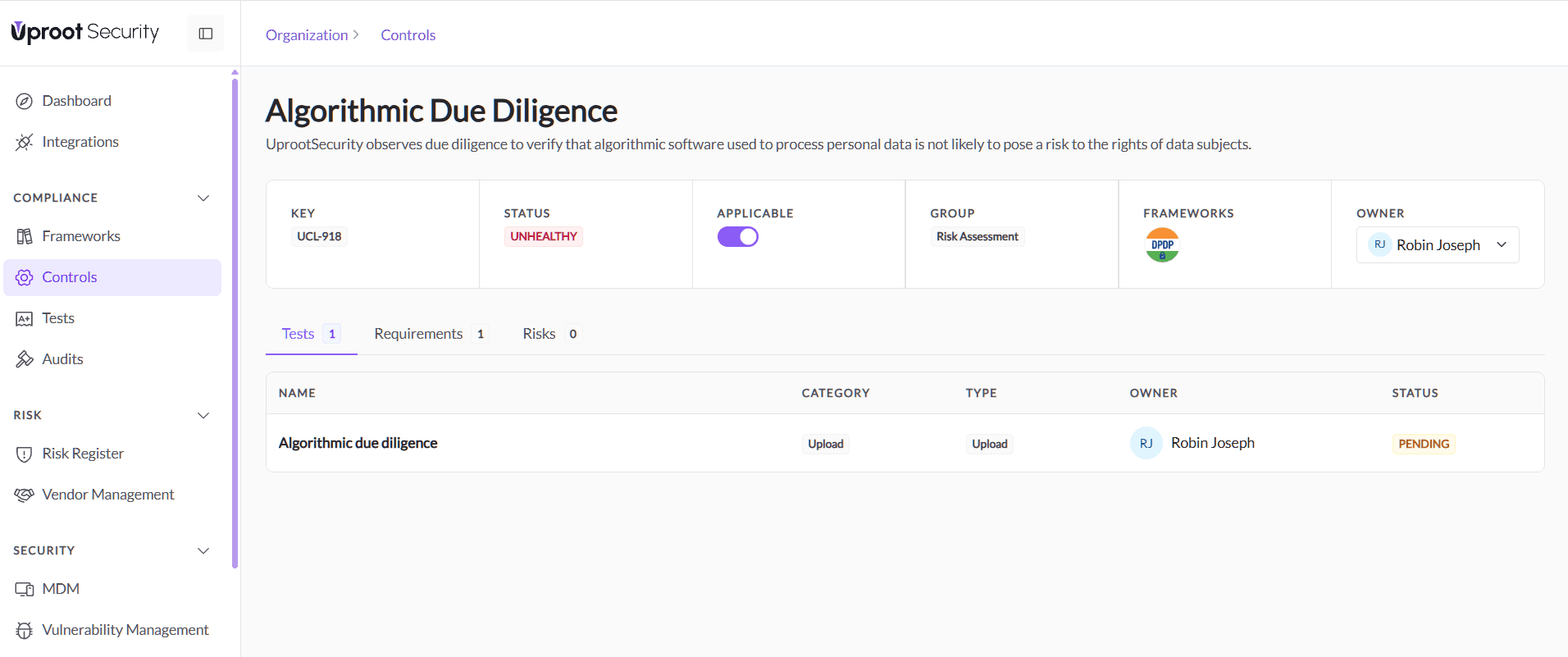
1,247 production-grade tests across cloud, identity, code, endpoints, data and vendors. Most run every fifteen minutes, with event hooks on AWS, Okta and GitHub where they exist.
High severity to PagerDuty with inline diffs, the rest to Slack with a rollback
Fixes as Terraform, IAM JSON or Kandji blueprints, reviewable, not a black box
Intentional changes matched to an open PR auto-snooze, so alerts stay meaningful
86% of drifts auto-resolved in the last 30 days, 14-minute median
Every vendor in this market is selling autonomous agents. Here is our published list of the decisions we deliberately keep human, because an auditor needs a name and a reason behind each one, not an assertion with nobody accountable behind it.
Approving and publishing a policy
Accepting and scoring a risk
Assigning a vendor's risk tier
Answering a vendor questionnaire
Completing a vendor review
Deciding what enters the risk register
SOC 2 and ISO 27001 should be byproducts of being secure, not the product you bought.
Continuous risk monitoring and vendor breach alerts cost extra, on top of the platform
Security testing happens once a year, on a date in a contract
Findings arrive as a PDF that someone has to translate into tickets
The dashboard is green while an unauthenticated endpoint is live
You pass the audit and still don't know if you'd survive an attacker
Drift is caught and fixed automatically, inside the platform you already pay for
1,247 checks running continuously, not once a year
Findings arrive with the payload, the blast radius and a fix as a PR
Every one of those checks is also your signed evidence for SOC 2, ISO 27001 and PCI
The certificate is the byproduct. Being secure is the product
We know. It's the single most common reason people stay somewhere they've stopped recommending. So we built the move around your audit window, not ours.
Export your evidence, policies, and control mappings from your current tool and we import them for you, with files, dates, and approvals intact. Nothing gets re-collected just because the logo changed, and your completed controls stay completed.
Yes, you keep your audit firm and your current audit period. Your auditor gets a read-only portal invite, works from the evidence already in place, and never has to re-learn a control library mid-engagement.
One named engineer owns your migration and stays on after it. You get a shared Slack channel with them from the first call. Not a ticket queue, not a rotating CSM, and not an upsell on a higher plan.
Book 30 minutes. Connect a read-only role. See your posture, your evidence, and what HackBot finds, before you decide anything.
About this comparison. Claims about Sprinto are drawn from Sprinto's own published pricing, support and documentation pages and from verified customer reviews on G2, Capterra, PeerSpot and Software Advice. Claims about UprootSecurity are drawn from uprootsecurity.com and help.uprootsecurity.com. Product capabilities on both sides change; figures were checked on 8 October 2026. Sprinto is a trademark of its respective owner; this page is published by UprootSecurity and is not endorsed by Sprinto.
