Cyber Risk Scores: How to Understand, Measure, and Manage Risk

Robin Joseph
Senior Security Consultant

Ever wonder why some companies dodge disasters while others get blindsided by threats they never saw coming? The difference isn’t luck—it’s a solid cyber risk score. Whether you’re measuring cybersecurity threats, vendor exposure, or fraud likelihood, risk scores turn invisible dangers into numbers your team can act on.
Think of risk scores as your organization’s threat radar. They take messy, complicated risks swirling around your business—financial, operational, or cybersecurity—and turn them into a single number. Higher numbers, bigger problems. Simple but powerful.
Why care? Flying blind is expensive. Banks use risk scores to decide who gets a loan. Hospitals use them to keep patients safe. Cybersecurity teams rely on them to spot vulnerabilities before hackers do. Even compliance teams use them to avoid fines or breaches.
Risk scores show which fires to put out first, get everyone speaking the same language about threats, guide fact-based decisions, allocate budgets wisely, and keep regulators satisfied. Without them, you’re throwing darts blindfolded.
Understanding Risk Scores and Why They Matter
A risk score is a numerical representation of potential threats to your organization. It takes messy, complex risks—from cybersecurity gaps to operational weaknesses—and turns them into a single number you can understand. Higher scores mean higher risk; lower scores indicate less danger.
Think of it like a dashboard for decision-making. Instead of guessing which risks are urgent, risk scores highlight the areas that need attention first. They create a shared language across teams, so finance, security, and operations can all agree on what’s truly critical.
Risk scores aren’t pulled from thin air. They’re calculated using data, historical trends, and statistical models. This can include metrics like vulnerability severity, likelihood of fraud, vendor reliability, or potential financial impact. Regular updates keep the score accurate as conditions change.
The best risk scores are clear, actionable, and easy to interpret. They help organizations prioritize efforts, allocate resources wisely, and make informed decisions—turning uncertainty into manageable, measurable actions.
Types of Risk Scores and Their Applications
Not all risks are created equal. And neither are the scores that measure them. Each industry has its own flavor of chaos. Banks worry about credit defaults. Hospitals focus on patient safety. Tech companies lose sleep over data breaches. Understanding the different types of risk scores helps you turn complex threats into clear numbers and actionable decisions.
The main types of risk scores are:
- Cybersecurity Risk Score
- Fraud Risk Scoring
- Vendor Risk Scoring
- Polygenic Risk Score Test
- Ausdrisk Score
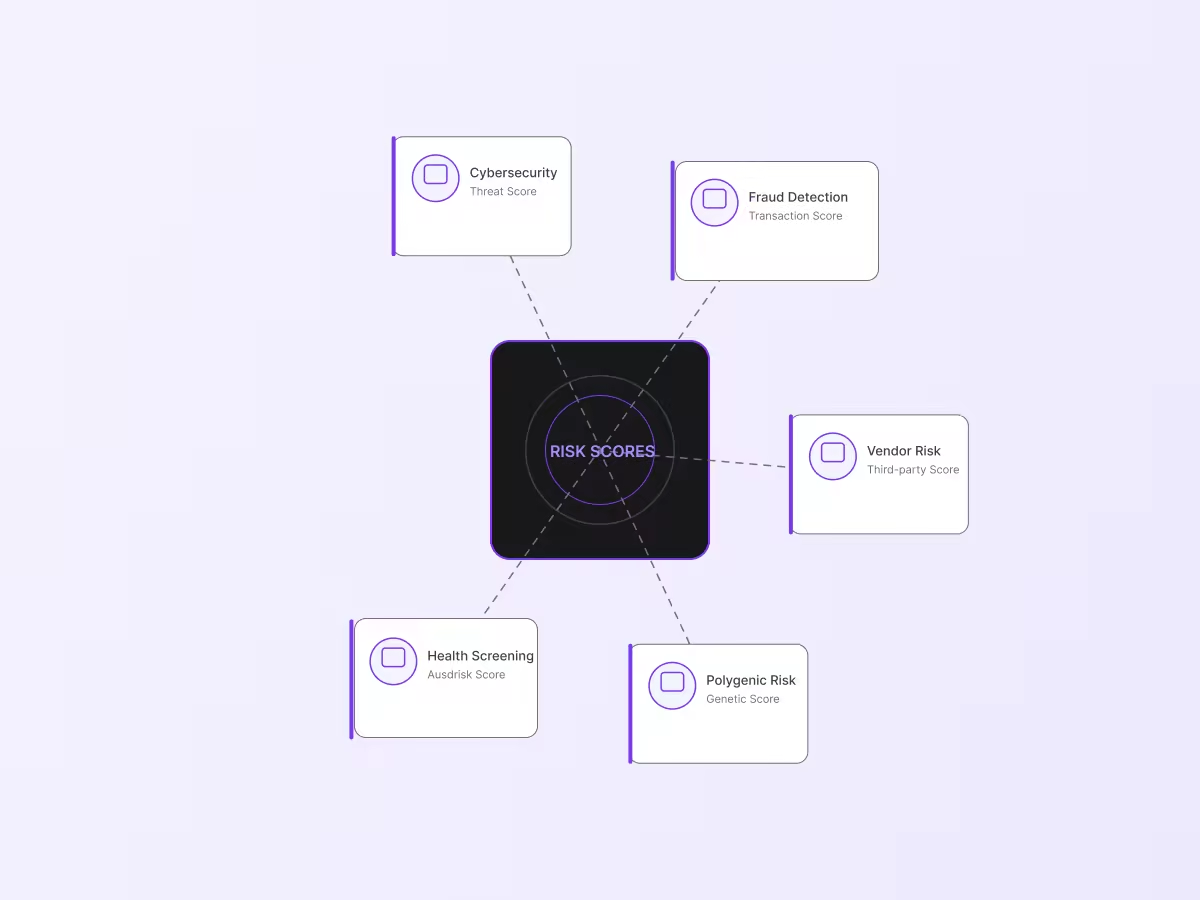
Let’s get into each of these and see what they actually do for you.
1. Cybersecurity Risk Score
This is your security team’s best friend. Cybersecurity risk scores turn digital vulnerabilities into hard numbers. They help you:
- Figure out which threats deserve your attention first
- Decide where to spend your risk management budget
- Spot future problems before they bite you (thanks to AI and machine learning)
Per NIST SP 800-30, risk is decomposed as: Risk = Threat Source → Threat Event → Vulnerability → Predisposing Conditions → Impact. It basically means “here’s how badly things can go wrong, step by step.”
2. Fraud Risk Scoring
Fraud scores act like a digital bouncer for online transactions. They help you:
- Spot sketchy behavior patterns before money disappears
- Check if billing addresses match shipping addresses
- Decide whether to approve, block, or investigate a transaction
Banks use these to catch unusual activity—like five large purchases at 3 AM.
3. Vendor Risk Scoring
Third-party vendors can be your weakest link. Vendor risk scoring tells you:
- Which partners might cause problems
- Who needs extra monitoring
- Whether to continue working with someone
Many vendor risk platforms use a Gaussian-weighted mean — a scoring method that weighs the worst issues most heavily, ensuring critical problems get prioritized for action.
4. Polygenic Risk Score Test
PRS looks at your genes to predict disease risk. It:
- Gives personalized health predictions based on your DNA
- Combines data from multiple genetic studies
- Works better than single-marker tests
Polygenic risk scores turn complex genetics into actionable health insights.
5. Ausdrisk Score
Australia’s 10-question test predicts diabetes risk over five years. It asks about:
- Age, family history, and lifestyle factors
- Habits that may need adjusting immediately
Score 12+? Time to pay attention. Score 20+? One in three people like you may develop diabetes.
How Risk Scores Are Calculated and Interpreted
Look, you don’t need a PhD to understand risk scores. The basic formula is simple:
Risk Score = Likelihood × Impact
How likely is something bad to happen? How much will it hurt if it does? Multiply those together and you’ve got your number. Easy.
Qualitative vs. Quantitative Scoring Models
Some teams love numbers, others trust their gut. Smart organizations use both.
-
Qualitative models rely on expert judgment and terms like low, medium, high. Perfect for brand-new threats or when data is scarce.
-
Quantitative models crunch hard numbers using historical data and stats. Calculating Annual Loss Expectancy (ALE)? This approach shows exactly how much money you might lose over a year.
Most successful organizations blend both—numbers where possible, judgment where needed. We recommend starting with qualitative scoring for emerging threats where historical data is thin, then layering in quantitative models like FAIR as your data matures. Trying to go fully quantitative from day one is a common mistake that stalls risk programs for months.
NIST Cyber Risk Scoring Framework (CSF & RMF)
NIST gives a solid foundation for risk scoring:
- Weight your controls 1–10 based on importance
- Rate assets for Confidentiality, Integrity, and Availability
- Sum component risks for a complete picture
This makes it easy to compare risks across systems—like email versus databases—apples to apples.
Cyber and IT Security Scorecards
NIST Cybersecurity Framework scorecards turn technical metrics into business language. They show:
- Where you stand in each security category
- Current risk versus leftover risk after controls
- What the scores mean for your bottom line
Scorecards make technical risks clear and actionable for business decisions.
Gaussian-weighted Mean in Vendor Risk Ratings
When rating vendors, many systems use a Gaussian-weighted mean. Fancy name, simple idea: the worst problems get the most attention.
- Prioritizes your riskiest vendors
- Weighs serious issues heavier than minor ones
- Predicts potential breaches better than simple averages
Ensures the most critical vendor issues get addressed first.
Security Risk Score Thresholds and Aligning with Risk Appetite
Risk scores are meaningless without thresholds. Clear rules matter:
- Below this number? You’re good
- Middle range? Double-check controls
- Above the red line? Stop everything and fix it
Set thresholds to match your risk appetite—how much risk your organization is willing to tolerate. Otherwise, your controls are just expensive paperwork.
Benchmarking and Measuring Risk Scores Effectively
Different industries face different threats. Different threats need different scores. Risk scores aren’t just numbers—they’re your decision-making compass. They tell you where to focus, how much to invest, and what might go wrong if you ignore them.
Mapping Risk Scores to Business Impact
Risk scores aren’t meaningful until you tie them to real outcomes. A number on a spreadsheet doesn’t pay the bills, but knowing what that number means for revenue, compliance, or operations does.
- High cybersecurity risk? Could mean downtime, stolen data, or regulatory fines.
- Elevated fraud risk? Lost revenue and damaged customer trust.
- Vendor risk score ticking up? Potential supply chain or security disruption.
By mapping scores to impact, you can prioritize efforts and spend your resources where they actually matter.
Using FAIR and CRQ for Quantitative Analysis
Numbers don’t lie—but only if you know how to interpret them. Quantitative models like FAIR (Factor Analysis of Information Risk) and CRQ (Cyber Risk Quantification) help:
- Translate likelihood and impact into dollar terms
- Calculate Annual Loss Expectancy (ALE) for projects and systems
- Compare risks across departments or assets consistently
This approach removes guesswork and gives executives something concrete to act on. In our security assessments, we’ve found that clients who adopt FAIR typically see risk committee discussions shift from gut-feel debates to data-backed prioritization within two quarters — the dollar figures make budget conversations significantly easier.
Metrics like MTTD, MTTR, Exposure Score
Operational metrics bring context to your scores. They let you track how well you’re actually managing risks:
- MTTD (Mean Time to Detect): How fast do you spot threats?
- MTTR (Mean Time to Respond): How quickly do you fix issues?
- Exposure Score: How much risk remains after controls are applied
These metrics turn abstract numbers into actionable insights, highlighting weak spots and measuring improvement over time.
Cyber Risk Scorecards and NIST Cybersecurity Scorecard
Scorecards translate raw risk numbers into business language. They show:
- Where you stand across security categories
- Residual risk after controls
- Areas needing immediate attention
NIST’s Cybersecurity Framework adds a layer of standardization, making it easier to compare risks across systems and departments. Scorecards turn technical data into decisions your leadership team can understand and act on.
Using Risk Scores for Decision-Making and Compliance
Having risk scores is one thing. Using them effectively? That’s where most organizations stumble. Risk scores aren’t just numbers—they’re decision-making tools. They show where to focus, how to allocate resources, and how to protect your business before things go sideways.
Integrating Cybersecurity and Fraud Scores in Reporting
Smart organizations don’t treat cybersecurity and fraud as separate problems. They connect the dots.
- Spot patterns between hacked accounts and suspicious transactions
- Make customer verification more accurate with combined data streams
- Update risk profiles in real time instead of quarterly
Transparency across teams isn’t fancy—it’s survival. Fraud teams and cybersecurity teams need to share insights immediately because threats don’t operate in silos.
Vendor Risk Scores in Procurement and Supply Chain Security
Not knowing which vendors are risky is worse than having risky ones. Vendor risk scoring is about survival, not paperwork.
- Align legal, procurement, and security teams on the same scoring system
- Turn debates into data-driven discussions
- Show auditors that you know your vendors and their risk exposures
This is especially critical in healthcare, finance, and regulated industries.
IT Security Scorecards for Audits and Internal Compliance
CISOs constantly ask: “Are we secure?” and “What are the risks?” Scorecards answer both—clearly.
- Highlight exactly where your organization stands without technical jargon
- Help justify budget allocation for key controls
- Provide documentation to support audits and investigations
Scorecards turn complex security data into clear insights that drive decisions and keep your organization audit-ready.
Automation of Risk Score Monitoring with GRC Tools
Compliance tools don’t have to feel like punishment. The best GRC platforms act like superpowers.
- Integrate risk scores, controls, audits, and vendor assessments in one platform
- Translate technical metrics into business impact executives understand
- Keep decision-makers informed so they can act quickly
At the end of the day, every risky conversation comes down to one question: “What’s this going to cost us?”
When risk scores are measured, interpreted, and applied effectively, they stop being abstract numbers and start driving smart, actionable decisions that protect your organization, your people, and your bottom line.
Improving Risk Scores with Actionable Strategies
You’ve got the scores. Now what? Numbers alone don’t protect your business—they just show where the problems are. The real value comes from acting on them. This section walks through strategies that turn raw scores into real, measurable improvements.
Remediation Workflows for Low Vendor Ratings
When vendors score poorly, shrugging isn’t an option. Smart companies turn those scores into action. Automated workflows assign tasks to the right teams, set clear deadlines, and give vendors portals to prove issues are fixed. No more “we’ll get to it eventually.” Either the problem gets resolved or the vendor gets replaced. This approach keeps your supply chain secure and accountability clear.
Reducing Fraud Risk with Behavior Analytics
Catching fraud after the fact is too late. Organizations track user behavior in real time, spotting suspicious activity before transactions complete. Machine learning detects fraud in milliseconds, blocking the majority of attempts without alerting customers. Proactive monitoring turns risk scores into prevention, protecting both your money and reputation while keeping operations smooth.
Boosting Cybersecurity Risk Ratings with Patch Management
Many security teams struggle to prioritize vulnerabilities. Risk-based patching focuses on the flaws that truly matter, using AI to filter out the noise. Patching everything is impossible, but patching the right things prevents incidents, reduces downtime, and optimizes resource use. This ensures security investments are focused where they have the most impact.
Security Awareness Training to Improve IT Scorecards
Employees are either your weakest link or strongest defense. Effective training reduces successful phishing attacks by up to 90% and drives measurable ROI. Tracking key metrics—like reported suspicious emails, containment speed, and repeat mistakes—turns your workforce into a proactive security asset.
Limitations and Challenges of Risk Scoring Systems
Risk scores aren’t perfect. Pretending they are is dangerous. Understanding their limits is just as important as knowing their strengths.
Lack of Continuous Monitoring
Most risk assessments are snapshots, not living measurements. Today’s score can be obsolete tomorrow. Traditional models treat everyone the same, missing behavior changes, emerging threats, or shifting regulations. Your risk landscape moves faster than your scoring system updates—and hackers notice.
False Positives in Cybersecurity and Fraud Scoring
False alarms drain attention and trust. Fraud systems flag harmless transactions, cybersecurity tools panic over every update. Teams start ignoring alerts, and the real threats slip through. Time wasted chasing ghosts means less time stopping real attacks. When your tools cry wolf too often, confidence evaporates.
Blind Spots in External-only Ratings
External ratings only tell half the story. They can’t see internal quirks, rogue servers, or outdated software tucked away in a corner. Relying solely on outsiders is like self-diagnosing with WebMD—you’ll miss the critical stuff that makes your organization unique.
Overreliance on Scores without Context or Validation
Treating numbers like gospel is a trap. A “7” in accounting doesn’t equal a “7” in warehouse operations. Scores ignore context, human judgment, and complex internal relationships. They’re tools, not crystal balls. Used wisely, they guide decisions. Used blindly, they mislead.
Understanding these limitations ensures risk scores remain a compass, not a crutch, helping you make smarter, more informed decisions without being fooled by the numbers.
Conclusion: Making Risk Scores Work for Your Organization
Look, we’ve covered a lot. Risk scores help you spot problems before they blow up. They turn confusing threats into clear numbers and show you where to spend your resources wisely.
But let’s be real—they’re not perfect. Sometimes they miss things. Sometimes they raise false alarms. The best organizations don’t treat them like crystal balls. They use scores alongside human judgment, industry knowledge, and common sense.
Start small. Pick an area—cybersecurity, vendor management, or fraud prevention. Build a simple scoring system, make it work, then expand. Behavioral analytics can block the majority of fraud attempts before transactions complete. Security awareness training consistently delivers strong ROI — organizations that track phishing click rates, incident response times, and repeat offender metrics see measurable improvement quarter over quarter.
Risk scores aren’t going away—they’re getting smarter and faster every year. Effective risk management isn’t about avoiding every threat. It’s about making smart choices with the information you have. Risk scores give you that clarity. What you do next is up to you.
Turn your risk insights into action, reduce vulnerabilities, and keep your organization secure with UprootSecurity.
→ Book a demo today
Risk & Vendor Management