What is GDPR? A Plain-English Guide for Startups

Robin Joseph
Senior Security Consultant

The General Data Protection Regulation (GDPR) is a global privacy law that controls how businesses collect, use, and protect personal data. Here’s GDPR explained simply: if your startup handles data from people in the EU, GDPR applies to you, no matter where you’re based.
It doesn’t matter if your servers sit in California or your team works out of Singapore. GDPR doesn’t care about geography or company size. If you process EU user data—even something as simple as email signups—you’re in scope from day one.
Since its launch in 2018, GDPR has reshaped how startups build products and handle data. With strict rules and heavy penalties, it pushes companies to treat privacy seriously from the start, not as an afterthought.
What is GDPR for Startups?
GDPR is more than a regulation—it’s a rulebook for how startups should handle user data responsibly. It defines personal data broadly, covering everything from names and emails to IP addresses, cookies, and even behavioral data. If data can identify a person directly or indirectly, it falls under GDPR.
For startups, “processing” data includes almost everything you do with it—collecting, storing, analyzing, or deleting. Whether you’re running analytics, managing a CRM, or backing up databases, you’re processing personal data under GDPR.
The regulation is built on core principles like transparency, data minimization, and accountability. Break these rules, and the consequences aren’t small—fines can reach up to €20 million or 4% of your global revenue.
It also gives users strong rights over their data, including access, correction, deletion, and portability. Add strict breach reporting timelines, and it’s clear: GDPR forces startups to build privacy into their products from day one.
Who Does GDPR Apply To (And When It Affects Your Startup)
Think GDPR only applies if you have a European office? Not even close. If your startup touches EU user data in any way, you’re already in scope.
Does Your Startup Fall Under GDPR Scope?
Most founders assume GDPR starts when they expand into Europe. Wrong. GDPR’s Article 3 defines two triggers: the establishment criterion (any EU presence) and the targeting criterion (offering services or monitoring EU users). You don’t need an office, team, or entity in Europe to fall under it.
In practice, this means even simple actions—like allowing EU users to sign up or tracking them through analytics—can bring you under GDPR. The law protects individuals based on where they are when their data is collected, not their citizenship. A US user in France is covered. An EU citizen in the US isn’t.
GDPR for US Companies: Territorial Reach and Implications
GDPR doesn’t wait for you to enter Europe—it follows your users. If your product shows signals of targeting EU audiences, compliance kicks in automatically. These signals include pricing in euros, offering EU languages, or shipping to EU countries. Even passive tracking—cookies, analytics tools, or ad pixels—counts as monitoring behavior. That alone is enough to trigger GDPR obligations, even if you never intended to target Europe directly.
Understanding GDPR Personal Data Definition
Personal data under GDPR is broader than most startups expect. It includes any information that can identify someone, directly or indirectly. Beyond names and emails, this covers IP addresses, device IDs, cookies, location data, and behavioral patterns. Internal data like employee records or performance insights can also qualify. If there’s any way to link the data back to a person, GDPR treats it as protected.
Company Size and Compliance: Myths vs Reality
One of the biggest myths is that small startups are exempt. GDPR doesn’t offer size-based exemptions for core obligations. Even early-stage startups must comply if they process EU user data. While limited exceptions exist for very small companies, they rarely apply in practice. If your product handles user data regularly, GDPR applies—regardless of your size or stage.
GDPR Key Principles Every Startup Must Follow
Most startups break GDPR rules without realizing it. Article 5 defines the core principles of responsible data handling—and violating them can trigger the highest level of penalties under GDPR.
Lawfulness, Fairness, and Transparency
You need a valid legal basis before processing any personal data. GDPR defines six lawful bases:
- Consent: Clear, freely given permission from users
- Contract: Necessary to fulfill an agreement
- Legal obligation: Required by law
- Vital interests: Protecting someone’s life
- Public task: Performing official duties
- Legitimate interests: Business needs that don’t override user rights
Fairness means no surprises. If users sign up for one purpose, you can’t quietly repurpose their data for something else. Transparency ties it together—you must clearly explain what data you collect, why you collect it, and how it’s used.
Purpose Limitation and Data Minimization
Collect data for a specific, defined purpose—and stick to it. GDPR doesn’t allow “just in case” data collection. If you can’t justify it, don’t collect it.
Data minimization reinforces this. Only gather what’s necessary for that purpose. Extra fields without a clear reason increase your compliance risk and add unnecessary exposure. Regular audits of collected data help ensure you stay aligned with this principle over time.
Accuracy and Storage Limitation
Data must be accurate, complete, and kept up to date at all times. If information becomes incorrect or outdated, you need to correct or delete it without delay to avoid compliance risks.
You also can’t store data indefinitely. Define clear retention periods, document them, and remove data once it’s no longer needed. Holding unnecessary data increases both risk and liability, making strong retention policies essential for consistent data management.
Integrity, Confidentiality, and Accountability
You’re responsible for protecting personal data from unauthorized access, loss, or misuse. This means implementing safeguards like encryption, access controls, monitoring systems, and regular staff training to reduce risks and prevent breaches.
Accountability ties everything together. It’s not enough to follow the rules—you must prove it. Maintain clear records, document decisions, and ensure your processes align with GDPR principles. Regular audits and internal reviews help demonstrate compliance and strengthen long-term data protection practices.
GDPR Lawful Basis for Processing: Roles of Controllers and Processors
Choosing your GDPR lawful basis isn’t a checkbox exercise. Pick the wrong one, and you can’t easily fix it later. Get it wrong, and you risk non-compliance, user distrust, and serious penalties.
Data Controller vs Data Processor: Know Your Role
Controllers decide why and how personal data is processed. If your startup collects user emails, tracks behavior, or stores customer data—you’re the controller. You define the purpose and take ownership of how that data is used.
Processors, on the other hand, act on your instructions. Tools like email platforms, analytics services, or cloud providers process data on your behalf. They don’t decide why data is used—they simply execute what you’ve already defined.
Here’s what that looks like in practice: if your startup tracks website visitors using analytics tools, you decide what data gets collected and why—making you the controller. The analytics tool processes that data based on your setup, making it the processor. And that’s why responsibility ultimately sits with you.
Six Legal Bases for Processing Personal Data
GDPR gives you six lawful bases—but this isn’t a menu where everything applies. You must choose one clear reason before collecting any data.
- Consent → User permission
- Contract → Service delivery
- Legal obligation → Legal requirement
- Vital interests → Emergencies
- Public task → Official functions
- Legitimate interests → Business needs vs user rights
You can’t mix or switch bases casually. The choice shapes how you collect, use, and justify data. Pick wrong, and you’ll end up reworking your entire data flow—not just documentation.
GDPR Consent Requirements: How to Get It Right
Consent must be clear, specific, informed, and freely given—pre-ticked boxes, silence, or vague wording don’t count. Users should understand exactly what they’re agreeing to before sharing data, with full transparency at every step. Just as important, withdrawing consent must be easy. If it takes one click to opt in, it should take one click to opt out—no friction, no confusion.
When Legitimate Interest Applies to Startups
Legitimate interest gives startups flexibility, but it’s not a shortcut. You must pass a three-part test: identify your interest, prove the processing is necessary, and balance it against user rights. Miss one step, and the basis fails. Even if it applies, users can object—especially to direct marketing—and when they do, you must stop processing immediately.
GDPR Rights of Data Subjects: What Your Users Can Demand
GDPR gives users real control over their data—and exercising these rights can quickly overwhelm unprepared startups. Each request requires time, coordination, and clear processes, turning privacy into a real operational challenge.
Right to Access and Data Portability
Users can ask whether you process their data—and request a full copy, including purpose, categories, recipients, and retention details. You must respond within one month, no delays. Data portability takes it further. Users can receive their data in machine-readable formats like CSV or JSON and move it elsewhere—even to competitors—when processing is based on consent or contract and handled through automated systems.
Right to Rectification and Erasure
Users can request corrections if their data is inaccurate or incomplete, and you must act without delay. They can also request deletion when data is no longer needed, consent is withdrawn, or processing is unlawful. However, this right isn’t absolute. Legal obligations, public interest requirements, or the need to defend legal claims can override deletion requests, meaning you may be required to retain certain data despite user demands.
Right to Restrict Processing and Object
Users can restrict how their data is used, especially when accuracy is disputed or processing is challenged. During this period, you can store the data but not process it further. They can also object to processing at any time. For direct marketing, this right is absolute—you must stop immediately. No conditions, no delays, and no justification required from the user.
Handling Data Subject Access Requests (DSARs)
Handling DSARs is where compliance gets complex fast. You must locate user data across systems, tools, and vendors, then respond accurately within strict deadlines. When updating or deleting data, you’re also required to notify any third parties who received it. Automation can speed things up, but human review is often essential to ensure accuracy and avoid exposing other users’ data.
Practical GDPR Compliance for SaaS Startups
GDPR compliance isn’t optional or theoretical—it’s operational. Startups that rely on scattered spreadsheets and ad-hoc tracking break quickly. Real compliance comes from building structured, repeatable processes into everyday workflows.
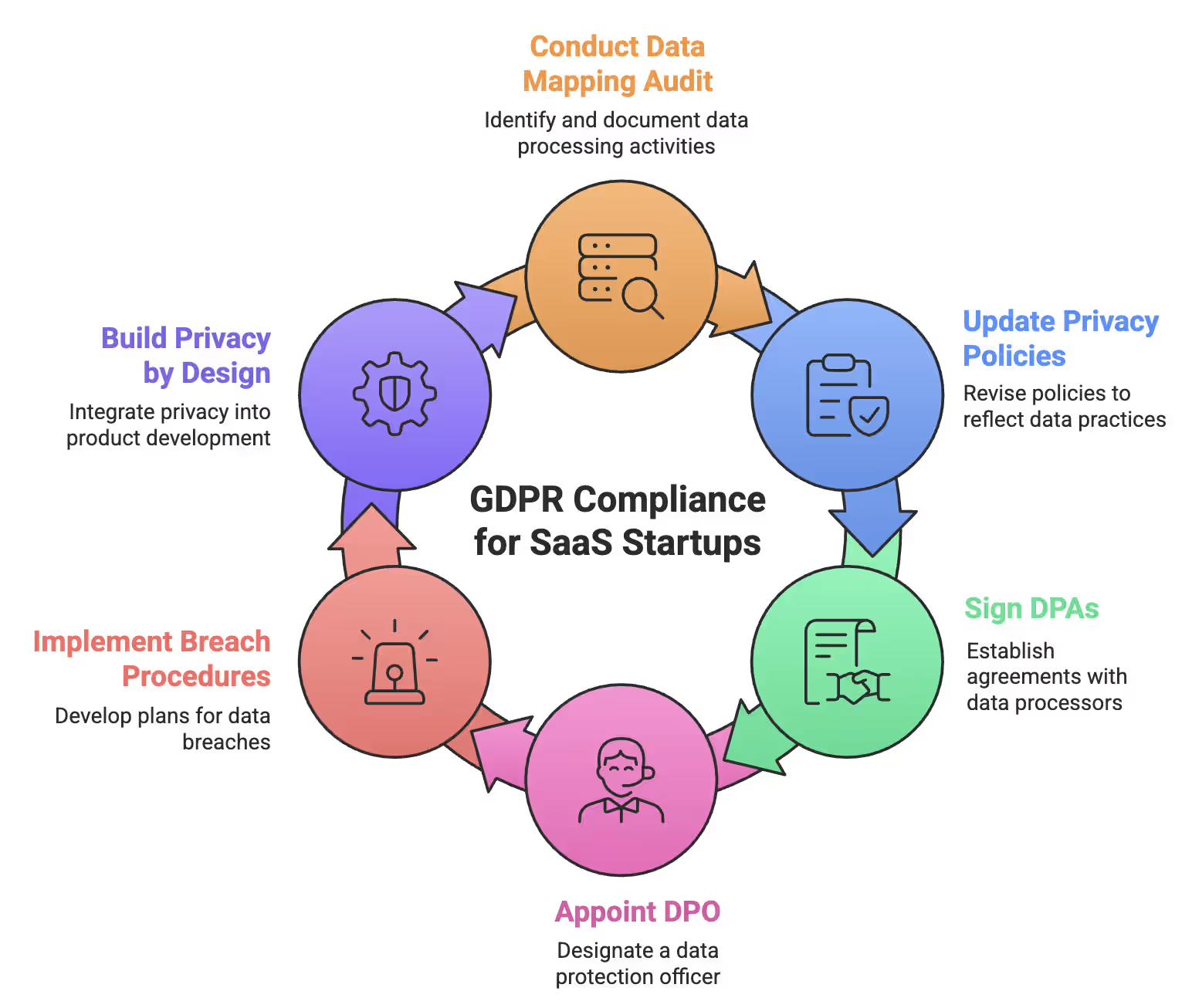
1. Conducting a Data Mapping Audit
Start by mapping every data touchpoint—what you collect, where it lives, who can access it, how long you keep it, and which vendors you share it with. Instead of manually tracing everything, send structured questionnaires across teams like engineering, marketing, and support. This approach surfaces hidden data flows faster and helps you build a reliable, complete data inventory.
2. Updating Privacy Policies and Cookie Banners
Your privacy policy and cookie banner are your first line of compliance—and most startups get them wrong. Modern requirements are strict:
- Show a reject option upfront
- Remove pre-ticked boxes
- Avoid misleading button designs
- Don’t rely on vague “legitimate interest” language
- Make withdrawal as easy as consent
If opting in is simple, opting out must be just as easy. No tricks.
3. Signing Data Processing Agreements With Vendors
Every vendor handling personal data must have a signed Data Processing Agreement (DPA). This is mandatory under GDPR. DPAs should clearly define what data is processed, how it’s secured, breach notification timelines, and how sub-processors are managed. These agreements ensure accountability across your data ecosystem. If a vendor can’t meet these standards, they shouldn’t be part of your stack.
4. Appointing a DPO or EU Representative
If your startup processes sensitive data or monitors users at scale, you may need to appoint a Data Protection Officer (DPO) to oversee compliance and act as a contact for regulators. If you’re based outside the EU but target EU users, appointing an EU representative is mandatory under GDPR. This role ensures regulatory communication and accountability within the EU.
5. Implementing Breach Notification Procedures
Data breaches aren’t a matter of if—they’re inevitable. GDPR requires certain breaches to be reported within 72 hours of discovery, or you risk penalties. You need a clear process: detect the breach, assess impact, document details, and notify authorities when required. If users are at risk, inform them without delay. Defined roles and a tested incident response plan ensure you stay compliant when it matters most.
6. Building Privacy by Design Into Your Product
Most startups get this backwards. Privacy isn’t something you add later—it must be built into your product from day one. Default to minimal data collection, strong encryption, and strict access controls across systems. This reduces risk and simplifies compliance. Building privacy early is faster, cheaper, and far more scalable than fixing issues after launch or during rapid growth.
GDPR Fines and Penalties: The Real Cost of Non-Compliance
Think GDPR fines are just scare tactics? Not anymore. Since 2018, enforcement has surged, turning GDPR into a real financial and operational threat for businesses of all sizes.
The Two-Tier Fine Structure Explained
GDPR uses a two-tier penalty system based on the severity of violations.
Lower-tier fines can reach €10 million or 2% of global annual revenue. These apply to issues like poor record-keeping, missing documentation, or inadequate security measures.
Higher-tier fines go up to €20 million or 4% of global revenue. These cover serious violations like unlawful processing, invalid consent, or failure to uphold user rights. Startups fall under the same rules—no exceptions.
Common Violations That Actually Trigger Fines
Most fines come from preventable mistakes. These include weak security measures, collecting or processing data without a valid legal basis, failing to report breaches within 72 hours, and ignoring user rights requests.
Using data beyond its original purpose or maintaining poor documentation also puts you at risk. These issues often stem from lack of process—not intent—which makes them even more dangerous for fast-moving startups.
Impact Beyond Fines: Reputation, Trust, and Operations
The real damage goes beyond money. Data privacy failures erode customer trust, disrupt operations, and trigger regulatory audits that drain time and resources.
Once trust is lost, it’s hard to recover. Customers hesitate, investors question risk, and teams get pulled into damage control. GDPR penalties don’t just hurt your finances—they slow your growth and impact your ability to scale confidently.
Building a GDPR-Compliant Startup From Day One
Building GDPR compliance early isn’t just about avoiding fines—it’s about avoiding costly mistakes later. Retrofitting privacy into existing systems can take 50–70% more time and effort than building it in from the start. As your startup scales or enters global markets, those gaps don’t stay hidden—they turn into risks that slow you down.
Startups have a clear advantage: a clean slate. You can design privacy-first systems, workflows, and products from day one. That consistency makes it easier to scale, onboard teams, and meet regulatory expectations without constant rework. It also sends a strong signal to investors, who increasingly expect solid data protection practices early on.
The payoff goes beyond compliance. Strong privacy practices build trust, improve user retention, and reduce long-term risk. GDPR becomes more than a requirement—it becomes a growth enabler. Build it right once, and you turn compliance into a durable competitive edge.
Take control of GDPR compliance, reduce risk, and build user trust with UprootSecurity — where privacy isn’t just a requirement, it’s a growth enabler.
→ Book a demo today