
11 Most Costly Compliance Issues Businesses Must Fix in 2025
Robin Joseph
Senior Security Consultant

Ever wondered why some businesses seem solid one quarter—and gone the next? It’s rarely failed products or bad timing. In 2025, the real business killer is compliance failure, not competition.
Regulatory enforcement has shifted from symbolic penalties to consequences that can end companies. Across finance, tech, healthcare, and crypto, small control gaps now trigger massive fines, public scrutiny, and long-term trust damage. What used to be “fix it later” is now “pay now—or shut down.”
Compliance is no longer a back-office checkbox. It’s a survival function. As regulations expand, enforcement tightens, and regulators coordinate globally, reactive compliance strategies are collapsing. Organizations that still treat compliance as optional are learning the hard way: in 2025, failure doesn’t just hurt margins—it erases businesses.
In 2025, these common compliance issues are no longer isolated problems—they represent the most seen compliance issues and growing compliance risk areas across regulated industries.
What Are Compliance Issues?
Compliance issues are the gaps between what regulations require and what actually happens inside an organization. A single compliance issue may look small on its own—but in regulated environments, even minor gaps can escalate fast. They’re not always dramatic failures. More often, they’re quiet breakdowns—outdated policies, unclear ownership, weak controls, poor training, or blind trust in vendors—that compound over time.
In 2025, that escalation is no longer gradual—it’s immediate. In practical terms, being out of compliance means failing to meet legal, regulatory, or contractual requirements—whether intentionally or by oversight. Regulations change constantly. Enforcement is coordinated globally. Audits are data-driven and unforgiving. What once passed as a “minor oversight” now triggers fines, investigations, and public scrutiny. Compliance related issues don’t stay isolated in legal or risk teams anymore—they spill into operations, finance, HR, IT, and customer trust.
These issues cut across people, processes, and technology. A missed regulatory update. An employee who doesn’t understand handling requirements. A vendor operating outside approved controls. An AI tool deployed without oversight. Individually, they seem manageable. Together, they become systemic risks.
Understanding what compliance issues really are is the first step to fixing them—before regulators, auditors, or customers force the issue.
11 Most Costly Compliance Issues in 2025
Compliance failures in 2025 aren’t edge cases—they’re systemic. Rapid regulatory change, AI-driven risk, and aggressive enforcement are turning small control gaps into costly, organization-wide consequences that impact revenue, reputation, and long-term growth.
These are not edge cases—they are high risk compliance issues, reflected in real-world enforcement actions and failures businesses are dealing with daily.
Here are the compliance issues driving the highest risk and cost this year:
- Lack of Awareness of Regulatory Changes
- Inadequate Employee Training Programs
- Data Privacy and Security Breaches
- Inconsistent Documentation and Recordkeeping
- Vendor and Third-Party Non-Compliance
- Over-Reliance on Manual Compliance Processes
- Weak Internal Audit and Monitoring Systems
- Failure to Address Workplace Discrimination and Harassment
- Sub-Processor and Storage Location
- Inadequate Incident Response Plans
- Failure to Govern AI and Emerging Technologies
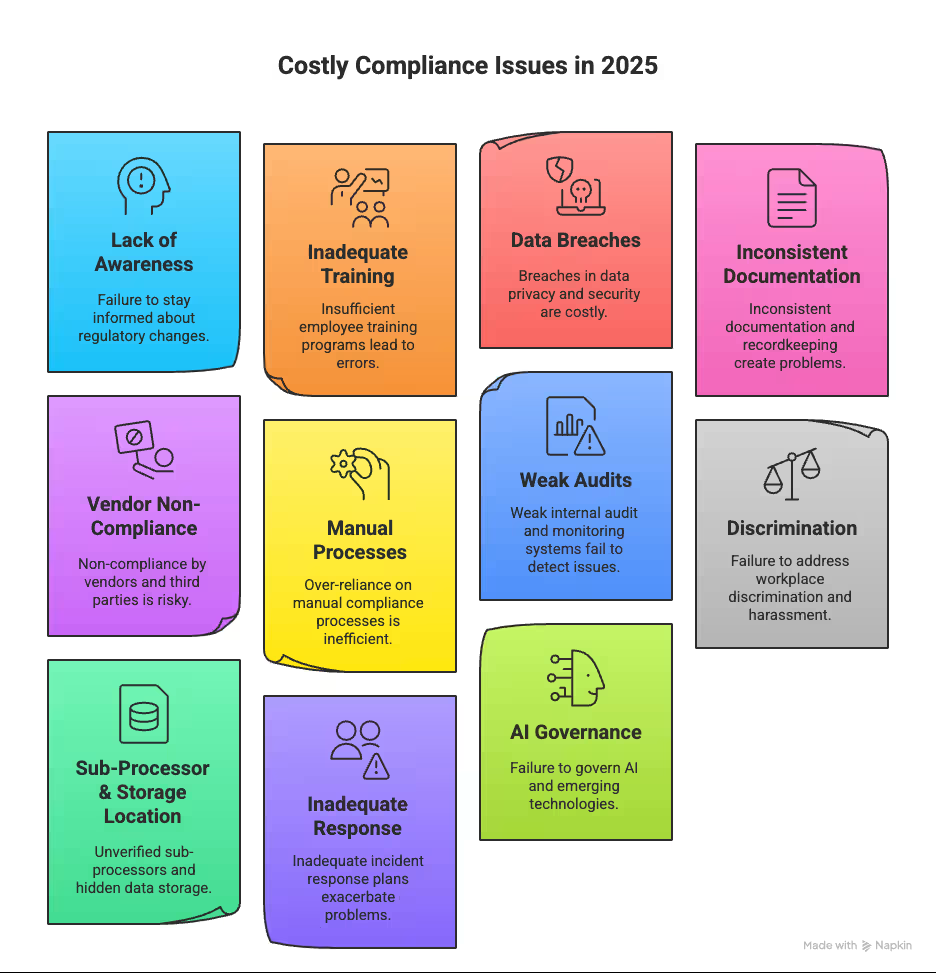
Together, these are real-world examples of compliance issues businesses are confronting daily. Let’s break down each issue and why it’s becoming more costly in 2025.
1. Lack of Awareness of Regulatory Changes
Most compliance failures start with blind spots, not bad intent. Every year, thousands of new rules hit the books—and most organizations have no clue which ones matter. Miss a change, act too late, or misinterpret a rule, and suddenly fines, frantic fixes, and regulator scrutiny are your reality.
Multinationals and regulated sectors feel this hardest. One missed update can violate multiple frameworks. The problem? Outdated processes. Spreadsheets, inboxes, disconnected systems—they all fail. In 2025, staying blind isn’t optional. It’s a business risk.
How to Overcome Lack of Awareness of Regulatory Changes
Here’s how companies actually stay ahead instead of playing catch-up:
- Assign clear ownership for monitoring and impact
- Automate alerts and tracking with RegTech
- Centralize compliance reporting
- Embed regulatory checks into operations and products
Regulatory awareness isn’t optional in 2025—get ahead, or your business will pay the price.
2. Inadequate Employee Training Programs
Most compliance training is broken—and everyone knows it. Fewer than one in four employees rate it “excellent,” and only 10% say it changes how they work. Poor training leads to missed red flags, mishandled data, operational mistakes, and costly fines.
The consequences are real. In 2024, TD Bank faced a USD 3.00 billion penalty, with training deficiencies explicitly cited. Organizations that treat training as a yearly checkbox are setting themselves up for disaster. Compliance isn’t a form to fill—it’s a daily practice. Continuous learning, role-specific paths, and ongoing assessments turn employees into the first line of defense against costly errors.
How to Overcome Inadequate Employee Training Programs
Here’s what actually makes training effective:
- Update training whenever regulations change
- Provide safe spaces for practice without fear
- Use ongoing assessments to spot gaps
- Create role-specific learning paths
Good training isn’t optional—it protects your business and reputation.
3. Data Privacy and Security Breaches
Data breaches aren’t just rising—they’re exploding. The global average cost of a breach hit USD 4.45 million in 2023, and with 144 countries enforcing privacy laws, businesses are sitting on a financial time bomb. Mismanaged data triggers fines, lawsuits, and lost customers. Meta alone paid USD 1.3 billion in GDPR fines, and penalties can reach 4% of global turnover.
Data risks aren’t just legal—they’re operational. Unclear ownership, poor access controls, and outdated incident plans leave sensitive information exposed. Over 75% of customers avoid companies after a breach. Ignoring proactive data governance is inviting disaster.
How to Overcome Data Privacy and Security Breaches
To actually protect sensitive information and reduce risk, organizations should:
- Map all data and where it’s stored
- Restrict access to authorized personnel
- Define governance roles and responsibilities
- Build tested incident response plans
Protecting data isn’t optional—it’s survival.
4. Inconsistent Documentation and Recordkeeping
Your documents tell your compliance story—and if that story is messy, you’re in trouble. Poor documentation wastes time, reduces productivity by up to 21%, and raises the risk of fines, failed audits, and operational errors. Employees spend 30% of their time hunting for files or struggling with version control. In regulated sectors like healthcare and finance, sloppy records can trigger hefty penalties or lost licenses.
Documentation isn’t just a task—it’s proof you follow the rules. Clear, standardized, and auditable records help avoid legal trouble, gain regulator trust, and make audits smoother. Without it, organizations are flying blind, vulnerable to costly compliance gaps.
How to Overcome Inconsistent Documentation and Recordkeeping
To get documentation under control:
- Establish naming conventions and version control
- Implement review and approval processes
- Automate workflows where possible
- Create retention policies by document type
Well-managed documentation protects your business and reduces compliance risk.
5. Vendor and Third-Party Non-Compliance
Trusting vendors without proper oversight is a costly gamble. Nearly 69% of organizations experience third-party breaches, with average losses of USD 4.5 million per incident. Vendor failures—from ransomware exposing patient data to payment processor lapses—hit your company directly and disrupt operations.
Regulators hold you responsible, making third-party exposure one of the high risk for compliance issues, fueling repeated breaches, compliance violations, and reputational damage. High-risk sectors like healthcare, finance, and retail face the harshest penalties, yet many companies still rely on one-off assessments instead of continuous monitoring.
How to Overcome Vendor and Third-Party Non-Compliance
To reduce risk and prevent vendors from becoming a liability, organizations should:
- Categorize vendors by risk: high, medium, low
- Verify certifications; 18% of claims are false
- Audit high-risk vendors quarterly, medium every six months, low annually
- Maintain ongoing monitoring and documentation
Your compliance is only as strong as your weakest vendor.
6. Over-Reliance on Manual Compliance Processes
Still managing compliance with spreadsheets, emails, and disconnected systems? That’s a disaster waiting to happen. Manual processes waste time, multiply errors, and increase risk exposure. Employees can spend up to 30% of their time hunting for documents, while 54% of firms still rely on spreadsheets for controls. Fragmented systems create blind spots, delays, and missed deadlines. The cost? Failed audits, regulatory fines, and operational chaos.
Manual methods slow your organization and leave gaps regulators love to exploit. Without automation, compliance is reactive, not proactive, and small mistakes snowball into expensive problems.
How to Overcome Over-Reliance on Manual Compliance Processes
To modernize and reduce risk:
- Automate evidence collection and monitoring
- Integrate systems for a single source of truth
- Reduce manual data entry and duplication
- Use platforms with real-time alerts and reporting
Automation turns compliance into a continuous, reliable process, cutting errors and saving time.
7. Weak Internal Audit and Monitoring Systems
Internal audits aren’t just formalities—they’re your early warning system. Yet 5% of companies report material weaknesses each audit. Failed audits can trigger 19% stock drops and 60% higher costs. Weak controls create gaps that lead to fraud, mismanagement, regulatory penalties, and reputational damage. Without strong audits, organizations fly blind. Internal audit failures dramatically increase legal and regulatory risk when issues go undetected.
Audits prove that governance, risk management, and controls work. They catch issues early, protect assets, and ensure regulatory compliance. Lack of independence, board support, or risk focus leaves audits ineffective and organizations exposed.
How to Overcome Weak Internal Audit and Monitoring Systems
To strengthen audits and monitoring across your organization:
- Secure board-level support and independence
- Focus on high-risk and emerging areas
- Use analytics and audit software
- Maintain thorough documentation of scope, tests, and corrective actions
Strong audits turn compliance risk into a strategic advantage.
8. Failure to Address Workplace Discrimination and Harassment
Workplace discrimination and harassment aren’t just HR issues—they’re major compliance risks. Over one-third of EEOC charges in recent years involved harassment claims. Ignoring them leads to legal liability, hostile work environments, retaliation claims, productivity drops, and long-term reputational damage. Companies treating harassment as someone else’s problem are playing with fire.
Creating a respectful, inclusive workplace is essential for compliance and business continuity. Policies alone won’t cut it; employees need safe reporting channels, thorough investigations, and mandatory training. Without action, lawsuits, fines, and reputational harm escalate quickly, especially in finance, tech, and healthcare.
How to Overcome Failure to Address Workplace Discrimination and Harassment
Effective prevention starts with clear reporting. Ways to report a compliance issue include HR channels, anonymous whistleblower tools, manager escalation, and third-party systems.
To prevent harassment and discrimination:
- Develop clear policies with concrete examples
- Provide multiple confidential reporting channels
- Conduct regular, mandatory training
- Investigate complaints promptly and thoroughly
- Document every step
Respectful workplaces protect both people and business.
9. Sub-Processor and Storage Location
Managing sub-processors and data storage locations is critical for compliance and operational security. Mismanaged third-party processors or undisclosed storage sites can lead to regulatory violations, data breaches, and reputational damage. Companies must know exactly where sensitive data is stored and which sub-processors have access, particularly when operating across multiple jurisdictions.
Visibility into sub-processors and storage locations is no longer optional—it’s a key compliance requirement. Organizations that fail to track this risk exposure face fines, audit failures, and increased operational liability. A proactive approach ensures transparency, protects sensitive information, and builds trust with customers and regulators.
How to Overcome Sub-Processor and Storage Location Risks
To reduce risk and maintain compliance, organizations should:
- Maintain a verified inventory of all sub-processors.
- Document every data storage location, including cloud and cross-border storage.
- Ensure vendor contracts enforce disclosure and residency compliance.
- Review sub-processor and storage changes regularly.
- Align internal policies with applicable regulations.
Strong sub-processor and storage oversight protects your business and compliance posture.
10. Inadequate Incident Response Plans
Organizations without solid incident response plans face severe risk. Cyberattacks or disruptions quickly escalate due to confusion, delays, and miscommunication. 60% of smaller companies close within six months after a breach—not from the attack itself, but from lacking actionable response. Poor preparedness fuels financial, regulatory, and reputational damage.
A solid incident response plan turns chaos into control. Clear roles, smooth communication, and rapid recovery reduce downtime and protect trust. Organizations that regularly test and update plans ensure readiness, making response a strategic advantage rather than a liability.
How to Overcome Inadequate Incident Response Plans
Here’s how to get your incident response ready:
- Define command structure and responsibilities
- Establish incident triggers and escalation protocols
- Maintain multiple communication channels
- Conduct regular simulations and tests
- Continuously update plans based on lessons learned
Prepared response safeguards operations, finances, and reputation.
11. Failure to Govern AI and Emerging Technologies
The AI revolution is here, yet most organizations operate blindly. Nearly 70% use AI without proper governance, risking shadow deployments, biased algorithms, and data leaks. Without controls, operations stall, reputations suffer, fines accumulate, and ungoverned AI becomes a major compliance and business risk. Ungoverned AI now sits at the intersection of ethics and risk management, regulatory exposure, and operational integrity.
Ignoring AI oversight gambles with your future, letting competitors pull ahead. Proper governance ensures AI remains ethical, controlled, and compliant, turning risk into opportunity rather than disaster.
How to Overcome Failure to Govern AI and Emerging Technologies
To govern AI effectively:
- Implement a structured AI governance framework with inventory, policies, and controls
- Establish an ethics review board for high-risk AI projects
- Centralize monitoring and escalation for AI concerns
- Manage third-party AI vendors with clear oversight
- Continuously update policies with evolving regulations
Strong AI governance protects operations, reputation, and compliance.
Addressing these 11 compliance challenges isn’t optional. Ignoring them puts your operations, finances, and reputation at serious risk. Organizations that tackle them proactively turn potential disasters into competitive advantages, build trust with regulators and customers, and stay ahead in a rapidly evolving compliance landscape.
The True Cost of Compliance Failures
Compliance failures ripple far beyond fines—they threaten every corner of your business. Here’s what ignoring them really costs in 2025:
Financial Penalties
Regulatory fines are higher than ever. Missing even a single update—GDPR, AML, or environmental compliance—can cost millions. Repeat violations amplify the damage, draining budgets that could fund growth or innovation. Non-compliance is no longer a minor issue—it directly threatens business survival.
Operational Disruption
Audits, investigations, and remediation efforts slow operations to a crawl. Teams spend hours recreating lost records, responding to regulators, and correcting preventable mistakes. Delays ripple across projects, slowing launches, customer support, and service delivery. Every hour lost is revenue slipping away.
Reputational Damage
Customers, partners, and investors notice compliance failures. Trust erodes, relationships falter, and partnerships dissolve. Rebuilding credibility takes years, if possible. In 2025, reputation is measurable currency that impacts revenue, partnerships, and growth.
Legal Exposure
Compliance gaps, harassment claims, and data breaches invite lawsuits and fines. Even small penalties are dwarfed by mounting legal fees, settlements, and regulatory scrutiny. Minor oversights can escalate into major legal crises.
Market Limitations
Weak compliance doesn’t just block access to regulated markets—it also reduces financing opportunities, inflates insurance premiums, and deters investors. Growth stalls as competitors capitalize on the markets and clients you can’t reach.
Employee Productivity
Reactive compliance drains teams’ energy, focus, and creativity. Employees spend more time correcting preventable errors than innovating or serving customers, leading to missed deadlines, stalled projects, and declining morale across the organization.
Ignoring compliance isn’t just risky—it’s existential. Prevention, automation, and proactive governance are your fastest path from survival to competitive advantage.
Here's the Truth About Compliance in 2025
The regulatory world isn’t getting easier—it’s getting brutal. We’ve covered 11 compliance failures that can sink your business. The numbers speak for themselves: USD 5.47 million for companies with strong programs versus USD 14.82 million when things go wrong.
The fallout isn’t just fines. Operations stall during investigations. Customer trust evaporates. Legal bills skyrocket. Growth opportunities vanish. Insurance treats you like a liability.
These risks are real, not theoretical. Companies using automated monitoring catch 52% more issues before they explode. The ones relying on spreadsheets and hope? Many don’t survive six months after a major compliance hit.
Smart leaders know compliance isn’t just defensive—it’s strategic. Strong governance attracts talent, secures better financing, and builds real trust with customers.
Half-measures won’t work. Audit all 11 areas, pinpoint vulnerabilities, and fix them with technology, standard processes, and training that actually sticks. Compliance isn’t optional anymore—it’s a competitive edge.
Turn compliance from a liability into a competitive advantage with UprootSecurity — where real governance, automation, and visibility replace guesswork.
→ Book a demo today