SOC 2, ISO 27001, HIPAA & GDPR Compliance Statistics for 2026
Sourced 2026 statistics on SOC 2 audits, ISO 27001 certificates, HIPAA breaches and penalties, and GDPR fines, with the original source linked for every number.
Yadunath R
Senior Growth Marketer
Compliance budgets, certification uptake, and enforcement activity tell different parts of the same story. These sourced statistics cover SOC 2, ISO 27001, HIPAA, and GDPR, with three visual snapshots of breach costs, enforcement, and third-party risk.
SOC 2 Statistics
SOC 2 has no public registry the way ISO 27001 certification or GDPR enforcement do. Reports are shared privately under NDA, so verified numbers are harder to come by. Here is what is actually confirmed.
- SOC 2 Type 2 audits typically cost $10,000 to $200,000 or more, with a median around $30,000 for small and mid-sized companies, according to Linford & Co.
- All-in cost, prep plus audit, usually runs $20,000 to $50,000 for SMBs and $50,000 to $250,000 or more for enterprise-scope engagements, according to Linford & Co.
- Demand for SOC 2 engagements is up almost 50%, driven by growing awareness of third-party IT security risk, according to AICPA's own survey of over 400 CPA firms, via AICPA and CIMA.
- A-LIGN, one of the largest SOC 2 audit firms, has completed more than 16,000 SOC 2 audits since 2009 and describes itself as the top global issuer of SOC 2 reports, a self-reported figure rather than an independently audited one, according to A-LIGN.
For a full breakdown of what drives that cost range, see our SOC 2 audit cost guide.
ISO 27001 Statistics
- 96,709 valid ISO/IEC 27001 certificates existed worldwide in 2024, up from 48,671 in 2023, nearly doubling in a single year, per the ISO Survey 2024, via HEIC.
- China holds the largest share of any single country, with 33,359 certificates, more than a third of the global total, according to HEIC.
See our full breakdown of ISO 27001 requirements and the 93 Annex A controls for what earning one of those certificates actually involves.
HIPAA Statistics
Healthcare breach impact combines financial loss with a long response window.
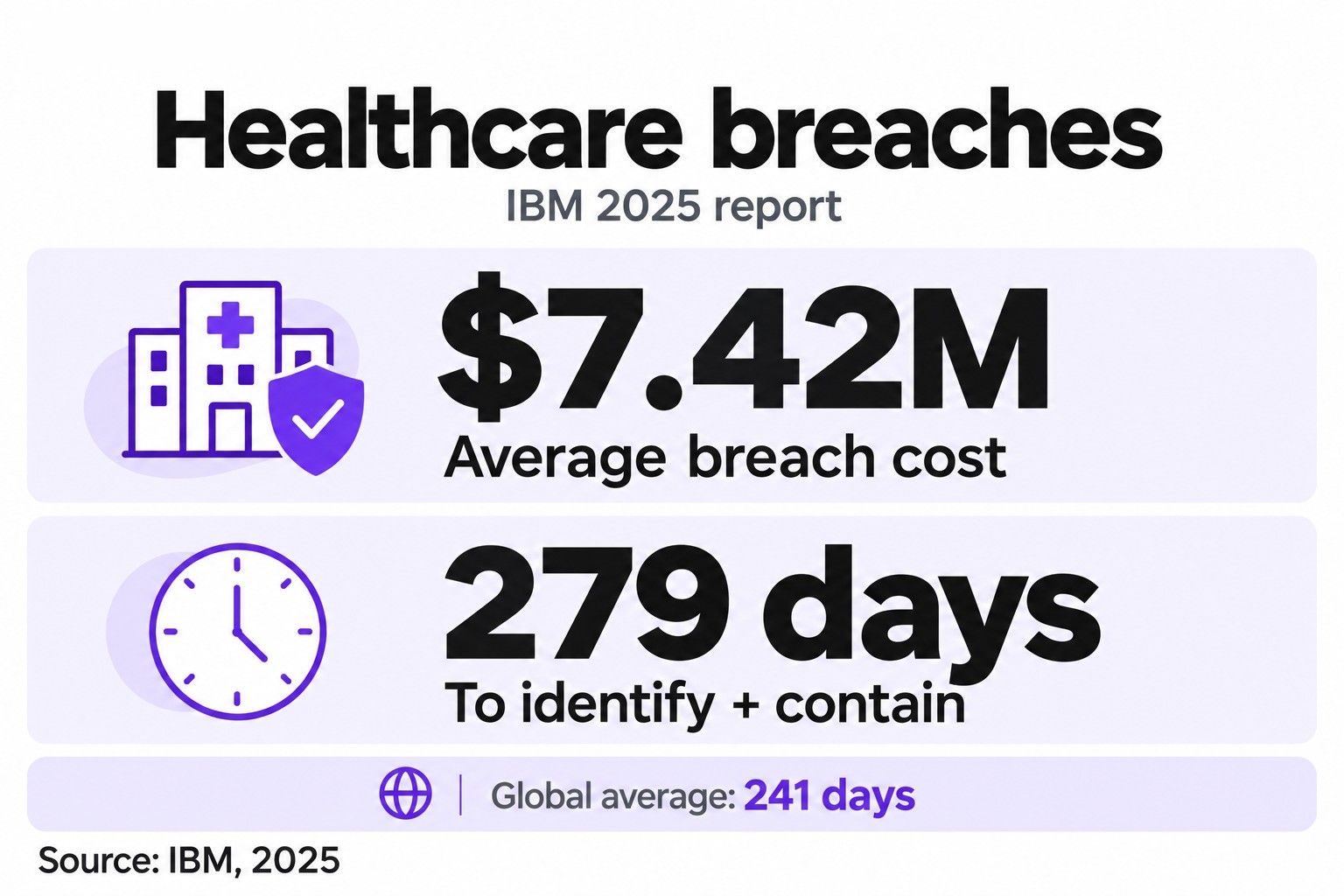
Source: IBM's 2025 Cost of a Data Breach Report. These are breach costs, not HIPAA fines.
- 772 healthcare data breaches affecting 500 or more people were reported to HHS OCR in 2025, exposing roughly 138.5 million individuals' information, according to HIPAA Journal.
- More than 80% of large healthcare breaches were caused by hacking or IT incidents, according to HIPAA Journal.
- OCR reached 21 settlements in 2025, the second-highest annual total on record, according to Medcurity.
- Inadequate risk analysis keeps showing up in named, government-confirmed 2025 settlements: BST and Co. CPAs, LLP (ransomware breach, risk analysis failure cited), Deer Oaks Behavioral Health ($225,000, risk analysis failure cited), and Comstar, LLC ($75,000, ransomware breach affecting 585,621 people), according to HHS.gov, HHS.gov, and HHS.gov.
- IBM's 2025 report puts the average healthcare breach cost at $7.42 million, down from $9.77 million in 2024 but still the highest among the industries studied, according to IBM.
- In IBM's 2025 report, healthcare breaches took an average of 279 days to identify and contain, compared with 241 days across all industries, according to IBM.
For the full risk analysis methodology auditors expect, see our HIPAA Security Rule requirements guide.
GDPR Statistics
Annual fines and cumulative totals answer different questions. Here is the cumulative picture from CMS.
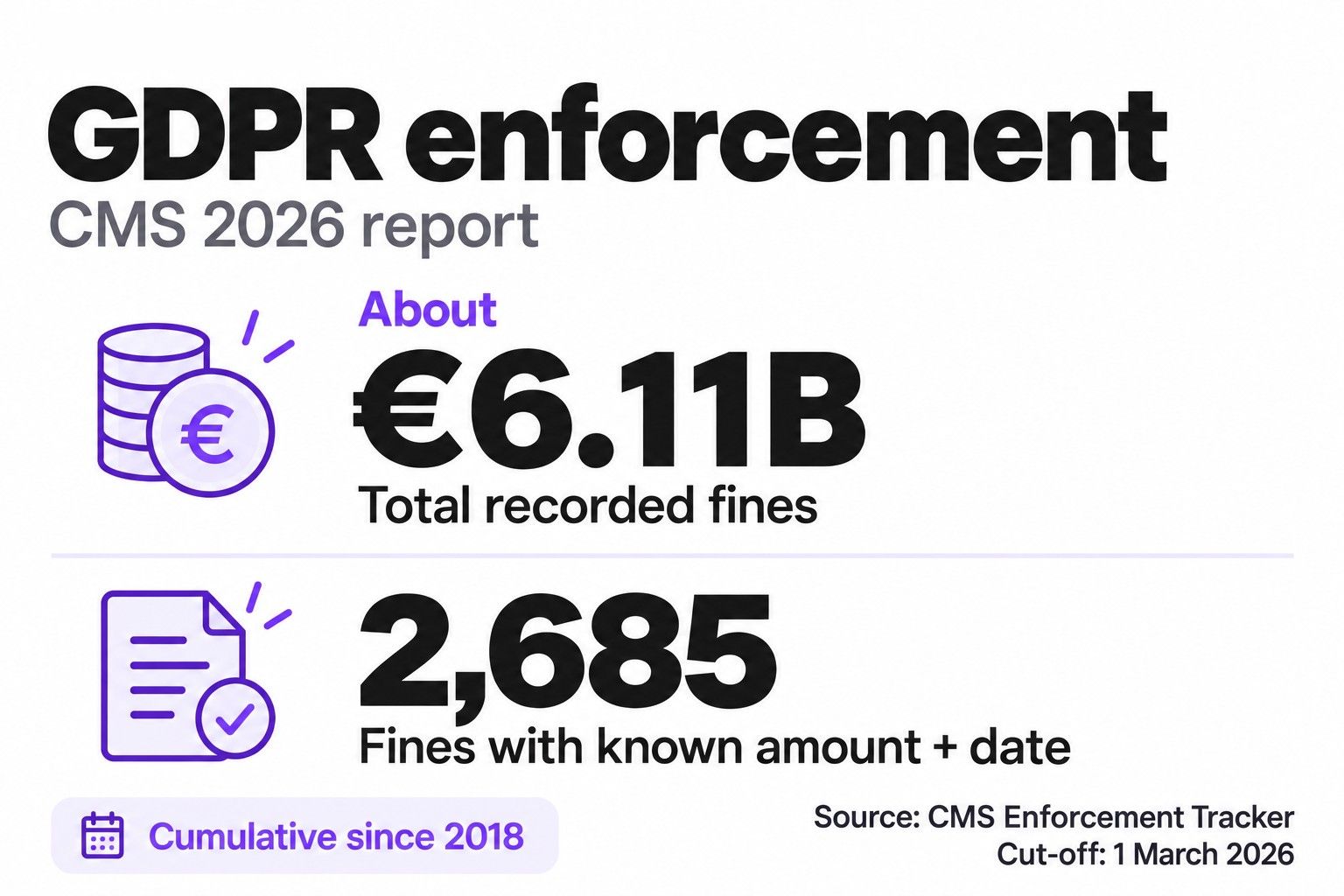
Source: CMS Enforcement Tracker Report 2026. Totals exclude fines with incomplete amount or date information.
- European supervisory authorities issued approximately €1.2 billion in GDPR fines in 2025, broadly matching 2024, according to DLA Piper.
- CMS's 2026 Enforcement Tracker report records 2,685 fines with known amounts and dates since 2018, totaling roughly €6.11 billion at its reporting cutoff, according to the CMS Enforcement Tracker.
- The average fine in that CMS dataset is approximately €2.28 million, according to the CMS Enforcement Tracker.
- The largest single fine of 2025 was €530 million, issued to TikTok by Ireland's Data Protection Commission in May 2025 over unlawful EU-China data transfers, according to Kiteworks.
For lawful basis and the practical side of staying compliant, see our GDPR data privacy compliance guide.
Cross-Framework Compliance and Breach Statistics
These numbers are not specific to one framework, but they make the case for compliance as infrastructure rather than paperwork.
Third-party involvement has increased across three consecutive DBIR editions.
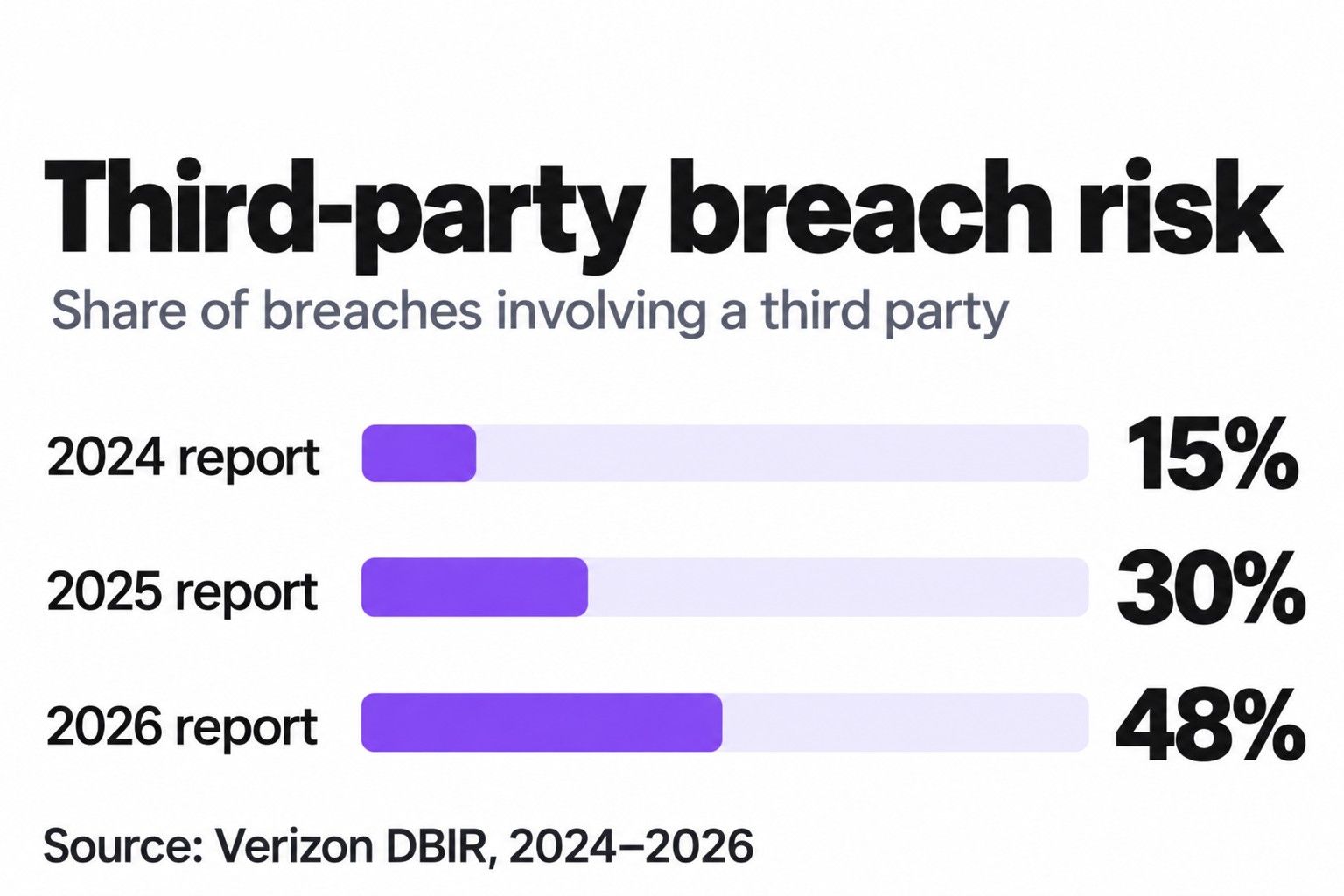
Source: Verizon DBIR. Years refer to report editions, not calendar-year breach totals.
- Non-compliance costs companies an average of $14.8 million a year, versus $5.5 million to stay compliant, a 2.7x difference. This comparison comes from a 2017 Ponemon Institute and Globalscape study, the most direct study of its kind we could find, but it has not been repeated recently, so treat it as directional rather than current. Source: Globalscape and Ponemon.
- Breaches involving regulatory non-compliance cost an average of $201,112 more than breaches at organizations with strong compliance postures, according to IBM, via SureCloud.
- Third parties were involved in 48% of breaches in Verizon's 2026 DBIR, up from 30% in its 2025 report and 15% in its 2024 report, according to Verizon.
- The global mean time to identify and contain a breach fell to 241 days in 2025, the lowest in nine years, according to IBM.
- 60% of confirmed breaches involved a human element such as phishing, social engineering, or misdelivery, per Verizon's 2025 DBIR, via Mimecast.
- For context, not a framework-specific number: the broader GRC and compliance software market was valued at $72.4 billion in 2025, projected to reach $82.9 billion in 2026, a 13.7% CAGR, according to Grand View Research.
Frequently Asked Questions
Every number on this page is linked to its original source: a standards body such as AICPA or ISO, a government enforcement record from HHS OCR or the GDPR Enforcement Tracker, a named audit firm reporting on its own work, or a widely cited industry report from IBM or Verizon. None are repeated from a secondary blog without checking where the number actually came from.
Because no source, including AICPA, publishes one. SOC 2 reports are shared privately under NDA rather than filed publicly, so an industry-wide failure or exception rate does not exist as verifiable data the way HIPAA settlement or GDPR fine data does. Any specific percentage you see elsewhere for this is almost certainly an unverifiable estimate.
IBM's Cost of a Data Breach Report attributes it to the high value of health data, the operational urgency hospitals face during an incident, which pushes them toward paying ransoms or restoring systems quickly rather than investigating thoroughly first, and reliance on legacy systems that are slower to patch.
This page combines sources published in different years, including the ISO Survey 2024, IBM's 2025 breach cost study, 2025 enforcement data, and CMS and Verizon's 2026 reports. Each figure names its report year so readers can tell current numbers from historical comparisons.
Turning Statistics Into a Program
Numbers like these are useful for building a case internally. They are not a substitute for knowing your own exposure. UprootSecurity helps you turn SOC 2, ISO 27001, HIPAA, and GDPR requirements into evidence you can actually produce, not a spreadsheet you update once a year before an audit.
Continuous Compliance & GRC Ops