9 Best Governance Risk and Compliance Tools for 2026 (Expert Tested)

Robin Joseph
Senior Security Consultant

Ever wondered why so many companies still treat governance, risk, and compliance tools like overpriced paperwork machines?
Here’s what’s really happening. Smart organizations have moved past checkbox compliance. They’re leveraging modern governance risk and compliance platforms to gain clearer risk visibility, faster audits, and leadership-ready reporting. The results are hard to ignore—95% better executive risk reporting and up to 75% faster compliance testing.
The financial impact matters too. Companies using the right compliance technology save an average of USD 1.02 million. One risk leader summed it up perfectly: what once took 10–16 hours to prepare for the board now happens in a single click, freeing up weeks of effort every year.
In 2026, GRC isn’t about documentation. It’s about automation, insight, and turning compliance from a cost center into a strategic advantage.
Why Choosing the Best GRC Software Matters in 2026
Choosing the right GRC software in 2026 is no longer a technical decision—it’s a business resilience decision.
Modern platforms eliminate manual work by tracking regulatory updates, mapping controls, identifying gaps, and automating workflows. That means fewer errors, faster audits, and teams spending time on risk—not spreadsheets. The best tools also break down silos, connecting security, compliance, audit, and risk teams into a single operating model.
AI-driven insights help organizations spot risks early, not after incidents occur. Cloud-based dashboards provide real-time visibility, making them essential for distributed and fast-growing teams.
Gartner predicts legal and compliance teams will increase GRC spending by 50% by 2026—and not without reason. The wrong choice leads to delayed implementations, missed audits, poor adoption, and broken integrations. The right platform aligns with your size, tech stack, and certification goals—turning compliance into a competitive edge.
9 Best Governance Risk and Compliance Tools for 2026
Choosing governance risk and compliance tools in 2026 can feel overwhelming—too many promises, too little clarity. After testing dozens of platforms, these nine stood out for one reason: they actually work. Each combines real automation, usable AI, and integrations that don’t slow teams down.
These GRC tools fit different company sizes, tech stacks, and compliance goals—but all help teams move from reactive checklists to proactive risk management. Here are the best GRC tools of 2026 that earned their spot for driving results, not just ticking boxes:
- Uproot Security
- Drata
- MetricStream
- AuditBoard
- LogicGate Risk Cloud
- IBM OpenPages
- Archer
- ServiceNow
- Lightbeam
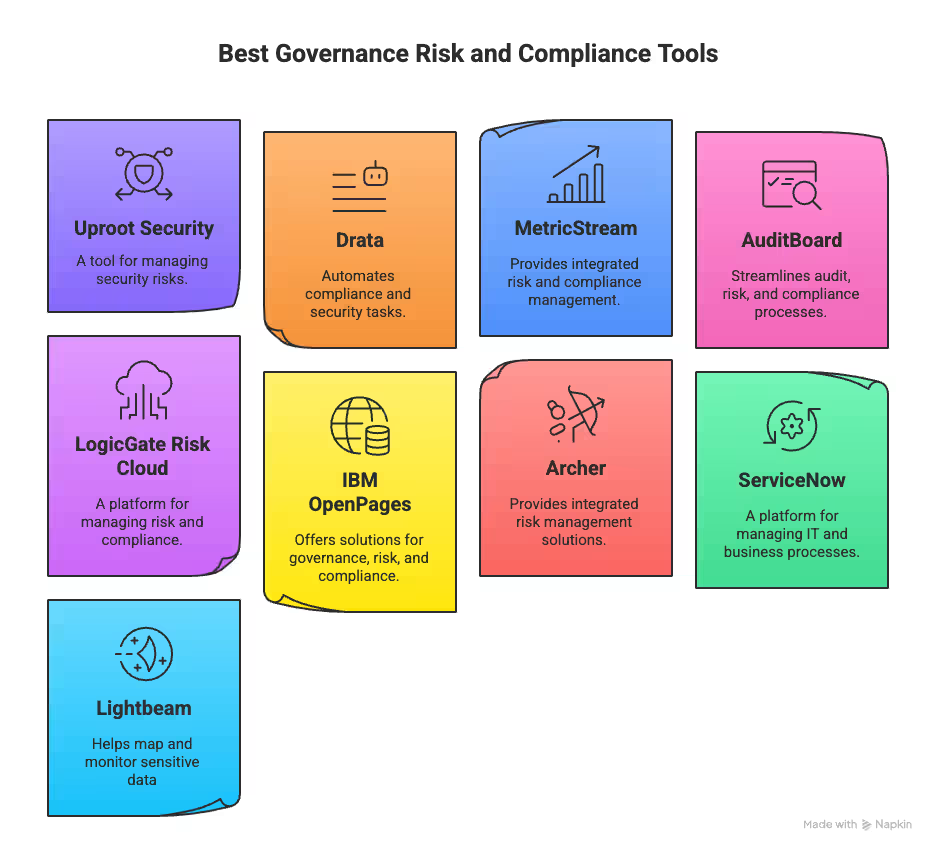
Let’s get into what makes each of these platforms worth your time.
1. Uproot Security – Compliance-First GRC Tool Built for Modern Security Teams
Uproot Security treats governance, risk, and compliance as a security problem—not a paperwork exercise. It combines real security testing with compliance automation, so controls actually reduce risk and improve security.
Uproot Security Key Features
- Automated support for SOC 2, ISO 27001, HIPAA, and PCI DSS
- Annual penetration testing included in every plan
- Continuous cloud and infrastructure monitoring
- Built-in risk and vendor management
- Plain-English audit readiness with automated evidence collection
Uproot Security Pros and Cons
Pros:
- Real security testing with GRC automation
- Clear workflows teams actually follow
- Fast setup with expert guidance
Cons:
- Not designed for pure DIY compliance
- Limited fit for massive, multi-entity enterprises
Uproot Security Pricing
Uproot Security Pricing for one security compliance framework is $10000 including pentesting.
Uproot Security Best Use Case
Best for startups and scaling SaaS teams that want compliance to improve security without slowing them down.
Uproot Security fits teams that expect compliance to make them safer, not busier.
2. Drata – Best GRC Tool for Fast-Growing Teams
Drata doesn’t treat compliance as a checklist. It automates governance, risk, and compliance tasks so fast-growing teams can stay audit-ready while focusing on building their business. AI and real-time monitoring keep systems compliant without manual work.
Drata Key Features
- Real-time compliance monitoring for MFA, encryption, and user access
- Automatic evidence collection from logs and configuration data
- Supports 15+ frameworks: SOC 2, ISO 27001, HIPAA, GDPR, PCI DSS
- 90+ integrations for cloud, HR, identity, and developer tools
- AI-powered questionnaire assistance
Drata Pros and Cons
Pros:
- Reduces manual compliance work
- Maps controls across frameworks automatically
- Auditors can work directly in-platform
Cons:
- Setup takes 4–6 weeks
- Pricing increases at renewal with extra frameworks
Drata pricing
- Foundation: ~$15,000/year
- Advanced: $15,000–$25,000/year
- Enterprise: $50,000–$100,000+/year
Drata Best Use Case
Ideal for scaling startups and SaaS teams that want compliance to grow with them.
Drata turns GRC into a business advantage, not a burden.
3. MetricStream – Enterprise GRC Software with AI Capabilities
MetricStream is built for large enterprises with complex regulatory needs. It uses AI to provide actionable insights across risk, compliance, audit, and cybersecurity, turning scattered data into a centralized risk management platform.
MetricStream Key Features
- AiSPIRE: AI-powered insights from existing GRC data
- MetricStream Intelligence: Analytics engine with predictive recommendations
- Connected GRC: Collaboration across risk, compliance, audit, and security teams
- BusinessGRC: Integrated product suite reducing silos
- Risk visualization and control optimization via AI
MetricStream Pros and Cons
Pros:
- Centralized risk repository
- Advanced analytics and real-time insights
- Streamlined workflows and process visibility
Cons:
- Complex implementation
- Customization and data import can be time-consuming
- High total cost of ownership
MetricStream Pricing
- Small enterprise: $75,000–$150,000/year
- Medium: $250,000–$500,000/year
- Large: $750,000–$1,000,000/year
MetricStream Best Use Case
Ideal for large enterprises in regulated industries needing centralized risk management and AI-driven insights.
MetricStream provides predictive, automated risk intelligence across multinational operations.
4. AuditBoard – Audit GRC Software for Compliance Teams
AuditBoard is designed by audit and compliance professionals for teams that need GRC to just work. Trusted by over 50% of Fortune 500 companies, it simplifies audits, SOX, and operational compliance while keeping teams connected.
AuditBoard Key Features
- Five integrated modules: OpsAudit, RiskOversight, Compliance, Internal Controls, CrossComply
- AI-assisted reporting and automation
- No-code analytics and drag-and-drop dashboards
- Real-time visual dashboards for instant insights
- Integrates with 150+ systems like Jira, ServiceNow, and Workday
AuditBoard Pros and Cons
Pros:
- Everything in one platform
- Reduces administrative hours
- Real-time updates improve efficiency
Cons:
- Setup requires coordination
- Can slow with large files
- Less flexible for custom workflows
AuditBoard Pricing
- Small to mid-sized: $30,000–$50,000/year
- Mid-market: $40,000–$88,000/year
- Enterprise: $100,000+
AuditBoard Best Use Case
Best for mid-to-large companies managing multiple frameworks and needing efficient audit operations.
AuditBoard turns audit and compliance work into a streamlined, collaborative process.
5. LogicGate Risk Cloud – Flexible Cloud-Based GRC Solution
LogicGate Risk Cloud is a no-code GRC platform built for teams that need flexible workflows. It’s an ideal cloud based GRC solution for mid-sized organizations seeking automation, flexibility, and real-time risk visibility. It allows organizations to create custom governance, risk, and compliance processes without coding, making automation and reporting simple.
LogicGate Risk Cloud Key Features
- No-code visual workflow builder
- 20+ pre-built applications for GDPR, ISO 27001, policy management, and business continuity
- Automated control gap analysis
- Connected view of assets, risks, and controls
- Risk quantification and Spark AI for control mapping
LogicGate Risk Cloud Pros and Cons
Pros:
- Fully customizable workflows
- Grows with your business
- Connects with hundreds of tools via RESTful API
Cons:
- Interface can feel overwhelming
- Setup can be challenging for beginners
- Advanced reporting may require custom work
LogicGate Risk Cloud Pricing
- Team-level: ~$12/user/month
- Professional deployment: ~$30/user/month
- Implementation services extra
LogicGate Risk Cloud Best Use Case
Ideal for mid-sized companies needing flexible workflows, automated approvals, and a unified view of GRC.
LogicGate balances flexibility with structure for efficient risk management.
6. IBM OpenPages – AI-Driven Governance Risk and Compliance Software
IBM OpenPages is designed for large enterprises with complex GRC needs. Its AI-driven platform centralizes risk, compliance, policy, and audit management, providing scalable and automated insights for informed decision-making.
IBM OpenPages Key Features
- watsonx AI integration for contextual assistance
- Dynamic dashboards and heat maps
- Modular solutions: 11 specialized options to choose from
- Automated workflows and process customization
- Single source of truth with standardized data and REST APIs
IBM OpenPages Pros and Cons
Pros:
- Centralizes risk management across domains
- Real-time monitoring of incidents and key indicators
- Flexible workflow design
Cons:
- Complex and resource-heavy implementation
- Pricing can be high for mid-sized teams
- Integration with external systems could improve
IBM OpenPages Pricing
- SaaS Essentials: $3,300/year
- SaaS Standard: $6,050/year
- On Cloud Enterprise: $9,000/year+
- Cloud Pak for Data: $162,000+
IBM OpenPages Best Use Case
Ideal for large enterprises in regulated industries needing centralized GRC and AI-driven insights.
IBM OpenPages streamlines compliance and risk oversight at scale.
7. Archer – Best GRC Tool for Integrated Risk Management
Archer has over 20 years of experience helping organizations manage risk. It centralizes risk data, provides flexible dashboards, and standardizes terminology across departments, making enterprise GRC manageable and actionable.
Archer Key Features
- Integrated risk management across multiple domains
- Common risk language for consistent policies and metrics
- Operational resilience testing for cyber attacks and disasters
- Automated risk identification to spot emerging threats
- Issue management consolidating findings from risk, compliance, and audit
Archer Pros and Cons
Pros:
- Works with existing software
- Standardizes risk reporting across teams
- Scalable for large enterprises
Cons:
- Requires significant computing resources
- Steeper learning curve for new users
- Customization less flexible than newer platforms
Archer pricing
- Estimated $50,000–$100,000+/year depending on modules, users, and setup
Archer Best Use Case
Ideal for large enterprises and government agencies managing multiple risk areas with standardized processes.
Archer delivers proven, enterprise-grade risk management across complex organizations.
8. ServiceNow – Governance Risk and Compliance Platform
ServiceNow GRC centralizes risk and compliance data on a single platform, eliminating silos and automating workflows. Its AI-powered assistant and integrated modules help teams manage risk efficiently while improving visibility across the organization.
ServiceNow GRC Key Features
- Single source of truth with a unified data model
- AI chatbot for routine compliance tasks
- Automated workflows requiring no coding
- Integrated modules: Risk Management, Business Continuity, Privacy, Third-Party Risk
- Continuous monitoring of IT services and high-risk areas
ServiceNow GRC Pros and Cons
Pros:
- Centralized visibility across teams
- Automation reduces manual work
- Seamless integration if already using ServiceNow
Cons:
- Licensing can be complex and expensive
- Implementation requires significant time and resources
- Non-ServiceNow integrations may be tricky
ServiceNow GRC Pricing
- Starts around $50,000/year
- Base license: $40,000–$100,000/year
- Implementation: 2–3× base license
ServiceNow GRC Best Use Case
Best for organizations needing integrated risk intelligence baked into daily operations.
ServiceNow GRC streamlines governance and compliance across enterprise teams.
9. Lightbeam – Automated Data Discovery & Privacy Risk Management
Lightbeam brings clarity to where sensitive data lives and how it moves. Instead of relying on outdated inventories, it continuously discovers and maps personal data across cloud and on-prem systems, helping teams reduce privacy risk with real evidence.
Lightbeam key features
- Automated discovery of PII across structured and unstructured data
- End-to-end data mapping for complete data flow visibility
- Continuous monitoring to detect new and shadow data
- Privacy risk insights aligned to real data usage
- Support for GDPR, CCPA, and global privacy regulations
Lightbeam pros and cons
Pros:
- Strong visibility into unknown and unmanaged data
- Reduces manual data mapping and audit effort
- Purpose-built for privacy and data protection teams
Cons:
- Focused on privacy rather than full GRC coverage
- Initial scans can take time in large environments
- Requires tuning to optimize discovery accuracy
Lightbeam Pricing
- Custom pricing based on data sources, scale, and deployment
Lightbeam best use case
Lightbeam is ideal for organizations that need defensible, real-time insight into sensitive data to strengthen privacy compliance and reduce data-driven risk.
Lightbeam helps teams move from assumptions to evidence-based privacy decisions.
The right GRC tool makes compliance simple, efficient, and actionable. It should fit your team, goals, and existing tech stack.
Now that you know the top GRC tools for 2026, let’s break them down side by side to see how they stack up in features, pricing, and use cases.
| GRC Tool | Key Strength | Pricing Range | Best For |
|---|---|---|---|
| Uproot Security | Compliance-first with built-in pentesting | $10,000–$30,000/year | Startups & scaling SaaS teams needing security-focused compliance |
| Drata | Automation-heavy, real-time monitoring, 90+ integrations | $15,000–$100,000+/year | Fast-growing companies needing scalable, AI-assisted compliance |
| MetricStream | Enterprise AI insights, centralized risk management | $75,000–$1,000,000/year | Large enterprises with complex regulatory requirements |
| AuditBoard | All-in-one audit & compliance platform | $30,000–$100,000+/year | Mid-to-large companies managing multiple frameworks |
| LogicGate Risk Cloud | No-code, flexible workflow builder | ~$12–$30/user/month | Mid-sized teams needing customizable, automated workflows |
| IBM OpenPages | AI-driven, scalable, centralized GRC | $3,300–$162,000+/year | Large enterprises needing AI-powered, multi-domain GRC |
| Archer | Integrated risk management with standardization | $50,000–$100,000+/year | Large enterprises and government agencies managing multiple risk areas |
| ServiceNow GRC | Centralized, automated workflows, AI assistant | $50,000+/year | Organizations wanting integrated risk intelligence across operations |
| Lightbeam | Maps and monitors sensitive data for privacy risk | Custom pricing | Teams needing clear visibility and control over sensitive data |
This table gives a quick snapshot of top GRC tools for 2026. Use it to match your team, budget, and compliance goals to the platform that fits best.
Picking Your GRC Platform: What Actually Matters
Choosing the right governance, risk, and compliance tool comes down to knowing what you actually need—not what looks good in a demo. GRC isn’t a filing cabinet anymore; it’s a business tool that drives real results.
Pick Uproot Security if you want built-in security testing from day one. Drata works for fast-growing teams that need scalable automation. MetricStream delivers enterprise-grade AI, but be ready for complexity. LogicGate offers flexibility without a tech degree, while IBM OpenPages and Archer give serious enterprise power at the cost of time and resources.
Smart GRC balances automation with human judgment. It handles repetitive tasks while leaving strategic decisions to people. Regulations are growing more complex, and your tech stack keeps evolving, so your platform choice needs to keep up.
The right GRC platform won’t just meet today’s needs—it prepares you for tomorrow. Companies winning at GRC turn compliance into competitive advantage, move faster, make smarter decisions, and sleep better at night.
Turn compliance into real security with Uproot Security—GRC that reduces risk, strengthens trust, and goes beyond checklists.
→ Book a demo today
Continuous Compliance & GRC Ops