Risk-Based SOC 2 Compliance Software for Smarter Risk Management

Robin Joseph
Senior Security Consultant
Ever stared at a SOC 2 checklist and felt your soul leave your body? You’re not alone. SOC 2 compliance can feel like trying to solve a 10,000-piece puzzle while blindfolded. Endless documentation, manual tasks that eat weeks of your life, and requirements so complex you need a decoder ring just to figure out where to start.
That’s where risk-based SOC 2 compliance software steps in—not just to make things easier, but to make them actually doable. Instead of treating every control like life-or-death, you focus on what really matters. Real risks, real impact, real prioritization. Suddenly, you can pour resources where they matter, build controls that fit your actual risks, and adapt when regulations shift (because they will).
For startups and smaller companies, this isn’t just helpful—it’s survival. Faster compliance, lower costs, and a competitive edge. Automation handles the grunt work. Continuous compliance replaces frantic pre-audit scrambles.
Why Risk-Based SOC 2 Compliance Software Matters
Traditional SOC 2 compliance is a nightmare. Endless paperwork. Manual tasks that waste weeks. Hours you could spend growing your business? Gone. And the stakes are brutal: data breaches now cost an average of $4.88 million, and for financial companies, $6 million-plus. About 70% of organizations say a breach derails operations completely.
Instead of chasing every requirement blindly, you identify actual threats, prioritize based on impact and likelihood, and allocate resources where they truly matter. Automated workflows slash preparation time by 40–70%, reduce errors, and keep your controls continuously monitored.
The result? Compliance that’s faster, smarter, and less painful. You get a SOC 2 Type II report that opens doors, shows customers you’re serious about security, and builds trust that actually sticks. No more box-ticking. Just actionable, risk-based assurance.
Implementing a Risk-Based Approach to SOC 2 Compliance with Software
Time to stop talking theory and start building something that actually works. A risk-based approach doesn’t just simplify SOC 2—it creates a security posture that actually makes sense for your business.
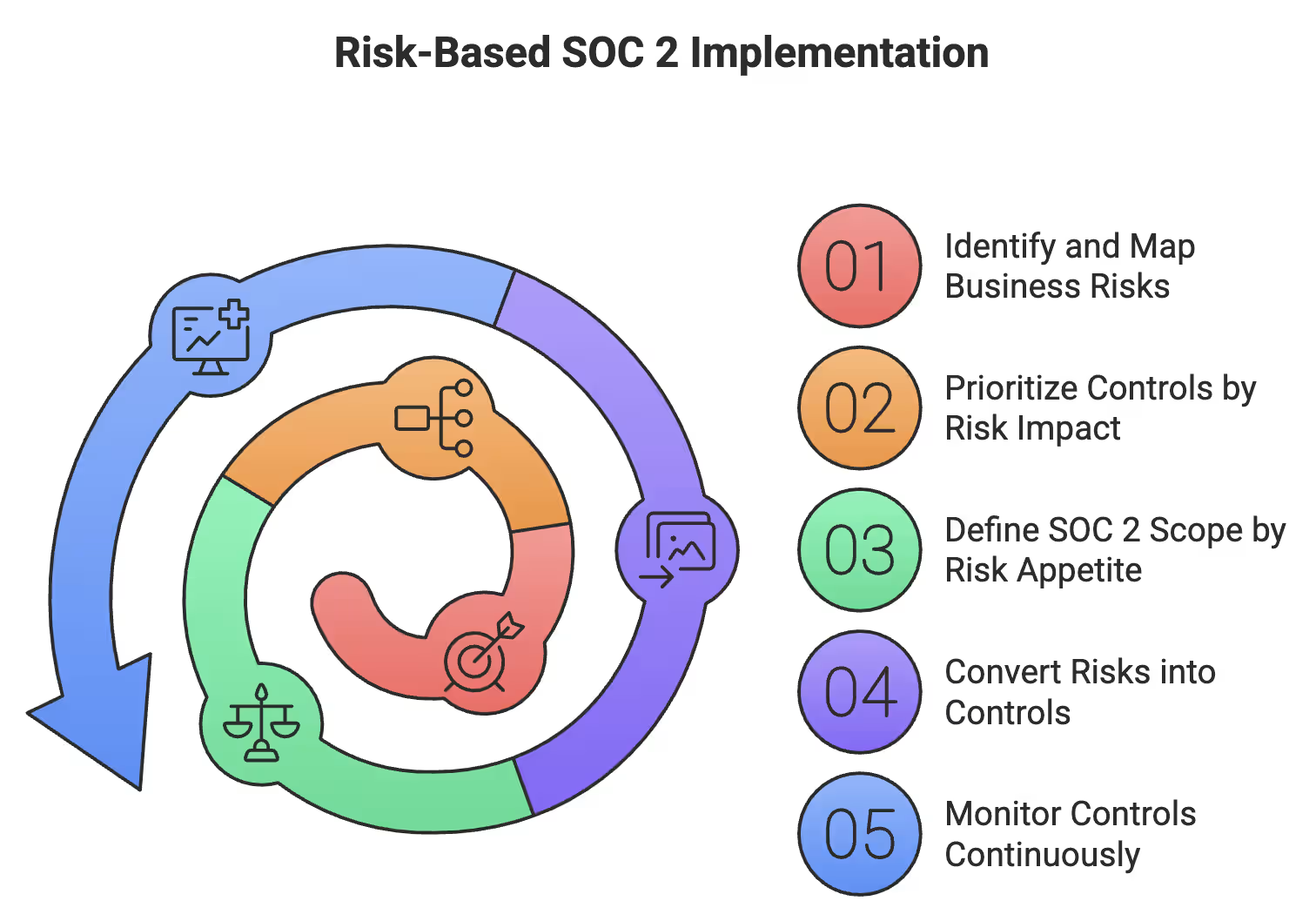
Mapping Business Risks to SOC 2 Trust Services Criteria
This is where the magic happens. Connect your real business risks to the five Trust Services Criteria (TSC): Security, Availability, Processing Integrity, Confidentiality, and Privacy. Security is mandatory—everyone gets that. The others? Pick what matters most to your business.
Modern compliance software takes the guesswork out:
- Links actual risks to the right SOC 2 criteria automatically
- Shows how business processes connect to security requirements
- Creates a central hub for all compliance data
It’s not about ticking boxes—it’s about tackling the risks that actually keep you up at night.
Prioritizing Controls Based on Risk Impact
Not all risks deserve panic. Smart SOC 2 software helps you figure out what matters:
- Assigns likelihood and impact scores to each risk
- Sorts risks by potential business damage
- Points your resources to where they’ll make the biggest difference
Stop wasting time on low-impact tasks. Focus on the gaps that could actually sink your ship.
Aligning Risk Appetite with SOC 2 Scope
Your risk tolerance shapes your SOC 2 scope. Advanced platforms help you:
- Pick Trust Services Categories that match your goals
- Justify your choices for auditors
- Track scope decisions so nothing gets lost
SOC 2 lets you tailor your approach. Why sign up for requirements your customers don’t care about?
Translating Risk Assessments into Control Requirements
This is where planning becomes action. Good software:
- Builds mitigation strategies automatically (accept, transfer, avoid, or fix)
- Assigns control owners—no more “I thought you were handling that”
- Sets deadlines based on risk urgency
- Creates workflows for automated evidence collection
Do a comprehensive risk assessment at least annually—and don’t wait when big changes happen. Smart software turns SOC 2 compliance from a chore into a security program that actually adds value, addressing real risks instead of imaginary ones.
Key Features of Risk-Based SOC 2 Compliance Software
Most SOC 2 tools are just glorified checklists with fancy interfaces. The real game-changers? Features that actually align with how businesses think about risk—and help teams get things done.
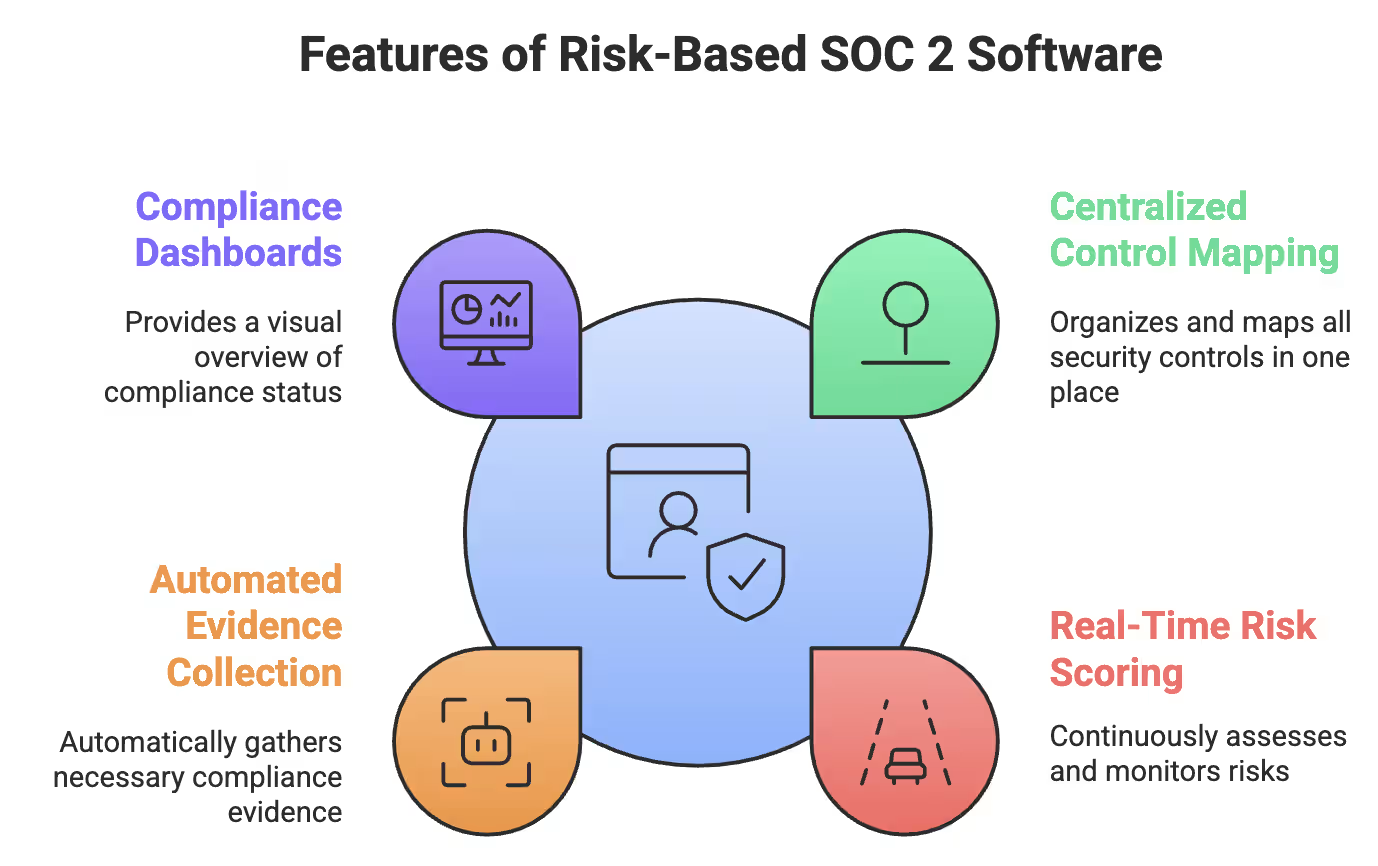
Centralized Control Mapping Across SOC 2 and Other Frameworks
Stop repeating work. Smart compliance software cuts through redundancy:
- Map controls once, use them everywhere—SOC 2 and ISO 27001 share about 80% overlap
- Build a single source of truth instead of juggling spreadsheets
- Access pre-mapped controls for 30+ global frameworks that fit SOC 2 Trust Services Criteria
This approach turns separate compliance headaches into one coherent program. Your team implements controls that cover multiple frameworks simultaneously. Result? Up to 39% less duplicate work and a more efficient compliance program.
Real-Time Risk Scoring and Continuous Monitoring for SOC 2 Compliance
Forget quarterly “compliance theater” reviews. Continuous monitoring changes everything:
- Risk scores update in real time based on current activity
- Instant alerts when controls fail or vulnerabilities appear
- Automated responses fix issues before they become disasters
Point-in-time assessments are like checking your bank account once a year. Continuous monitoring gives ongoing confidence and eliminates last-minute panic.
Automated Evidence Collection with Risk Context
Evidence gathering eats more time than anything else in SOC 2—and automation is a lifesaver:
- Systems automatically capture access logs, encryption settings, and backup status
- Up to 80% time savings versus manual collection
- Timestamped, tamper-proof evidence straight from source systems
Audit prep becomes faster, and mistakes like uploading the wrong version vanish.
Dashboards for Compliance and Risk Visibility
Dashboards don’t just look pretty—they turn chaos into clarity:
- See compliance status across all frameworks in real time
- Spot failing controls organized by type and priority
- Track readiness with clear percentage indicators
Put these four features together, and you’ve got more than compliance software—you’ve got a foundation for security practices that actually work long after the audit ends.
SOC 2 Compliance Gap Assessment and Mitigation Strategies
Here’s the truth nobody talks about: most companies walk into SOC 2 audits completely blind. They think they’re ready—checked boxes, organized files—then boom, audit failure. Why? Because identifying gaps isn’t optional. It’s the difference between passing and watching months of work go down the drain.
Performing a SOC 2 Compliance Gap Assessment
Think of gap assessments like a dress rehearsal for your audit. Stats don’t lie—84% of organizations that perform readiness assessments pass their SOC 2 audits on the first attempt. Run these before your initial SOC 2 attempt and annually for renewals. Cover everything auditors will check: security policies, access controls, technical testing, and incident response validation. Like an annual physical, but for your security posture.
Identifying and Prioritizing Control Gaps
Not all gaps are equal. Some will sink your audit; others are cosmetic. Common culprits include weak access security, sloppy vulnerability monitoring, and incident response plans that exist only on paper. Smart companies prioritize based on severity, urgency, and business impact. Fix critical vulnerabilities first, not easy wins that feel productive but don’t move the needle.
Developing Risk-Based Remediation Plans
Found your gaps? Now the work begins. Document each issue clearly: who owns it, what exactly needs to happen, and when. Roll out fixes gradually—don’t disrupt operations. Use the four risk strategies: accept, transfer, avoid, or reduce. Pick what makes sense for your business. Timeline everything according to real risk levels and available resources—ambitious deadlines look good on paper but fail in practice.
Tracking Mitigation Progress Over Time
Compliance isn’t one-and-done. Schedule quarterly check-ins to review progress, update risk assessments, and track fixes in a shared system—no more email tag. This approach doesn’t just prep you for audits; it strengthens your security over time through consistent improvement, which is exactly the point.
Cross-Department Collaboration in SOC 2 Compliance
Think SOC 2 compliance is just the security team’s problem? That’s like saying only the pilot matters when a plane lands safely. Sure, they’re crucial—but what about air traffic control, ground crew, and maintenance? SOC 2 works the same way—it needs everyone.
Involving Legal, HR, Engineering, and Security Teams
SOC 2 isn’t just technical—it’s operational too. Here’s how each department contributes:
- Legal: privacy notices, data policies, and customer contract obligations
- HR: hiring, training, and access management—all key for Security and Confidentiality criteria
- Engineering/Operations: system changes, incident response, and uptime
- Security: technical expertise without carrying the entire load
84% of organizations with successful SOC 2 implementations use cross-functional teams where everyone knows their role. Getting the right people involved ensures no gaps are left unattended and accountability is clear across the organization.
Assigning Control Ownership Across Departments
Clear ownership prevents confusion and ensures accountability. Keep these points in mind:
- Assign ownership to someone with authority to implement changes, not just a title
- Document responsibilities formally—teams change, people move or leave
- Think of it like car ownership: the driver may use it daily, but the registered owner is ultimately responsible
Formal ownership guarantees continuity and ensures actions actually happen instead of sitting on a to-do list.
Streamlining Evidence Collection Through Shared Workflows
Manual evidence collection kills efficiency. Here’s how smart teams fix it:
- Stop losing requests in endless email chains
- Automate evidence capture via integrations across teams
- Map evidence across frameworks in one central hub
- Achieve up to 80% time savings versus manual collection
Automation removes chaos, prevents errors, and makes audits smoother, saving time and stress for the whole team.
Improving Accountability and Review Cycles
Good governance needs structure without overkill. Follow these steps:
- Conduct practical control reviews with real participation
- Create clear escalation paths for solving issues, not burying them
- Schedule regular check-ins to maintain ownership and momentum
- Foster working relationships between compliance managers and control owners
When everyone knows their role, communicates clearly, and follows a structured workflow, SOC 2 compliance stops being a dreaded task and becomes a sustainable, team-driven process.
SOC 2 Compliance Checklist and Reporting Practices
Want to know why some companies breeze through SOC 2 audits while others crash and burn? It’s all in the prep. 84% of organizations that perform proper readiness assessments pass their audits on the first try. The rest? They learned the hard way that winging it doesn’t cut it.
Building a Risk-Based SOC 2 Compliance Checklist
Not all controls are equal. Smart compliance focuses on what actually matters:
- Pick Trust Services Criteria based on real business priorities (Security is mandatory; the rest? Choose wisely)
- Map every control to specific criteria—no vague connections
- Assign risk levels to each control: low, moderate, high
- Name owners for each control—“the team” doesn’t cut it
A prioritized, risk-focused checklist keeps your audit prep targeted, prevents wasted effort, and makes controls actionable instead of theoretical.
Preparing for Pre-Audit Readiness Reviews
Readiness reviews are like dress rehearsals for your audit. You wouldn’t go on Broadway without one, right?
- Run readiness checks before your initial audit and annually for renewals
- Use automation to speed up assessments—companies report 75% faster audits
- Catch failures early and save $15,000–$30,000 per review by avoiding last-minute fixes
These rehearsals identify gaps, build confidence, and make the actual audit feel routine instead of chaotic.
Generating Audit-Ready SOC 2 Reports Automatically
Manual reporting is where compliance programs die. Smart platforms handle it effortlessly:
- System descriptions built from your actual infrastructure, not assumptions
- Controls mapped with full traceability—auditors can follow the breadcrumbs
- Reports export automatically with all evidence linked and ready to go
Maintaining Clear Documentation for Auditors
Auditors are detectives. Give them messy evidence, and they assume the worst.
- Keep everything in one place—logs, policies, training docs, records
- Use version control to track changes and who made them
- Apply templates for consistency and professional presentation
Automated SOC 2 checklists and reporting slash manual work by up to 73% while keeping you compliant year-round—not just during audits. Prep, automation, and clarity turn a once-dreaded process into something manageable and even predictable.
Choosing the Right Risk-Based SOC 2 Compliance Automation Solution
Shopping for SOC 2 compliance software? Welcome to decision paralysis central. Everyone promises a magic bullet—but the right solution isn’t about flashy features. It’s about what actually works for your business, today and as you grow.
Evaluating Scalability and Integration Capabilities
Your compliance needs will expand as your company scales. A tool that works for ten people may collapse at fifty. Look for software that:
- Scales when you add new systems or teams
- Integrates smoothly with your existing tech via APIs or native connections
- Supports multiple frameworks (SOC 2, ISO 27001, HIPAA)
Nobody wants to shop twice. Pick a solution that grows with you, not against you.
Support for Continuous Monitoring and Risk Management
Stop scrambling before audits. Continuous monitoring turns SOC 2 from a nightmare into a routine part of business:
- Real-time alerts when controls fail—surprises belong at birthday parties, not audits
- Risk assessments that actually guide next steps
- Detection of configuration changes that impact compliance
Point-in-time checks are like looking in the rearview mirror—you need visibility now, not after the fact.
Assessing Customization vs Speed of Implementation
Quick setup is tempting, but fast choices often bite back:
- Automation-first platforms get you started fast but may miss your specific needs
- Risk-aligned solutions take more effort upfront but fit your business
- Implementation ranges from 4–12 months depending on complexity
Think of it like buying off-the-rack vs. getting tailored: one’s faster, one actually fits.
Aligning Software Capabilities with Internal Teams
Your tool should align with how your team actually works:
- Support your workflow management style
- Offer project management assistance if needed
- Facilitate collaboration across departments
The right solution balances current needs with future growth. No compromises—just smart, risk-based choices.
Finalizing Your Risk-Based SOC 2 Compliance Program
You've got this. Time to make SOC 2 work for you. Risk-based SOC 2 compliance software changes everything. Prep time drops 40–70%. Audits get completed 75% faster. Manual work? Cut by nearly three-quarters. For startups and smaller teams, that speed isn’t just helpful—it’s survival.
The real magic comes with continuous monitoring. No more last-minute scrambles. Your team spots issues before they become problems, shifting from reactive firefighting to proactive risk management. Compliance stops being chaotic and starts being predictable.
SOC 2 isn’t a solo job—legal, HR, engineering, and security all play their part. When everyone owns their piece, compliance becomes sustainable instead of soul-crushing. Choosing the right platform matters: one that fits your risks, integrates with your tools, and scales as you grow.
But the best part? Trust. Customers, partners, and auditors see you’re serious about protecting data. Trust isn’t just compliance—it’s your competitive edge, your deal-maker, and your growth engine.
Take control of SOC 2 compliance, prioritize real risk, and build lasting customer trust with UprootSecurity — where GRC finally works like security should.
→ Book a demo today