What is GRC? A Complete Introduction for Modern Businesses

Robin Joseph
Senior Security Consultant
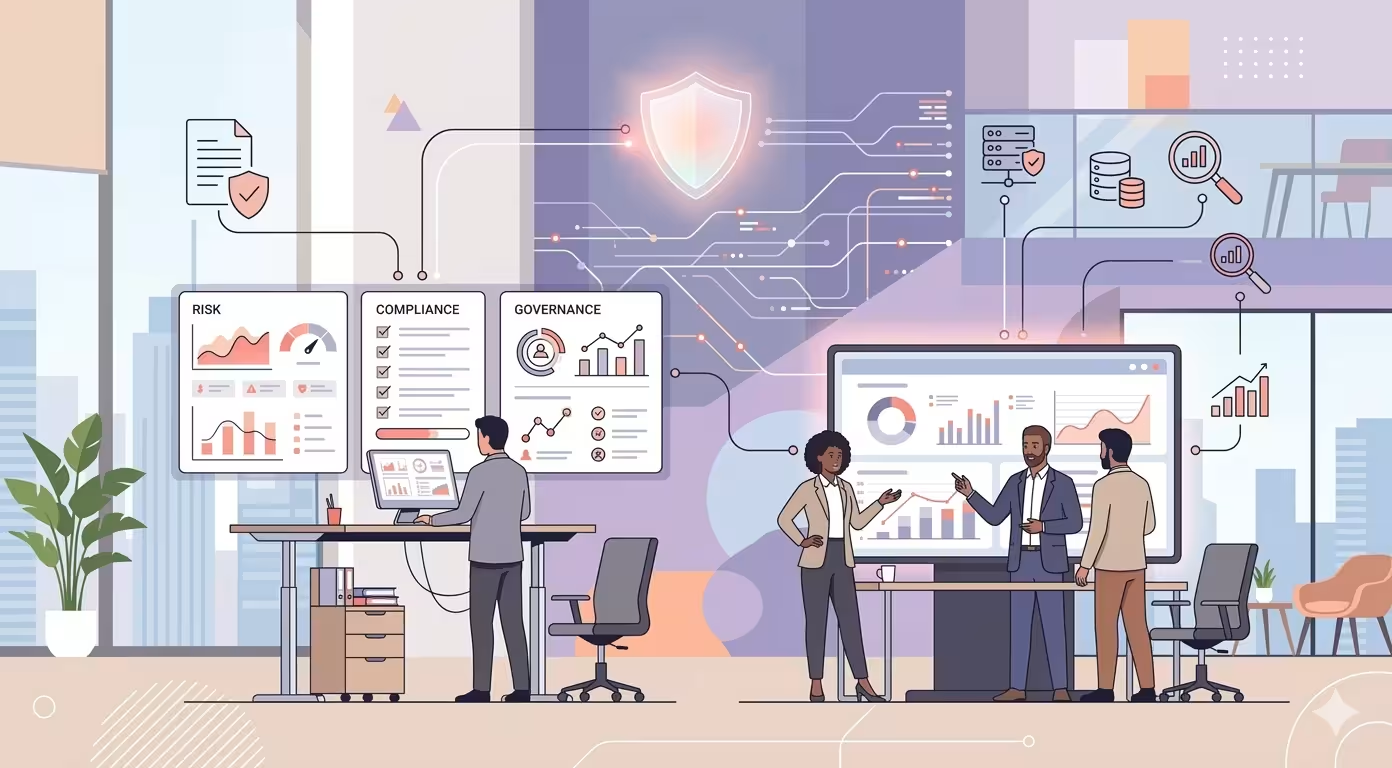
Ever wondered why organizations struggle to align risk management, compliance, and leadership decisions into a single coordinated strategy? The problem isn’t always lack of data—it’s lack of coordination. Governance, Risk, and Compliance (GRC) connects these functions into a single framework that helps organizations align strategy, manage uncertainty, and meet regulatory requirements without operating in silos.
Yet many companies still rely on disconnected systems and fragmented processes. Risk teams track threats in one place, compliance teams monitor regulations somewhere else, and leadership is left piecing together the bigger picture. When information stays siloed, critical gaps appear—often when the stakes are highest.
Those gaps are expensive. Regulatory penalties can reach millions, and operational disruptions often follow. That’s why GRC isn’t just another business acronym. Done right, it brings governance, risk management, and compliance together so organizations can make smarter decisions, respond faster to change, and operate with greater confidence.
GRC Definition: Governance Risk Compliance Explained
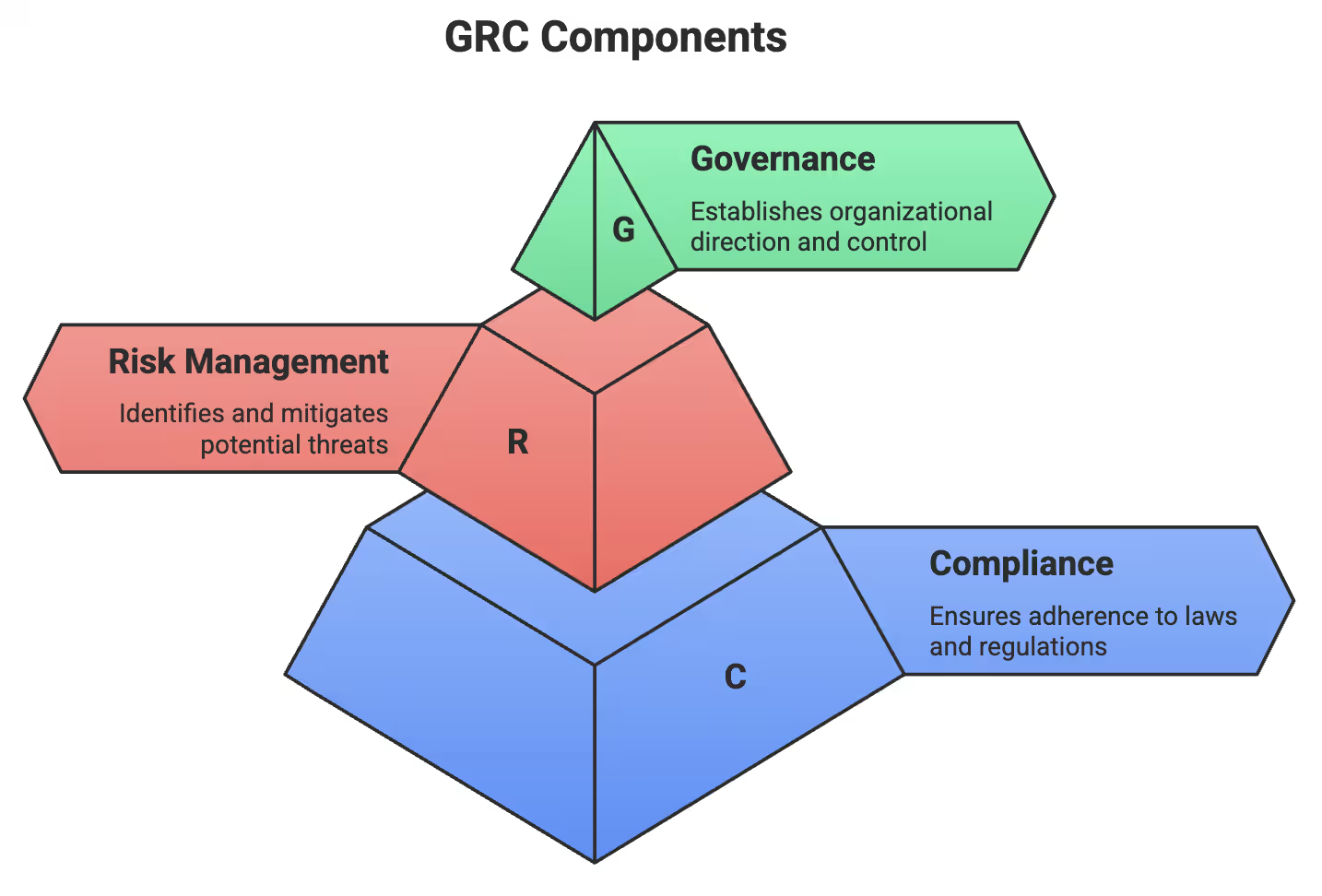
GRC stands for Governance, Risk, and Compliance. It’s a unified framework that helps organizations align business goals, manage uncertainty, and meet regulatory requirements. Instead of isolated departments, GRC connects governance, risk oversight, and compliance into one coordinated system across the organization.
Governance: Setting Direction and Accountability
Corporate governance defines the policies, rules, and oversight structures that guide how an organization operates. It aligns employee actions with business goals while ensuring leadership maintains accountability and transparency across departments and stakeholders.
Here’s what strong governance typically includes:
-
Clear ethical standards and resource management practices that guide employee behavior and decision-making.
-
Transparent communication between internal teams and external stakeholders to maintain visibility and trust.
-
Defined procedures for resolving conflicts and maintaining checks and balances across operations.
-
Performance-based evaluations that measure employees on results, not just responsibilities.
When governance fails, the impact is severe—weak oversight quickly leads to operational breakdowns, legal exposure, and reputational damage.
Risk Management: Identifying and Mitigating Threats
Risk management focuses on identifying, assessing, and controlling threats that could disrupt business operations. These risks can be financial, operational, legal, or cybersecurity related.
Modern organizations face constant uncertainty—from cyberattacks and infrastructure failures to regulatory changes and market disruptions. Effective risk management programs evaluate vulnerabilities, monitor systems, and implement controls that reduce exposure before risks escalate.
By identifying threats early and preparing response strategies, organizations protect assets, maintain stability, and strengthen long-term resilience.
Compliance: Meeting Regulatory Requirements
Compliance ensures organizations follow the laws, regulations, and industry standards that apply to their operations.
Different industries face different requirements. Healthcare organizations must protect patient data, while publicly traded companies must follow strict financial reporting standards. Failure to comply can result in financial penalties, legal action, and serious reputational damage.
Strong compliance programs monitor regulatory changes, enforce internal policies, and ensure organizations consistently meet their legal and ethical obligations.
The Three Core GRC Components Breakdown
Picture a three-legged stool. Remove one leg and the whole thing collapses. That’s GRC. Governance sets direction, risk management works within those limits, and compliance ensures rules are followed. When one piece fails, the entire system becomes unstable.
How Governance, Risk, and Compliance Work Together
When GRC works properly, each component feeds the others. Governance defines strategy and sets risk tolerance levels. It creates the policies and priorities that guide how risks should be identified and managed across the organization.
Risk management teams operate within those limits. They identify threats, evaluate vulnerabilities, and monitor systems and processes to keep operations within acceptable risk levels. When new risks emerge, those insights move back up to leadership for decisions and policy updates.
Compliance acts as the enforcement layer. It ensures policies and regulations are followed, reports gaps to leadership, and works with risk teams to address control failures. When regulatory risks appear, compliance teams flag them quickly so organizations can respond before issues escalate.
Without coordination between these three functions, organizations end up with fragmented oversight and delayed responses to threats.
Integrated GRC Approach
Integration connects governance, risk, and compliance into one coordinated system instead of separate operational silos. By aligning processes, data, and teams, an integrated GRC approach improves visibility and ensures organizations respond to risks and regulatory changes more effectively.
When organizations implement an integrated GRC approach, they gain:
-
A single source of truth: Risk, compliance, and operational data come together to create a clear organizational view.
-
Reduced redundancy: Teams stop repeating the same assessments and control testing across departments.
-
Faster decisions: Shared data and standardized processes accelerate risk analysis and leadership response.
-
Stronger collaboration: Risk managers, compliance teams, and auditors share insights and coordinate actions.
When GRC operates as an integrated system, organizations gain clearer visibility, stronger control over risk, and faster responses to regulatory change.
Why is GRC Important for Businesses
Modern organizations face increasing regulatory pressure, cybersecurity threats, and operational risks. GRC helps businesses manage these challenges by aligning governance, risk management, and compliance into a coordinated system that supports stability.
Cost Efficiency and Resource Optimization
GRC programs reduce operational waste and manual work. Automation tools streamline compliance processes, centralize documentation, and eliminate repetitive tasks across departments. This reduces administrative overhead, lowers labor costs, and improves efficiency. As a result, teams spend less time on paperwork and more time on strategic, high-value work.
Regulatory Compliance and Risk Reduction
Regulations change constantly across industries, making compliance difficult to manage manually. A structured GRC program helps organizations track regulatory requirements, maintain proper documentation, and monitor internal controls. This reduces the risk of penalties, legal exposure, and operational disruption while ensuring organizations stay aligned with evolving regulatory expectations.
Enhanced Decision-Making and Transparency
GRC improves organizational visibility by centralizing information about risks, controls, and compliance activities. Leaders gain a clearer understanding of operational challenges and emerging threats across departments. With better insights and real-time data, organizations can make faster, more informed decisions and respond quickly when new risks appear.
Building Stakeholder Trust and Confidence
Strong governance and compliance practices signal reliability to customers, investors, and partners. Demonstrating accountability and regulatory alignment shows that an organization manages risk responsibly. This credibility strengthens business relationships, supports long-term partnerships, and improves the organization’s reputation in competitive markets.
GRC for Small Businesses
GRC is not limited to large enterprises. Small businesses can adopt governance and risk practices through simple policies, regular risk assessments, and affordable cloud tools. Even basic oversight improves operational discipline, strengthens compliance readiness, and helps smaller organizations manage risks while growing sustainably.
GRC Framework Explained
A GRC framework provides a structured way to manage governance, risk, and compliance across an organization. It connects policies, oversight, and risk management processes to guide decisions and maintain regulatory alignment.
Core Elements of an Effective GRC Framework
An effective GRC framework connects governance, risk management, and compliance processes to maintain consistent oversight and structured decision-making across the organization.
Key elements typically include:
-
Defined governance structure: Leadership roles and reporting lines determine who makes strategic decisions related to risk management and compliance oversight.
-
Risk identification and assessment processes: Structured methods help organizations identify threats, evaluate their impact, and prioritize risks across departments.
-
Policy and control frameworks: Documented policies and internal controls guide employees in managing risks while maintaining regulatory compliance.
-
Monitoring and reporting mechanisms: Systems track compliance status, risk indicators, and control performance while providing insights to leadership.
-
Adoption of established standards: Frameworks like COSO, NIST, or ISO help organizations structure governance and enterprise risk practices.
Together, these elements create the operational backbone of an effective GRC program.
GRC Roles and Responsibilities
A successful GRC program relies on clearly defined roles that coordinate governance, risk management, and compliance activities across the organization.
Common GRC roles include:
-
Chief Risk Officer (CRO): Leads enterprise risk strategy and ensures risk management aligns with overall business objectives.
-
Chief Compliance Officer (CCO): Oversees regulatory compliance and monitors changes in laws, standards, and industry regulations.
-
Internal auditors: Evaluate internal controls and verify that governance and compliance processes operate effectively.
-
GRC analysts: Conduct risk assessments, manage documentation, and support reporting through GRC platforms and tools.
-
IT security officers: Focus on cybersecurity risks and ensure data protection and technical controls are implemented properly.
-
Business unit leaders: Align department operations with enterprise risk policies and compliance requirements.
Clear role definition ensures GRC responsibilities are coordinated, accountable, and effectively executed across the organization.
Understanding the GRC Maturity Model
The GRC maturity model helps organizations evaluate how advanced their governance, risk, and compliance practices are and identify opportunities for improvement.
Typical maturity levels include:
- Level 1 – Initial: Processes are reactive, informal, and largely unmanaged.
- Level 2 – Developing: Basic structures exist, but implementation is inconsistent.
- Level 3 – Defined: Policies and processes are documented and repeatable.
- Level 4 – Managed: GRC practices integrate with strategy and operational decision-making.
- Level 5 – Optimized: Governance, risk, and compliance are fully integrated and continuously improved.
Organizations usually progress gradually through these stages as their governance capabilities and risk management practices mature.
GRC vs ERM Difference
Organizations often confuse Governance, Risk, and Compliance (GRC) with Enterprise Risk Management (ERM). While both deal with managing risk, they operate at different scopes. ERM focuses primarily on identifying and managing enterprise risks, whereas GRC integrates governance oversight, risk management, and regulatory compliance into a broader operational framework.
| Aspect | GRC | ERM |
|---|---|---|
| Scope | Covers governance, risk management, and regulatory compliance | Focuses mainly on enterprise-wide risk management |
| Primary focus | Compliance, internal controls, and policy oversight | Strategic risk identification and mitigation |
| Approach | Often compliance-driven and policy-based | Strategy-driven and risk-prioritization focused |
| Implementation | Requires structured governance processes and compliance tracking | Can start lighter and expand with business growth |
| Best suited for | Highly regulated industries and audit-heavy environments | Organizations focusing on strategic risk planning |
When Each One Makes Sense
The right framework depends on an organization’s regulatory exposure, operational complexity, and risk priorities. Companies often adopt different approaches based on their size, industry, and compliance requirements.
-
Choose GRC when compliance requirements are high: Industries such as finance, healthcare, and government contracting require strong governance and regulatory oversight. Frameworks like SOC 2 or ISO certifications typically rely on structured GRC programs.
-
Start with ERM in smaller organizations: Growing companies often begin with ERM because it focuses on identifying and prioritizing strategic risks without requiring a complex compliance structure.
-
Expand ERM into GRC as the business grows: As organizations scale, regulatory obligations increase, and many gradually integrate governance and compliance processes into a broader GRC framework.
Many organizations begin with ERM and gradually expand into a full GRC program as compliance demands increase.
GRC Program Benefits
A well-implemented GRC program improves risk visibility, strengthens operational efficiency, and supports better decision-making. By aligning governance, risk management, and compliance, organizations gain clearer oversight and respond faster to emerging risks.
What a Mature GRC Program Delivers
When GRC programs mature, the operational and financial benefits become clear.
-
Improved operational efficiency: Automated workflows reduce manual reporting and repetitive compliance tasks, allowing teams to focus on strategic risk management rather than paperwork.
-
Lower compliance costs: Organizations using compliance technology often reduce administrative overhead and minimize the resources required for audits and regulatory reporting.
-
Stronger data security and control: Centralized GRC platforms replace scattered spreadsheets and disconnected tools, improving data accuracy and reducing the risk of errors.
-
Better risk visibility: Real-time dashboards and reporting tools provide leadership with clear insight into risks, controls, and compliance status across the organization.
These improvements help organizations shift from reactive compliance management to proactive risk oversight.
Measuring ROI and Success Metrics
Measuring the effectiveness of a GRC program requires focusing on outcomes rather than activity alone. Organizations often evaluate how long compliance processes take, whether reporting accuracy improves, and how quickly teams respond to emerging risks. Effective programs also measure reductions in compliance violations, operational disruptions, or regulatory penalties.
Teams may also track operational indicators such as audit preparation time, number of identified risk incidents, and the speed of issue resolution. Monitoring these metrics helps organizations identify process gaps, strengthen internal controls, and demonstrate the practical value of GRC initiatives across the business.
GRC Moving Forward
Governance, risk management, and compliance are no longer optional layers added for reporting purposes. They form the operational backbone of resilient organizations. When aligned properly, they improve oversight, strengthen accountability, and reduce exposure to regulatory, financial, and cyber risks.
Companies that integrate GRC outperform those that treat it as separate functions. Instead of working in silos, governance decisions, risk assessments, and compliance activities connect through shared processes and data. This integration improves visibility, accelerates response times, and supports clearer leadership decisions across the business.
Progress does not require a large budget or complex systems at the start. Organizations can begin with defined responsibilities, documented policies, and structured risk reviews. Over time, these foundations can expand into integrated frameworks supported by technology and measurable controls.
As risks grow and regulations evolve, stronger GRC maturity becomes a competitive advantage. The organizations that act early will be better prepared for long-term stability and sustainable growth.
Take control of compliance, reduce risk, and build trust with UprootSecurity — where GRC becomes the bridge between checklists and real breach prevention.
→ Book a demo today