
Compliance Auditor: Duties, Certifications and Salary Guide
Robin Joseph
Senior Security Consultant
Ever wonder who keeps companies honest when regulators come knocking? That’s the job of compliance auditors. Working quietly behind the scenes, they ensure businesses don’t cut corners on rules, regulations, and internal controls that protect customers, data, and reputations.
In today’s world, one mistake can trigger lawsuits, fines, or public backlash. Compliance auditors help organizations avoid these risks, ensuring what companies say they do matches what actually happens.
From healthcare and finance to IT and manufacturing, they operate wherever rules exist. They test processes, review records, interview employees, and verify policies are followed in practice — not just written in manuals that gather dust.
Their mission is simple but crucial: spot gaps before regulators do. Because when compliance fails, the consequences aren’t just theoretical — they’re costly, public, and often irreversible.
Who Is a Compliance Auditor?
A compliance auditor evaluates whether an organization truly follows the rules it claims to. They review not only external laws and regulations but also internal policies, procedures, and practices designed to keep the organization ethical, secure, and legally safe.
Unlike internal staff who may be too close to daily operations, compliance auditors are independent and objective. Their role is to spot risks before they become violations and highlight weaknesses before they make headlines.
They conduct internal and external audits, analyze records, review processes, and interview staff to see how work is actually done. They stay on top of changing regulations and help organizations adapt to new legal requirements.
Beyond identifying issues, compliance auditors recommend improvements, train employees, and provide leadership with clear, actionable insights. Simply put, they are the professionals who keep organizations accountable, prepared, and protected.
Compliance Auditor Job Description
Compliance auditors don’t just tick boxes. They stand between your business and regulatory disasters, spotting issues before they explode into fines, lawsuits, or reputation damage.
This isn’t a boring desk job. It’s high-stakes risk control, where one missed detail can cost millions.
Conducting Internal and External Audits
Compliance auditors run two different types of evaluations:
-
Internal Audits – Handled by employees who report directly to the audit committee. These happen year-round, tightening controls, improving processes, and stopping small risks from exploding into major failures.
-
External Audits – Run by independent professionals brought in to verify regulatory compliance. They cost more, but they exist for regulators, investors, and stakeholders who need proof — not promises.
Both follow a strict structure: planning, fieldwork, and reporting. No shortcuts.
Reviewing Policies and Procedures for Gaps
When reviewing your policies, compliance auditors go into detective mode:
- Examine controls, processes, and procedures for weak points
- Test whether controls actually work in real-world conditions
- Match controls to regulatory frameworks
- Check if business operations align with compliance rules
They don’t chase crimes. They stop them before they happen.
Reporting Findings and Recommending Improvements
After the deep dive, auditors produce reports that include:
- Executive summaries that cut through the noise
- Clear explanations of what was tested and how
- Specific findings on risks, gaps, and vulnerabilities
- Actionable recommendations that teams can implement
Here’s the difference between average and great auditors: objectivity. They don’t dictate. They collaborate. They help leadership agree on fixes that work in the real world.
Monitoring Regulatory Changes and Updates
Compliance auditors constantly track new rules because:
- Policies must evolve when regulations shift
- Leaders need reliable compliance insight
- Operations must stay stable through change
- Risk programs need continuous tuning
Regulations don’t sleep. Neither do serious compliance teams.
Training Staff on Compliance Requirements
Smart auditors don’t just find problems — they block them early by:
- Building compliance awareness into company culture
- Making sure people know their responsibilities
- Training teams, including senior managers
- Explaining complex rules in plain English
This job demands critical thinking, attention to detail, and independent judgment. Companies now see the truth: proactive compliance is cheaper than reactive damage control.
Bottom line? They’re not rule-followers. They’re rule-protectors.
Audit and Compliance Process
Think audits just happen randomly? Nope. Smart organizations follow a clear, repeatable system to stay ahead of regulators, reduce risk, and avoid nasty surprises. A structured audit process makes the difference between scrambling during inspections and staying in control.
These are the steps in the audit and compliance process:
- Plan and Define the Audit Scope
- Gather Documents and Evidence
- Conduct Interviews and Process Walkthroughs
- Test Internal Controls
- Identify Compliance Gaps and Risks
- Compile the Final Audit Report
- Recommend Corrective Actions
- Monitor and Track Improvements
Here’s how each step works in practice:
1. Planning and Scoping the Compliance Audit
Good audits begin with careful planning. Teams assess potential risks, define boundaries, and set objectives focused on high-risk areas. Key steps include:
- Risk assessment: Identify areas most likely to impact compliance
- Define clear scope for departments, systems, and processes
- Set specific audit objectives aligned with organizational goals
- Keep planning ongoing from the end of one audit to the start of the next
A well-planned audit ensures nothing is overlooked and sets the stage for efficient, effective evaluations.
2. Collecting Documentation and Evidence
Evidence forms the backbone of any audit. Auditors gather physical proof, records, and staff testimonials to confirm what is actually happening. Key actions:
- Collect relevant documents and records from all departments
- Interview staff to verify workflows and practices
- Centralize documents in a digital system for easy access, version control, and time efficiency
Organized evidence allows auditors to draw accurate conclusions and supports informed decision-making.
3. Conducting Interviews and Walkthroughs
Documents show what should happen, but interviews reveal reality. Steps include:
- Meet employees in their workspaces and build rapport
- Take concise notes while explaining why information is collected
- Conduct process walkthroughs to trace each step and verify internal controls
Direct engagement uncovers practical gaps and strengthens audit credibility.
4. Testing Internal Controls
Auditors verify whether internal controls are actually working as designed. This step focuses only on control performance, not risk analysis:
- Perform real-time evaluations of key processes
- Independently re-perform control activities to verify accuracy
- Observe activities directly to see controls in action
- Test critical controls annually to confirm reliability
This step confirms whether controls exist and function correctly in daily operations.
5. Identifying Compliance Gaps and Risks
Once controls are tested, auditors move into risk identification. This step is about analyzing results and spotting weaknesses:
- Compare expected control outcomes with actual performance
- Identify gaps where controls are missing, weak, or bypassed
- Assess the potential impact of each gap on compliance
- Prioritize risks based on severity and likelihood
This step transforms test results into clear, actionable risk insights.
6. Compiling the Final Audit Report
The report presents scope, methodology, evidence, findings, and prioritized recommendations:
- Ensure clarity for any independent auditor
- Include actionable, prioritized recommendations for management
- Highlight gaps and provide guidance for corrective action
A clear, well-structured report turns findings into action and keeps teams aligned on what to fix next.
7. Recommend Corrective Actions
Findings mean nothing without fixes. After identifying gaps, auditors lay out clear, practical steps to close them:
- Prioritize high-risk issues that need immediate attention
- Recommend control improvements, process changes, or new safeguards
- Assign responsibilities to specific teams or owners
- Set realistic timelines for remediation
Strong recommendations turn audit findings into real, measurable improvements.
8. Monitor and Track Improvements
Fixing issues once isn’t enough — they have to stay fixed. This step keeps the organization on track:
- Track remediation progress against agreed timelines
- Perform follow-up reviews to confirm controls are working
- Update risk registers and compliance documentation
- Adjust controls as regulations or business operations change
Ongoing monitoring ensures compliance doesn’t fade after the audit is over.
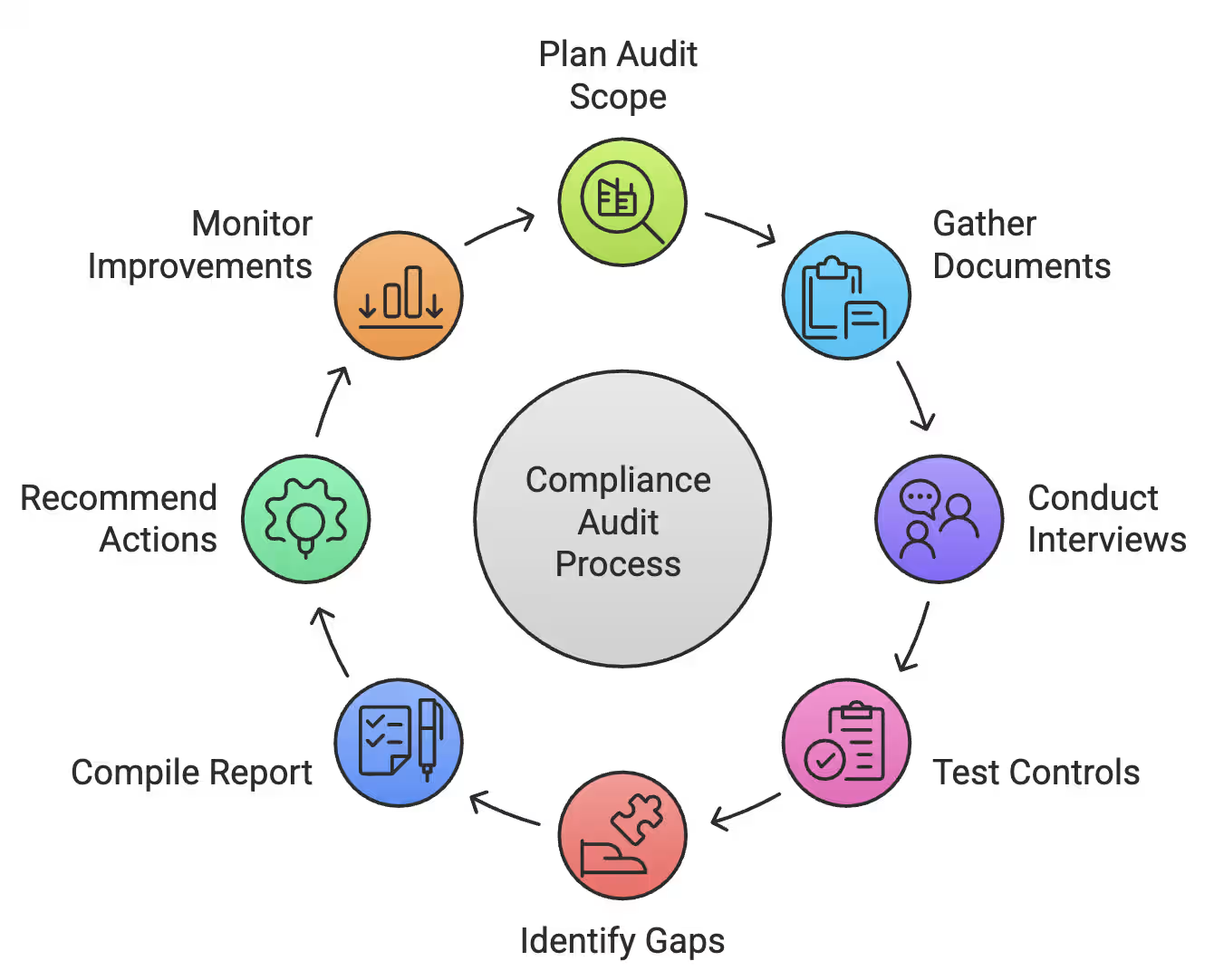
A structured audit process keeps your organization compliant, uncovers gaps early, and prevents small issues from turning into big problems.
Types of Compliance Audits Across Industries
Different industries, different rules, different headaches. What works for a pharmaceutical company won't cut it for a bank. And what keeps a hospital compliant might be irrelevant for a tech startup. Each sector comes with its own audit priorities and regulatory requirements.
Audit Compliance in Pharma and Life Sciences
Pharmaceutical audits are high-stakes. The FDA, EMA, and WHO monitor every step because mistakes can directly affect patient safety. Pharma auditors focus on:
-
CGMP (Current Good Manufacturing Practice) assessments – Ensuring manufacturing follows strict standards; most FDA inspections find facilities compliant
-
Quality system audits – Checking documentation, training, and deviation handling
-
Process quality audits – Scrutinizing each manufacturing step for consistency
-
Product quality audits – Ensuring batch records and test results match promised standards
Pharma auditors must understand complex regulations while staying independent from operations.
Financial and Environmental Compliance Audits
Money makes the world go round, but it also attracts fraud. Financial auditors focus on:
- SOX (Sarbanes-Oxley) audits – Required for publicly traded companies
- FINRA assessments – Covering 19 areas, including anti-money laundering and cybersecurity
- BSA/AML reviews – Examining suspicious activity reports and transaction compliance
Environmental auditors focus on compliance with environmental laws and internal initiatives:
- Regulatory standards – Clean Air Act, Clean Water Act, RCRA, and EPA mandates
- Internal programs – Environmental management systems and sustainability efforts
IT Compliance Auditor Roles
Cybersecurity evolves daily, and IT auditors keep up with regulations and frameworks like:
- PCI DSS – For organizations processing millions of credit card transactions
- SOC 2 – Evaluates controls for security, availability, integrity, confidentiality, and privacy
- GDPR – Ensures EU customer data protection
Auditors constantly update technical knowledge, as yesterday’s fixes can become today’s vulnerabilities.
Healthcare Compliance Auditor Responsibilities
Healthcare auditors ensure providers follow regulations while safeguarding patients. They focus on:
- Clinical documentation and medical coding accuracy
- HIPAA privacy compliance
- Medicare/Medicaid billing practices
- Identifying compliance issues before they escalate
Many healthcare auditors have clinical or health information management expertise, helping them understand both regulations and the realities of patient care.
Skills and Qualifications for Compliance Auditors
Want the honest truth about becoming a compliance auditor? It’s not just checking boxes. Organizations with qualified auditors report 35% fewer regulatory violations. But here’s what job postings rarely tell you.
Understanding audit and compliance job description
The basics matter:
- Educational foundation – A bachelor’s degree in accounting, business, law, or IT is usually required.
- Experience – Most roles ask for 5+ years of auditing experience, though entry-level roles offer exposure.
- Industry knowledge – Deep understanding of relevant regulations is essential to spot compliance gaps.
The real differentiators are critical capabilities:
- Analytical thinking – Evaluate complex processes against regulatory frameworks systematically.
- Detail orientation – Minor discrepancies often signal major compliance issues.
- Objectivity – Stay impartial regardless of findings or internal pressures.
Communication and report writing skills
Technical skills find problems; communication ensures they get fixed. Fact: poor communication causes over 50% of audit remediation failures.
Written skills:
- Create structured, audience-appropriate reports
- Present findings by significance or grouped activities
- Use charts and visuals to highlight key messages
- Maintain constructive, non-adversarial tone
Verbal skills:
- Listen actively during interviews for essential insights
- Build rapport to ease anxiety and defensiveness
- Explain compliance standards clearly to all departments
- Present findings to management with proper emphasis
As a compliance director says: “Technical expertise identifies problems, but communication ensures they get fixed.” You can be the smartest person in the room—but if you can’t explain what’s broken and how to fix it, your expertise means nothing. Most auditors master the technical side; few master the human side. Be different.
Compliance Auditor Certification Options
Want to boost your earning power? Get certified. Professional certifications don’t just look good on your resume—they open doors to higher salaries and better opportunities. Research shows certified professionals can earn up to 25% more than non-certified peers.
Compliance Audit Certification Programs
Leading institutions offer structured paths to compliance expertise:
-
USC Compliance Certificate – Fully accredited by the Compliance Certification Board (CCB). Graduates can skip work experience requirements for CCB exams.
-
Pace University’s CCRP® Program – 80 hours of training in 26 sessions, led by real compliance veterans and academics.
-
IIA Compliance Auditing Course – Covers SOX, PCI, HIPAA, OFAC, ESG, and GDPR, bridging theory and workplace application.
Compliance Auditor Certifications
These industry-recognized credentials prove your expertise:
-
Certified Internal Auditor (CIA) – The gold standard in internal auditing.
-
Certified Compliance and Ethics Professional (CCEP) – Focuses on compliance frameworks and ethics.
-
Certified Information Systems Auditor (CISA) – For IT systems and cybersecurity auditing.
-
Certified Risk Management Professional (CRMP) – Centers on spotting and managing risks.
Audit Compliance Certificates
Specialized certificates cover niche areas:
-
Certified HEDIS Compliance Auditor – Requires sponsorship; auditors complete two audits annually and six continuing education credits.
-
Certified Quality Auditor (CQA) – ANSI-approved under ISO 17024; education waivers can reduce experience requirements.
Regulations get more complex every year. These certifications give professionals the knowledge, credibility, and career edge they need. The real question isn’t whether you need certification—it’s which one you’ll pursue first.
Regulatory Compliance Auditor Salary and Career Opportunities
Ready for some real talk about compliance auditor salaries? The numbers might surprise you.
Regulatory Compliance Auditor Salary by Industry
The average compliance auditor earns between $68,732 and $74,164 annually in the United States. But here’s where it gets interesting — your industry choice can make or break your paycheck:
- Finance: $70,894 per year
- Healthcare: $66,314
- Government: $52,868
Some employers blow these averages out of the water:
- T. Rowe Price: $237,000
- Solventum: $230,387
- Brother USA: $205,000
Not too shabby for keeping companies honest, right?
Entry-level vs Senior Compliance Auditor Pay
Your years in the game directly impact your wallet:
- Starting out? Expect $42,700–$62,429 annually
- Mid-career brings $61,500–$63,956
- Senior level? Now we’re talking $100,491–$104,000
Location matters too:
- New York City tops the charts at $155,717
- Woodland Hills follows at $140,686
- Chicago comes in at $107,355
Freelance and Consulting Opportunities
Independent compliance pros get serious flexibility:
- Remote hourly work: $50–$57 per hour
- High-level remote positions: $80,000–$215,000 annually
- Top-tier compliance directors: $200,000–$250,000
These gigs usually want specialists in KYC, KYB, or AML operations with 5–8 years of experience.
The takeaway? Compliance auditing isn’t just about doing the right thing — it pays well too. Pick your industry, sharpen your skills, and explore flexible opportunities. Doing good and earning well can go hand in hand.
Conclusion: Is a Career as a Compliance Auditor Right for You?
Are you ready to be the person who keeps organizations honest? Compliance auditors don’t just tick boxes—they catch problems before they become headlines, fines, or lawsuits. They ensure companies follow rules, protect reputations, and prevent costly mistakes.
This career isn’t for everyone. You need sharp analytical thinking, obsessive attention to detail, and communication skills that turn complex regulations into clear, actionable advice. Objectivity under pressure is essential, even when everyone wants you to look the other way.
The rewards are real. Salaries can reach six figures. Opportunities span healthcare, finance, tech, and more. You can work in-house, consult independently, or focus on niche areas. Certifications aren’t just for show—certified auditors earn up to 25% more and often get the best roles.
Compliance is growing fast. It’s not just about avoiding fines—it’s about building trust with stakeholders and keeping operations ethical and safe. You’re protecting consumers, investors, patients, and communities.
You’re part detective, part advisor, part teacher—finding gaps, recommending solutions, and helping organizations become stronger, safer, and more resilient from the inside out.
Take control of compliance, reduce risk, and build trust with UprootSecurity — where GRC becomes the bridge between checklists and real breach prevention.
→ Book a demo today