Compliance Documentation: A Practical Overview
Robin Joseph
Senior Security Consultant

Ever feel like you’re drowning in regulations? You’re not alone. Modern businesses operate inside an increasingly complex maze of laws, standards, and compliance requirements — and that maze tightens every year. When auditors show up, good intentions don’t matter. Evidence does.
Compliance documentation isn’t just paperwork. It’s operational infrastructure. Without structured documentation, compliance becomes chaotic: duplicated efforts, missed controls, outdated policies, and hours wasted searching for the right files. Poor document management alone can drain over 20% of productivity across teams.
The financial stakes are even higher. Weak documentation and data practices significantly increase breach costs, often adding hundreds of thousands — sometimes millions — to the total impact. That’s not just a technical breakdown. It’s a governance failure.
Smart organizations understand this early. They treat compliance documentation as a controlled, strategic system — one that accelerates audits, reduces regulatory exposure, and replaces reactive fire drills with something far more valuable: defensible proof.
What Is Compliance Documentation and Why It Matters
Compliance documentation is proof. It’s any record that demonstrates your organization follows applicable laws, regulations, standards, and internal policies. These compliance records show how controls operate in practice, providing auditors with verifiable evidence rather than assumptions. That includes policies and procedures, licenses, training records, risk assessments, audit reports, and third-party agreements. Each document ties directly to a control or requirement.
Together, these records form structured evidence that regulators and auditors rely on to verify compliance. They show what controls exist, how they operate, and when they were reviewed. Without that trail, even strong security programs collapse under scrutiny.
Documentation protects you where intent cannot. It reduces legal exposure, enforces operational consistency, and surfaces risks before they escalate. It also builds credibility with regulators, customers, and partners by demonstrating accountability.
Most importantly, effective compliance documentation is proactive. It shortens audits, supports certifications, and enables faster adaptation when regulations change. Managed correctly, it shifts compliance from reactive firefighting to defensible, operational discipline.
Types of Compliance Documents
Compliance documentation isn’t a single bucket of paperwork. Different document types exist to prove different parts of compliance—from intent and execution to oversight and accountability.
The core types of compliance documents include:
- Policies and Procedures
- Training Records and Employee Acknowledgements
- Licenses, Permits, and Regulatory Certificates
- Audit Reports and Risk Assessments
- Contracts, NDAs, and Third-Party Agreements
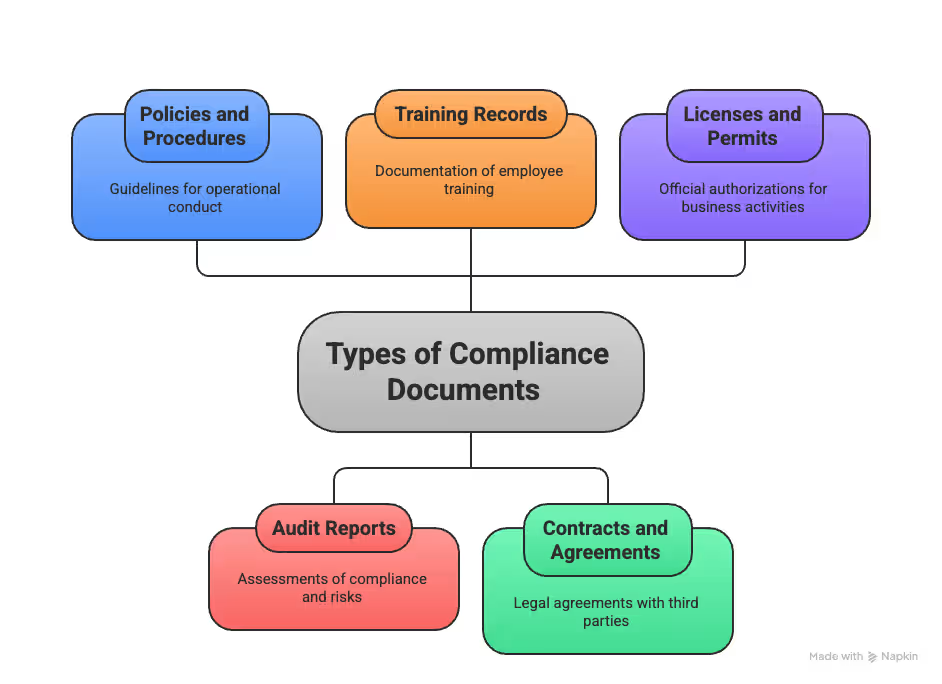
Each type plays a specific role in showing regulators, auditors, and stakeholders how compliance actually works in practice.
1. Policies and Procedures
Policies and procedures define how compliance operates across the organization. Policies set expectations, while procedures explain how those expectations are executed.
Key elements include:
- Clear, focused policy statements
- Defined roles and responsibilities
- Standardized formats and terminology
- Regulatory references and supporting SOPs
Together, they create consistency, reduce ambiguity, and give auditors a clear baseline for assessing control design.
2. Training Records and Employee Acknowledgements
Training records prove that compliance requirements are communicated, understood, and reinforced across the workforce.
Strong training documentation usually captures:
- Employee identification details
- Training titles and descriptions
- Completion dates and assessment results
- Signed acknowledgements of policy understanding
These records close the gap between written policies and real-world behavior, making enforcement and accountability possible.
3. Licenses, Permits, and Regulatory Certificates
Licenses and permits demonstrate that your organization is legally authorized to operate within specific jurisdictions and industries.
Common examples include:
- Business registrations and tax filings
- Industry-specific operating licenses
- Environmental, safety, or data-handling permits
Keeping these documents current is critical—expired or missing licenses can trigger fines, regulatory audits, operational disruptions, or forced shutdowns.
4. Audit Reports and Risk Assessments
Audit reports and risk assessments show that compliance isn’t assumed—it’s tested, reviewed, and validated through structured evaluations.
They typically include:
- Internal audit findings
- Third-party assessment reports
- Identified risks and control gaps
- Corrective action plans and timelines
Together, these documents demonstrate ongoing oversight, accountability, and a commitment to continuous improvement.
5. Contracts, NDAs, and Third-Party Agreements
Contracts and third-party agreements extend compliance responsibilities beyond your organization’s boundaries.
Key components often cover:
- Confidentiality and data protection terms
- Defined compliance obligations and liability limits
- Termination clauses for regulatory violations
Because vendor risk becomes organizational risk, these documents are essential for maintaining end-to-end compliance and accountability.
Together, these document types form the evidence layer of compliance—showing not just intent, but execution, oversight, and accountability across the organization.
Building a Strong Compliance Documentation Framework
You can’t just throw documents into a folder and call it compliance. A strong framework keeps documentation organized, accessible, and defensible—ready for auditors, regulators, and internal teams. Implemented properly, it turns paperwork into actionable evidence rather than a liability.
A strong compliance documentation framework typically includes these steps:
- Compliance hierarchy
- Centralized file management
- Version control and traceability
- Role-based access control
- Standardized formatting for audit readiness
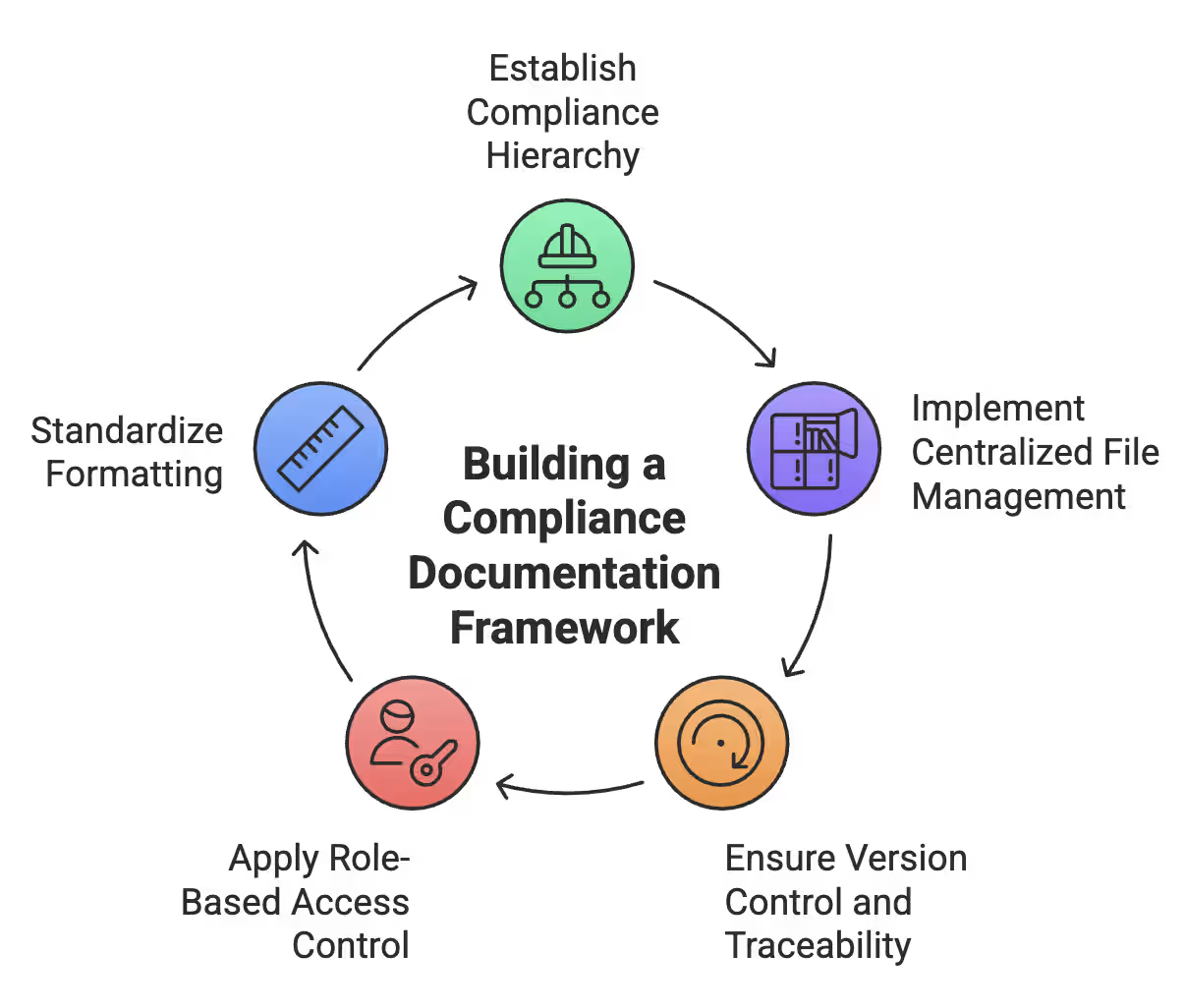
Each step strengthens how documentation is created, maintained, and reviewed.
1. Compliance Hierarchy
You can’t run compliance without knowing which documents matter most. A clear hierarchy ensures every policy, procedure, and SOP has its place. Policies define intent, procedures explain execution, and SOPs turn rules into actionable steps.
Key points include:
- Policies define organizational commitment to compliance
- Procedures explain day-to-day application
- SOPs provide step-by-step instructions for recurring tasks
- SOPs evolve with operations while giving auditors clear evidence
This hierarchy creates clarity, consistency, and a solid baseline for auditing.
2. Centralized Compliance File Management
Scattered documents create confusion, waste time, and increase audit risk. Centralized storage ensures everyone works from the same source of truth.
Benefits include:
- Easier regulatory compliance and oversight
- Controlled access with transparency
- Faster audits via clear evidence trails
- Preservation of institutional knowledge for reference
Centralization reduces duplication and keeps documentation usable year after year.
3. Version Control and Document Traceability
Version control tracks every change to ensure documents remain auditable and reliable.
Key elements include:
- Chronological record of edits
- Protection against unauthorized changes
- Assurance teams use current documents
- Regulatory retention compliance
- Traceability matrix to prove requirements are met
Traceable versions defend your organization during audits and prevent errors.
4. Access Control and Role-Based Permissions
Not every employee should access every document. RBAC ensures only authorized users can view, edit, or approve sensitive files.
Core components include:
- Roles tied to specific responsibilities
- Permissions for viewing, editing, or approving
- Assigning users to correct roles
RBAC protects data, enforces accountability, and simplifies compliance management.
5. Standardized Formatting for Audit Readiness
Consistent formatting improves readability and makes audits easier and faster.
Standardization elements include:
- Uniform templates and layouts
- Required regulatory sections
- Defined review and approval workflows
- Built-in audit logs tracking changes
Proper standardization transforms compliance documentation from a routine task into a strategic organizational asset.
When implemented together, these steps create a robust framework—organized, auditable, and a strategic business tool rather than just paperwork.
Compliance Documentation Lifecycle Management (CDLM)
Compliance documentation isn’t static. It evolves, changes, and eventually expires. Without lifecycle discipline, even strong policies become risky. CDLM ensures documents stay controlled, current, and defensible from creation to disposal. This lifecycle documentation approach keeps every compliance artifact traceable from drafting and approval through archival and secure disposal.
A disciplined CDLM framework typically moves through these defined stages:
- Creation and Drafting
- Review and Approval
- Distribution and Implementation
- Ongoing Monitoring and Updates
- Retention and Archival
- Retirement and Secure Disposal
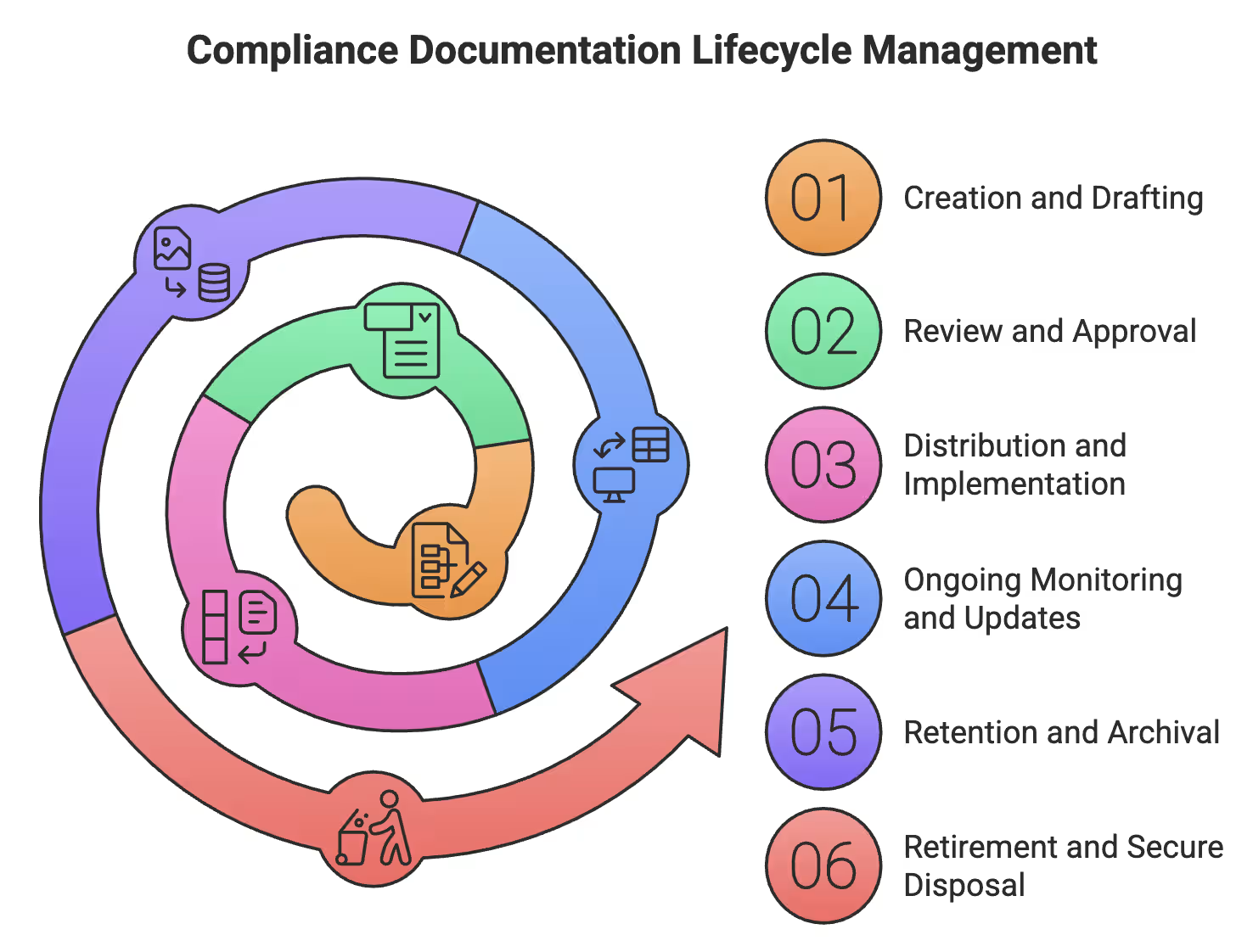
Let’s break down what each stage requires.
1. Creation and Drafting
Every document begins with a trigger — a new regulation, audit finding, control gap, or operational change. This stage defines ownership and structure before risk creeps in.
- Assign a clear document owner
- Use standardized templates
- Map the document to regulatory requirements
- Define scope and applicability
Strong drafting prevents ambiguity and rework later.
2. Review and Approval
Before release, documentation must be validated across functions. This step formalizes accountability.
- Conduct legal, compliance, and security reviews
- Use structured approval workflows
- Log version numbers and timestamps
- Require documented sign-off
Approval turns drafts into enforceable controls.
3. Distribution and Implementation
Publishing without control creates exposure. Distribution must be deliberate and traceable.
- Store in a centralized repository
- Apply role-based access controls
- Track acknowledgements where required
- Align training with new or updated documents
Controlled rollout ensures compliance moves from theory to execution.
4. Ongoing Monitoring and Updates
Regulations change. Operations evolve. Documentation must keep pace.
- Schedule periodic review cycles
- Trigger updates when regulations shift
- Maintain full version history
- Clearly label superseded documents
Monitoring prevents outdated controls from becoming audit risks.
5. Retention and Archival
Even inactive documents can carry legal value.
- Define retention timelines
- Securely archive historical versions
- Ensure audit-ready retrieval
- Separate archived from active files
Retention protects your organization during investigations or disputes.
6. Retirement and Secure Disposal
Obsolete documentation must be formally closed out.
- Follow documented destruction policies
- Maintain proof of disposal
- Remove outdated files from circulation
- Comply with data retention laws
CDLM transforms compliance documentation into a living, controlled system — not static paperwork waiting to fail under scrutiny.
Best Practices for Managing Compliance Docs
Creating compliance documents is just the start. The real challenge? Keeping them current, accessible, and audit-ready so you can manage and comply documents efficiently across your organization. Outdated or scattered policies don’t protect your business—they create risk.
Here’s how smart organizations keep documentation reliable and defensible:
Regular Review and Update Cycles
Compliance docs aren’t set-it-and-forget-it. Here’s what organizations do to stay ahead:
- Schedule annual or biannual reviews
- Trigger updates whenever regulations, processes, or tech change
- Document who reviews what, and when
- Close out cycles completely
Frequent updates reduce legal exposure, prevent conflicts, and keep your compliance engine running smoothly.
Assigning Ownership for Each Compliance Doc
Without a clear owner, documents slip through the cracks. Here’s how to nail ownership:
- Map responsibilities in an accountability matrix
- Assign based on expertise, not convenience
- Clarify who reviews, approves, and maintains each doc
- Get cross-functional input
Clear ownership drives consistency and makes accountability obvious to auditors and employees alike.
Training Employees on Compliance Paperwork
Policies mean nothing if staff don’t understand them. Effective training programs:
- Cover actual compliance requirements
- Gather feedback to ensure relevance
- Set completion deadlines and track progress
- Keep detailed records of participation
Well-trained employees turn policy into action and reduce compliance risk.
Using Compliance Documentation Software
Manual processes slow teams down. Specialized software:
- Centralizes document control
- Automates reviews, approvals, and versioning
- Provides dashboards for quick compliance insights
- Tracks regulatory changes in real time
Software makes managing compliance faster, more accurate, and auditable.
Monitoring and Internal Audits
Internal audits help catch issues before they become major problems. Your reviews should:
- Verify document accuracy and completeness
- Include cross-functional review teams
- Test whether controls actually work
- Document corrective actions
Regular audits keep compliance solid, demonstrate oversight, and ensure your organization is always audit-ready.
Common Challenges and How to Overcome Them
Managing compliance documentation is never easy. Even well-intentioned teams face recurring issues that slow work, increase risk, and complicate audits. Here are the main challenges and practical ways to handle them:
Time-Consuming Manual Processes
Compliance teams spend too much time on repetitive tasks, like collecting evidence or generating reports. Nearly 40% of work hours are lost to processes that could be automated.
Here’s what organizations do to improve efficiency:
- Use automation tools to handle repetitive tasks
- Adopt hybrid workflows—automation for heavy lifting, humans for judgment-based tasks
- Integrate with existing systems instead of replacing everything
Keeping up with Regulatory Compliance Documentation
Regulations change constantly, and staying current is a challenge for every compliance team. Financial services alone face roughly 257 regulatory updates each day.
To stay ahead:
- Use regulatory tracking software for real-time updates
- Assign a dedicated team to monitor changes
- Set up automated alerts for new or updated regulations
Managing Multiple Compliance Frameworks
GDPR, HIPAA, ISO 27001—different frameworks demand different documentation, retention periods, and reporting methods.
Best practices include:
- Map overlapping requirements to reduce duplicate work
- Build a unified control matrix for shared obligations
- Use compliance platforms designed to handle multiple frameworks
Maintaining Consistency Across Departments
Without standardization, multi-site organizations risk inefficiencies and compliance gaps. Every department may follow its own processes, creating chaos.
Ways to maintain consistency:
- Centralize compliance management
- Roll out standardized templates and workflows
- Conduct regular audits across all locations
Avoiding Redundancy in Compliance of Documents
Duplicate work wastes time and increases errors. Managing separate controls for each framework multiplies effort unnecessarily.
Solutions include:
- Implement a “collect once, use many times” approach
- Keep a centralized repository for all documentation
- Use a common control framework covering multiple requirements
Addressing these challenges makes compliance documentation more efficient, reliable, and strategically valuable.
Conclusion: Turning Compliance Documentation into a Strategic Asset
Compliance documentation isn’t just paperwork. It’s your business insurance, competitive advantage, and shield against regulatory penalties. Every document—policies, training records, licenses, audit reports, third-party agreements—works together like puzzle pieces. Alone, they’re just paper. Together, they create a protective framework that keeps fines, lawsuits, and audit nightmares at bay. Effective documentation of compliance transforms regulatory obligations into measurable operational proof, strengthening trust across audits, partnerships, and customer relationships.
A solid framework—hierarchy from policies to SOPs, centralized management, version control—makes the difference between stumbling through audits and breezing through them. Best practices like regular reviews, clear ownership, employee training, smart software, and internal audits ensure compliance is manageable and defensible.
Yes, challenges exist: manual work, changing regulations, multiple frameworks, departmental inconsistencies, and duplicate efforts. But smart organizations turn these hurdles into advantages. Compliance documentation proves you’re serious, builds trust with regulators, customers, and partners, and demonstrates real accountability.
View it as more than a burden. See it as a foundation for growth, resilience, and credibility. That’s the choice that sets successful businesses apart.
Take control of compliance documentation and reduce risk with UprootSecurity — turning paperwork into defensible security.
→ Book a demo today
Continuous Compliance & GRC Ops