
Governance vs Compliance: Which Matters More for Your Business?

Robin Joseph
Senior Security Consultant

Ever wondered why trust in big companies keeps falling off a cliff? It’s not your imagination. Since 2021, public trust has dropped by 21%. That’s not a statistic — it’s a warning shot. In 2025, compliance and governance aren’t corporate wallpaper. They’re your business survival kit.
The rules of the game didn’t just change — they exploded. You’re now navigating a maze of global laws, nonstop public scrutiny, and consequences that can shut down a business in a single afternoon. Welcome to 2025, the “Year of Regulatory Shift,” where a misstep isn’t a slap on the wrist — it’s an existential threat.
And here’s the twist: while the regulatory world keeps getting heavier, smart companies are using compliance and governance to move faster. To build trust. To stay ahead of regulators, competitors, and crises.
This isn’t about checklists. It’s about credibility. Transparency. Long-term value.
Compliance and governance aren’t optional anymore. They’re the backbone of every company that plans to stay alive — and stay trusted — in 2025.
Why Compliance and Governance Matter More Than Ever in 2025
Trust is the new currency in 2025 — and most companies are running low. Regulatory pressure is rising in every direction. Data protection laws now cover most of the world, ESG expectations are reshaping boardrooms, and governments are tightening enforcement instead of issuing warnings. The old “manage it later” mindset simply doesn’t work anymore.
The cost of getting compliance wrong has never been higher. We’re talking billion-dollar fines, revoked licenses, and criminal liability for executives who miss the signs. One mistake can erase shareholder value faster than any competitor ever could.
But forward-thinking companies understand something simple: governance isn’t paperwork. It’s architecture. It establishes the rules, accountability, and decision-making pathways that keep an organization steady, transparent, and resilient.
And compliance? That’s the engine that keeps that architecture running without breaking.
Together, they build trust—internally, publicly, and with regulators. In a world of constant scrutiny and rising expectations, compliance and governance aren’t just protective layers. They’re strategic assets that determine who survives and who collapses.
Compliance and Governance: Core Definitions Explained
Let’s cut through the jargon.
Most people toss around “compliance” and “governance” like they’re identical. They’re not. And knowing the difference isn’t corporate trivia — it’s the baseline for running a business that stays stable, accountable, and legally sound.
What Is Governance?
Governance is how you run the show from the inside.
It’s the system of rules, policies, processes, and controls that guide how your company behaves and makes decisions. Think of it as your internal compass — setting direction, defining responsibilities, and ensuring accountability.
Good governance means:
- Setting where you’re going
- Making roles crystal clear
- Building controls that actually work
- Balancing expectations across employees, leadership, shareholders, and communities
It influences everything from performance management to board oversight. Strong governance keeps everyone aligned and prevents chaos before it starts.
What Is Compliance?
Compliance is different — it’s about following rules set by others.
While governance is internally built, compliance focuses on meeting external requirements: laws, regulations, contracts, and industry standards.
Your compliance responsibilities typically include:
- Industry-specific regulations
- Government laws
- Contractual obligations
- Operational or security standards
Compliance keeps you out of legal trouble and builds trust with customers, partners, and regulators. In today’s environment, it’s not optional — it’s survival.
Governance Risk Management and Compliance Definition in Context
GRC — the definition of governance risk and compliance — isn’t just another acronym.
It’s the integrated set of capabilities that helps an organization achieve objectives, tackle uncertainty, and act with integrity.
- Governance sets internal direction
- Risk management identifies and controls threats
- Compliance ensures you meet every requirement
Together, they create a coordinated framework that aligns strategy, IT, and operations while reducing risk.
Regulation vs Compliance: Understanding the Difference
Regulations are the rules set by governments or industry bodies. Compliance is your response to those rules.
- Regulatory risk = impact from new or changing laws.
- Compliance risk = violating existing requirements.
Different risks — equally critical.
Compliance Corporate Governance Basics
This is where everything connects.
Governance defines your internal standards. Compliance ensures those standards meet external expectations.
When they work together, organizations gain:
- Transparent decision-making
- Clear accountability
- Strong stakeholder protection
- Lower legal and operational risk
These aren’t academic definitions. They’re practical tools that keep your business stable, ethical, and legally protected.
Compliance vs Governance: Key Differences
Here’s the deal: compliance and governance often work together, but they’re completely different beasts. Understanding the differences helps you make better decisions, stay out of trouble, and align your business for long-term success.
Here’s a clear breakdown:
| Aspect | Governance | Compliance |
|---|---|---|
| Source of Authority | Created internally by board, shareholders, and executives to achieve company goals | Set externally by regulators and legal authorities; mandatory by law |
| Strategic vs Tactical Focus | Long-term strategy, future direction, company vision | Day-to-day operational focus; ensures immediate legal and regulatory adherence |
| Mandatory vs Voluntary | Mostly voluntary; self-imposed frameworks | Mandatory; failing to comply can result in fines, lawsuits, or shutdowns |
| Controls and Governance | Internal controls and governance frameworks designed to achieve business objectives | External standards with measurable metrics (e.g., SEC disclosures, regulatory audits) |
| Decision-Making Role | Shapes strategic direction and ethical priorities | Ensures operational decisions stay within legal and regulatory boundaries |
Think of it like this: governance is your GPS, setting the destination and route. Compliance? That’s the traffic law, keeping you on the right path while avoiding penalties.
How Compliance and Governance Work Together
Compliance and governance aren’t rivals — they’re dance partners. When they move together, organizations operate efficiently, legally, and strategically.
Governance Supports Compliance Through Policies and Structure
Think of governance as your backstage crew. It creates the framework that makes compliance actually work.
93% of organizations have governance frameworks, but top performers:
- Build monitoring systems that catch issues early
- Create clear roadmaps for staying compliant
- Schedule regular check-ins to prevent small issues from becoming big disasters
Strong governance turns compliance from a burden into part of everyday operations.
Compliance in Corporate Governance: Where They Overlap
Corporate governance provides structure; compliance ensures it’s followed.
Take Target: executives follow the same ethics code as all employees, closing leadership blind spots and boosting accountability.
Smart companies also:
- Align internal policies with external regulations
- Use compliance checks to inform governance decisions
- Make accountability visible via audits and reporting
Compliance only thrives when governance actively supports it.
Compliance Drives Governance Improvements
Compliance isn’t just reactive — it actively strengthens governance across the organization, ensuring policies are practical, risks are managed, and decision-making stays aligned with strategic goals.
- 75% of companies have a chief compliance officer guiding compliance programs.
- 80% of compliance heads can escalate issues directly to the board.
Feedback from compliance teams identifies gaps, refines governance frameworks, and drives continuous improvement.
Compliance Governance Synergy in Modern Enterprises
When they work together, the benefits go beyond avoiding penalties:
- Efficiency: Duplicate audits vanish; teams collaborate
- Cost savings: Streamlined workflows free budget for priorities
- Connected systems: Data flows seamlessly across compliance, risk, and governance
- Strategic advantage: Compliance drives better governance, not just risk avoidance
Strengthening Compliance Corporate Governance Initiatives
Make the partnership work:
- Represent compliance at the top; give risk a voice in decisions
- Tie compliance targets to leadership incentives
- Automate governance risk and compliance frameworks
- Break down departmental silos for better collaboration
Getting this right turns compliance and governance into actionable, measurable initiatives that strengthen operations and accountability.
Compliance and governance aren’t just protective layers — when aligned, they become strategic assets that drive sustainable excellence.
Applying Compliance and Governance in Practice
Here’s the truth: the companies winning in 2025 aren’t the ones with the thickest policy binders. They’re the ones that turn compliance and governance into everyday habits—embedded into systems, decisions, and workflows. Here’s what that looks like in the real world.
Corporate Governance and Compliance in Regulated Industries
Regulated industries don’t get second chances. Their governance structures are built for survival, not formality.
In financial services, governance shapes how fraud controls, KYC checks, and reporting processes work. Healthcare organizations depend on governance to protect patient data, define access rules, and enforce HIPAA-aligned workflows. Energy and manufacturing companies rely on governance-backed safety standards, audits, and incident reporting to prevent operational failures.
In every case, governance sets the rules. Compliance ensures those rules are actually followed.
Real-World Examples of Corporate Compliance and Governance
Real improvement usually begins after the cost of failure becomes impossible to ignore.
Target’s breach triggered a governance reset. The board added dedicated cybersecurity oversight, and executives were held to the same Code of Ethics as employees—closing cultural and accountability gaps that had weakened compliance.
Wells Fargo’s unauthorized-account scandal forced a structural overhaul. Independent risk oversight was rebuilt, escalation paths were clarified, and new controls were introduced to detect policy violations early.
Pharmaceutical leaders like Pfizer demonstrate proactive governance. Their global operations demand unified compliance across clinical trials, supply chains, and regional regulations—showing that consistency is achievable even in complex environments.
The pattern is clear: compliance works only when governance leads decisively.
Using Technology and Entity Management Tools
Technology turns governance from slow and manual into something responsive. Entity management platforms keep corporate records current, automate board workflows, and maintain regulatory calendars. GRC tools map risks to controls, route tasks, and alert leaders when obligations change. Together, they reduce gaps and prevent surprises.
Compliance Audit Checklists and Internal Controls
Audit checklists verify every legal and operational requirement. Internal controls create guardrails around reporting, access, and daily processes. Regular audits test whether governance rules hold up in practice, while documentation provides the evidence regulators demand. In mature organizations, these controls evolve continuously—turning compliance into a proactive discipline rather than a reactive scramble.
Challenges in Managing Compliance and Governance
Managing compliance and governance isn’t easy. Companies across industries face the same mess, and 2025 isn’t making it simpler. Rules are expanding, expectations are higher, and every misstep carries real consequences. Staying compliant while keeping operations moving requires careful strategy.
Complexity in Governance Risk Management and Compliance Definition
The reality is stark: 73% of organizations feel compliance scrutiny increasing. Nearly three-quarters of cross-functional teams struggle because responsibilities are unclear. Global compliance costs hit USD 1.90 trillion annually. Compliance isn’t just a line item — it can be your largest operational expense.
Keeping Up With Regulatory Changes and Internal Policies
Regulations evolve at lightning speed. Financial services alone face 257 regulatory updates daily from over 1,300 regulators. Tracking new laws is a nightmare — 43% of chief compliance officers cite it as their top headache. Every day brings new rules, weekly interpretations, and monthly potential penalties.
Training, Awareness, and Cross-Department Gaps
Collaboration across departments often feels impossible. Traditional training doesn’t stick, and teams operate in silos. Compliance officers struggle to align legal, operations, and IT teams. Everyone seems to speak a different language, making coordination a constant challenge.
Balancing Flexibility With Legal and Regulatory Obligations
Resources are stretched trying to stay compliant while remaining agile. Rigid rules slow problem-solving, and “best practices” sometimes clash with regulations. Moving fast while following every rule is difficult — and unavoidable.
Smart organizations navigate these challenges, turning compliance and governance from obstacles into systems that strengthen growth, accountability, and resilience.
Building a Unified Compliance and Governance Framework
Here's the deal: most companies are terrible at building effective governance risk compliance frameworks. UK financial institutions alone burn through £34.2 billion annually on financial crime compliance. That's not strategy — that's desperation.
Steps to Align Corporate Compliance and Governance
You want a framework that actually works? Here's your roadmap:
Step 1: Assess Your Current Compliance Landscape
Map out what regulations hit you and what compliance stuff you've already got. No assumptions. Just facts.
Step 2: Assign Clear Ownership
Clear responsibilities aren't optional. If everyone's responsible, nobody's responsible.
Step 3: Implement Technology Solutions
Deploy integrated systems that centralize your documentation. Stop playing email tag with compliance docs.
Step 4: Foster Cross-Departmental Engagement
Cross-departmental participation isn't a nice-to-have. It's how you avoid those silos that kill good frameworks.
Step 5: Build a Compliance-Oriented Culture
Ongoing education that emphasizes organization-wide importance. Make compliance part of your DNA.
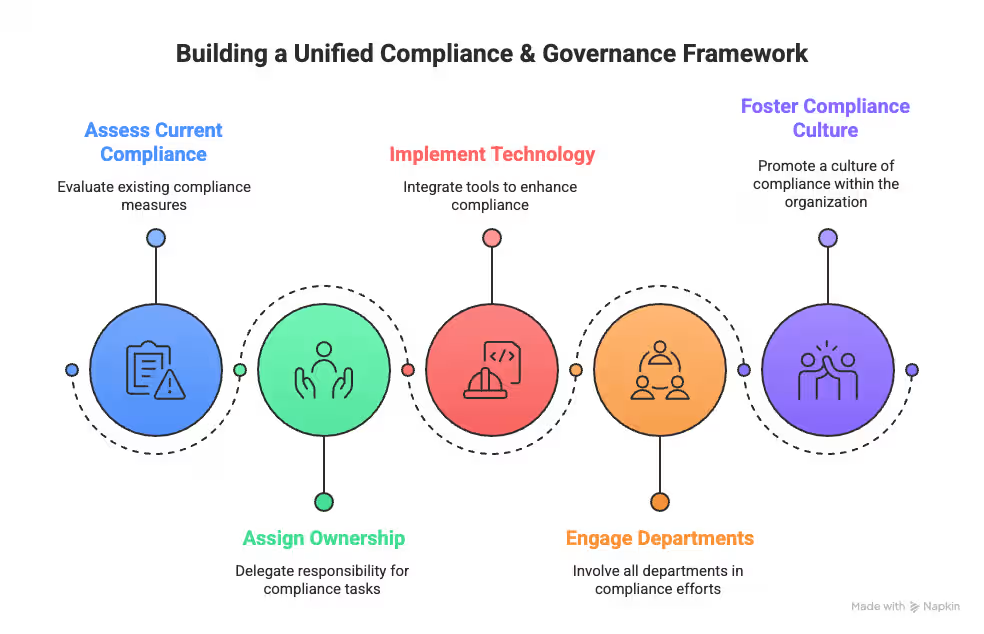
Done right, these steps turn compliance and governance into a system that actually works.
Using Automation to Streamline Compliance Governance
Smart companies automate. Here's why:
- Organizations using GRC automation cut audit prep time by 60%.
- Automation tools test cloud setups against 230+ CIS benchmarks.
- Some companies speed up certifications by 90%.
The real win? You eliminate duplicate work, slash costs, and create connected systems that actually talk to each other.
Behavioral Science in Governance Compliance Training
Annual compliance training is mostly useless. The effectiveness of once-a-year sessions in changing behavior? Questionable at best.
Try this instead:
- Positive signals work: Highlight good compliance behavior in your communications.
- Nudge at the right moment: Deploy reminders when people are making decisions.
- Make it engaging: Use the EAST framework — Easy, Attractive, Social, Timely.
- Leadership has to mean it: Authentic commitment from the top, not just lip service.
Monitoring, Reporting, and Continuous Improvement
Compliance isn't a one-and-done deal.
- Build dashboards with cultural metrics.
- Run regular internal audits.
- Generate reports that actually document your compliance posture.
- Keep monitoring continuously so you catch issues before they become disasters.
Because in 2025, staying ahead means staying vigilant.
Which Matters More for Your Business in 2025?
Asking whether governance or compliance matters more is like asking whether your heart or lungs matter more. The truth is—you need both, working together to keep your business healthy, resilient, and ready for 2025’s regulatory pressures.
Most companies get it wrong. They treat governance and compliance as separate boxes to tick. Governance over here, compliance over there. That approach creates gaps, inefficiencies, and missed opportunities. The real advantage comes from integration: aligning internal governance frameworks with external compliance requirements transforms obligations into strategic assets. Unified systems cut audit prep by 60%, eliminate duplicate work, and make processes communicate seamlessly.
Compliance without governance is just box-ticking. Governance without compliance? That’s risking billion-dollar fines, regulatory chaos, and reputational damage. Together, they build trust, strengthen performance, and make your business resilient to scrutiny.
The challenge isn’t technical—it’s cultural. Break silos, get teams collaborating, and embed compliance into your DNA. In 2025, success isn’t choosing one over the other—it’s making both work so well that competitors wonder how you do it.
Take control of compliance, reduce risk, and build trust with UprootSecurity — where GRC becomes the bridge between checklists and real breach prevention.
→ Book a demo today