The Complete Guide to SOC 2 Compliance for Startups
Robin Joseph
Senior Security Consultant

Some startups close enterprise deals effortlessly. Others stall over endless security questions. SOC 2 compliance is the reason—and the solution. It’s a framework that proves your startup protects customer data through real controls, processes, and verifiable evidence. Not just promises. Real trust.
Your product works. Your team delivers. But the moment security questions appear, momentum dies. PDFs pile up, deals slow, and confidence fades. Meanwhile, competitors with clear trust signals move faster—and win.
Enterprise buyers aren’t just evaluating features—they’re evaluating risk. When trust isn’t obvious, growth stalls, sales cycles stretch, and late-stage deals slip through your hands. That gap isn’t about engineering quality or vision. It’s about credibility.
SOC 2 quietly removes doubt exactly when buyers hesitate. Decisions move faster, conversations change, and startups stop losing momentum to trust gaps they shouldn’t have to fight.
This guide goes deep on SOC 2 specifically. If you're still deciding between SOC 2, ISO 27001, or both, see Compliance for Startups: SOC 2 and ISO 27001 Guide for the timing and cost comparison first.
What Is SOC 2 Compliance and Why It Matters for Startups
SOC 2 is a security framework that shows how your startup actually protects customer data—not in theory, but in practice. It’s built around the Trust Services Criteria and focuses on real controls, real processes, and real evidence of how your systems operate day to day. What matters isn’t what you promise, but what you can prove under independent scrutiny.
For startups, this matters because trust doesn’t scale automatically. Early customers may take your word for it. Enterprise buyers won’t. They expect assurance backed by evidence. SOC 2 turns security from an ongoing debate into a clear conclusion. Instead of re-explaining your posture on every sales call, you point to validation that removes friction and accelerates decisions.
As you grow, risk grows faster than teams and tooling. SOC 2 gives you structure before things break. It forces clarity on ownership, access, monitoring, and response—without freezing velocity.
Understanding SOC 2 for Startups and the Trust Service Criteria
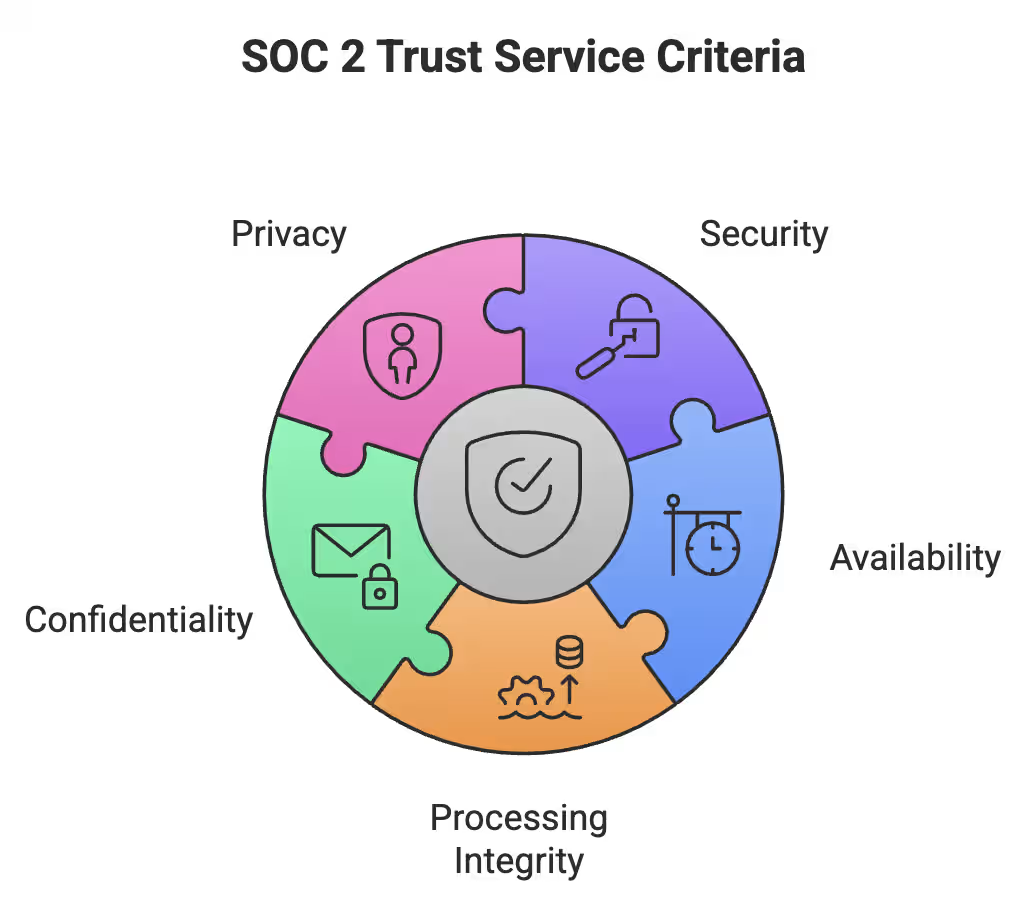
SOC 2 is built around five Trust Service Criteria that auditors use to assess how your startup protects data and operates systems. You don’t need all five. The right criteria depend on your product, data risk, and customer commitments.
Security as the Mandatory Trust Service Criterion
Security is the foundation of every SOC 2 report. There are no exceptions.
- Evaluates whether unauthorized users can access your systems
- Reviews access controls, authentication, and permission management
- Assesses risk identification and incident response processes
- Checks ownership and accountability for security decisions
- Validates day-to-day system operations and monitoring
For startups, Security proves you take data protection seriously. It’s the minimum bar for trust.
Availability and Confidentiality for SaaS Startups
Availability comes into play when uptime is part of your promise.
- Applies if you commit to availability in SLAs or contracts
- Reviews system uptime, monitoring, and recovery procedures
- Examines how outages are handled and communicated
Confidentiality focuses on sensitive business information.
- Covers protection of customer data and proprietary information
- Relevant for most B2B and SaaS startups
- Ensures restricted access to non-public data
If customers trust you with their data, confidentiality usually matters.
Processing Integrity and Privacy When They Apply
Processing Integrity is about correctness and reliability.
- Applies when systems process transactions or calculations
- Verifies data accuracy, completeness, and timeliness
- Common for fintech, payments, and e-commerce startups
Privacy addresses personal data handling.
- Reviews how personal data is collected, used, and retained
- Applies when handling PII beyond basic account data
- Often required due to regulatory or contractual obligations
Not every startup needs these—but when you do, they’re non-negotiable.
Mapping Trust Criteria to Startup Risk Profiles
SOC 2 isn’t just a checkbox—it’s a strategy. The goal isn’t to cover all Trust Service Criteria, but the ones that match your real risks. Consider the data you handle, the promises you make to customers, and contractual requirements. Over-scoping adds cost and audit friction without improving security. Focusing on the right criteria shows maturity, credibility, and that you can manage risk effectively as your startup scales.
SOC 2 Type I vs Type II and How Startups Should Choose
Choosing the wrong SOC 2 type wastes time, money, and energy—and you may still fall short of what enterprise clients expect. Pick based on real needs, not prestige.
SOC 2 Type I as a Design Readiness Assessment
Type I is a snapshot of your controls at a single point in time. It answers one question: are your controls designed properly right now?
The SOC 2 Type I report covers:
- Access management is properly configured
- Encryption is applied where it matters
- Change control processes are defined
- Incident response plans exist
- Business continuity measures are in place
The benefit: Type I can be completed in weeks instead of months. It’s perfect for startups needing to unblock sales conversations or show readiness quickly.
SOC 2 Type II and Proving Control Effectiveness Over Time
Type II evaluates whether your controls are followed consistently over 3–12 months. Think of it as checking not just the gym membership, but whether you actually work out.
The SOC 2 Type II report covers:
- Access permissions are reviewed regularly
- Backups are executed and verified
- Incidents are handled according to documented plans
- Infrastructure changes go through approval processes
Enterprise clients and regulated industries prefer Type II because it demonstrates reliability and operational maturity—not just promises.
When to Start with Type I vs Go Directly to Type II
Your business model and sales priorities should guide the choice.
- Selling to SMBs? Type I may suffice
- Targeting enterprises or regulated clients? Start planning for Type II
- Small teams with limited bandwidth? Type II requires strict operational discipline
Most startups do Type I first, then upgrade. If enterprise deals are imminent, skipping ahead to Type II can make sense.
SOC 2 Compliance for SaaS and Non-SaaS Startups
Type I helps close deals quickly, showing clients your controls exist and processes are in place. Type II proves those controls actually work over time, giving enterprise clients and regulated industries the confidence they require. Focus on customer expectations, contract obligations, and team capacity. Done right, SOC 2 drives growth without slowing operations.
Choose your SOC 2 type and scope based on real risk, customer needs, and team capacity. Smart scoping saves time, reduces friction, and positions your startup for secure, scalable growth.
What Is Required for SOC 2 Compliance in Startups
Here’s the deal: Most startups overcomplicate SOC 2. They try to implement every control under the sun and then wonder why audits drag and costs skyrocket. Smart startups build security into operations from day one—it’s way easier than retrofitting later.
Defining Audit Scope Across Systems, People, and Processes
The biggest mistake? Scoping like a Fortune 500 company. Stop that. Do it right:
- System boundaries – Only include what touches customer data
- Critical vendors – Document third-parties handling sensitive info
- People processes – Map which teams interact with in-scope systems
Startups that treat SOC 2 as more than a checkbox extract real value. Don’t just check boxes—build controls that protect customers and grow the business.
Mandatory vs Optional Controls for Startups
Not all controls matter equally. Focus on essentials:
- Multi-factor authentication (MFA)
- Role-based access controls
- Incident response plan
- Regular vulnerability scanning
- Annual security awareness training
Good news: you likely already have many in place. Google Workspace with MFA, weekly access reviews, quarterly incident drills—you’re halfway there.
SOC 2 for Startups in Regulated or Data-Sensitive Industries
Some startups need extra rigor:
- Fintech – Confidentiality controls are critical to protect sensitive financial data
- Healthcare – Privacy controls are mandatory to comply with regulations and avoid penalties
- Data processors – Often require all five Trust Service Criteria to cover every client obligation and risk
For SaaS startups, SOC 2 is table stakes. No compliance? No enterprise deal.
SOC 2 Compliance Checklist for Startups and Audit Readiness
Most SOC 2 guides drown you in jargon about “holistic frameworks” and “risk-based methodologies.” The reality? Startups succeed when they focus on what matters, stay organized, and demonstrate operational security to auditors and clients.
SOC 2 Compliance Checklist Download and PDF Resources
Getting audit-ready doesn’t have to be overwhelming. Focus on the essentials that matter most for startups, save time, reduce friction, and show real operational security to auditors and clients.
Key SOC 2 checklist items for startups include:
- Scope your audit realistically: Include only systems and processes that matter.
- Implement core controls: Cover access, change management, and vendor oversight.
- Centralize evidence collection: Keep logs, policies, and proof in one place.
- Review controls regularly: Conduct quarterly internal audits to catch gaps early.
- Remediate gaps proactively: Fix issues before auditors discover them.
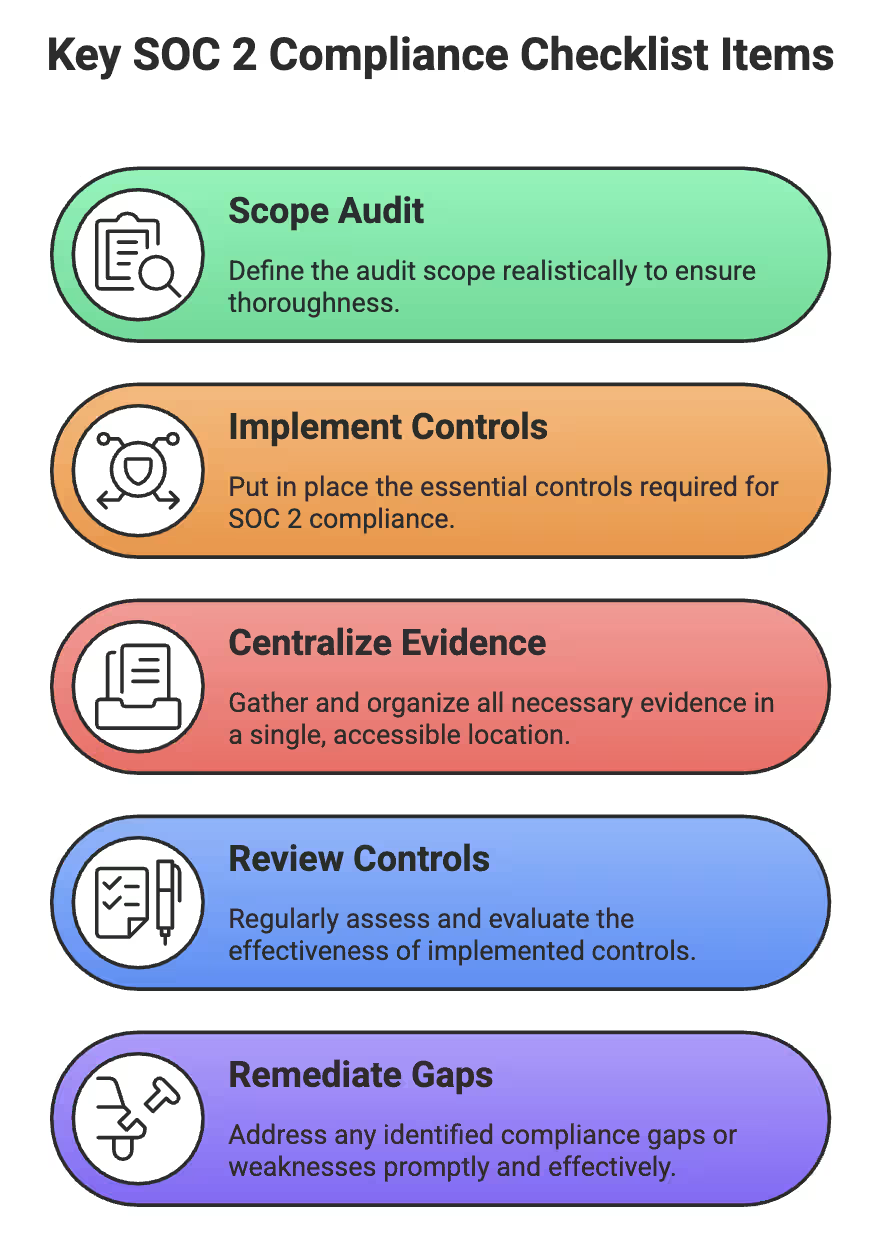
This streamlined checklist keeps startups audit-ready, focused on what matters, and able to demonstrate real operational security to clients and auditors. For a ready-to-use SOC 2 Compliance Checklist PDF, check out Security Compass SOC 2 Compliance Checklist.
Audit Readiness Steps
Getting SOC 2 ready isn’t about checking boxes—it’s a clear, repeatable process that reduces gaps and strengthens trust.
Key audit readiness steps:
- Readiness Assessments, Gap Analysis, and Risk Planning
- Control Implementation Across Access, Change, and Vendors
- Policies, Logs, and Evidence Collection
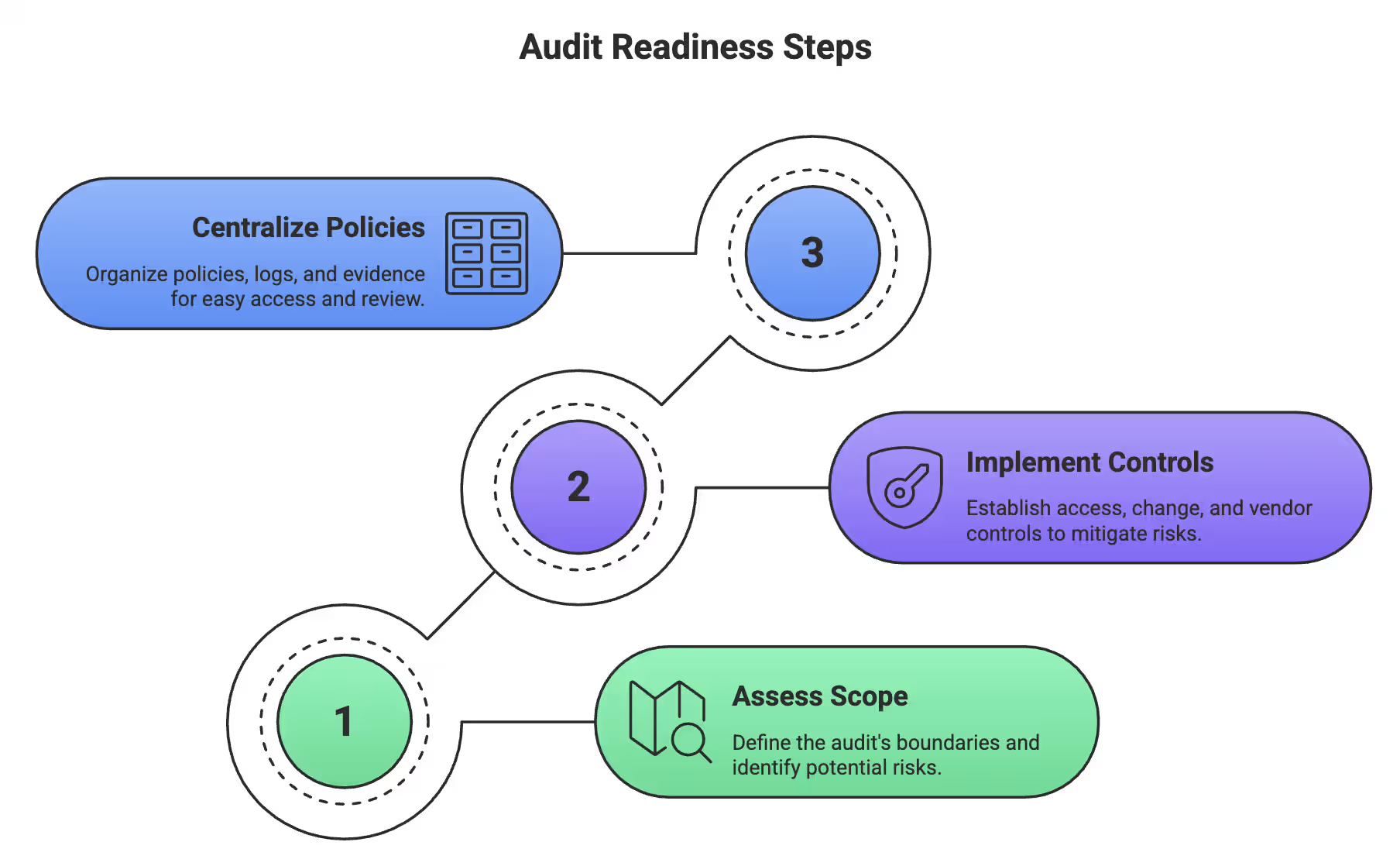
Let’s get into each step.
1. Readiness Assessments, Gap Analysis, and Risk Planning
Define system and process boundaries, identify critical vendors, and map risks for sensitive data. Prioritize remediation to focus on what truly matters and avoid wasted effort.
2. Control Implementation Across Access, Change, and Vendors
Enforce access controls with MFA, document and approve system changes, and continuously monitor vendor security. Turn policies into operational practices auditors can validate.
3. Policies, Logs, and Evidence Collection
Centralize policies, procedures, and logs. Automate evidence collection, assign owners, and timestamp activities. Ensure auditors see proof, not promises, reducing friction and speeding up reviews.
Following these steps keeps startups organized, reduces surprises, and ensures controls are proven and repeatable.
Who Needs SOC 2 Compliance and When to Start
SOC 2 isn’t optional for startups handling sensitive data or chasing enterprise clients. SaaS providers, cloud services, fintech, and healthcare startups usually require it. Start compliance work 4–6 months before contracts demand it, not weeks. Early planning saves time, reduces stress, and ensures readiness when auditors or clients show up.
Working With Auditors, Tools, and Compliance Platforms
Choosing the right auditor and compliance platform can make SOC 2 a growth enabler rather than a headache. Most founders underestimate how much smoother audits run when they align the right people, processes, and platforms from the start, making SOC 2 compliance for startups more achievable and less stressful.
How to Select a SOC 2 Auditor as a Startup
Finding the right auditor is like picking a co-founder. The wrong fit costs time, money, and stress.
- Startup experience matters: Look for auditors who have worked with early-stage companies and understand scrappy setups.
- Proper credentials: Always ensure they’re AICPA-certified.
- Tech-savvy: If they don’t understand your infrastructure or workflows, you’ll spend more time explaining than progressing.
90% of startups report smoother audits when their auditor understands both their team and tech. Don’t underestimate cultural fit — it’s as important as credentials.
SOC 2 Compliance Automation Platforms for Startups
Manual audits kill time and slow growth. The right automation platforms streamline evidence collection, track controls, and keep your team audit-ready.
- Uproot Security: automated dashboards, audit-ready reporting, and real-time compliance tracking.
- Scytale: automates evidence collection and continuous control monitoring.
- Secureframe: centralizes compliance with automated evidence and control tracking.
These platforms reduce manual work, help teams stay organized, and free founders to focus on product while maintaining SOC 2 compliance.
SOC 2 Compliance in India and Regional Considerations
For startups in India eyeing global clients, SOC 2 is non-negotiable.
- 60% of US clients won’t engage without it.
- European clients often expect both SOC 2 and GDPR alignment.
- Costs range from ₹5–15 lakhs, but the ROI in enterprise deals can be 10x higher.
SOC 2 certification opens doors and builds credibility that spreadsheets and PDFs alone can’t.
Maintaining SOC 2 Compliance After Certification
Got your SOC 2 certificate? Congrats. But this isn’t a trophy to put on a shelf. SOC 2 is like a gym membership—skip the work, and the benefits fade. You need ongoing effort to keep controls effective, auditors happy, and clients confident.
Continuous Monitoring and Evidence Collection
Think of your controls as always-on systems, not a one-time checklist. Automated monitoring makes compliance easier and strengthens security. Key practices:
- Catch control failures before they become audit issues
- Centralize all evidence with proper timestamps
- Show auditors that controls worked all year, not just during crunch time
- Eliminate last-minute scrambles for logs or backup confirmations
Following these practices keeps your controls reliable and reduces audit friction.
Internal Audits and Ongoing Risk Management
Regular check-ups keep your startup audit-ready and secure. Most startups that review controls quarterly sail through audits. Focus on:
- Reviewing critical controls every quarter
- Tracking new threats and risks to systems
- Logging changes to tech stacks and processes
- Assigning responsibility clearly for remediation tasks
Consistent internal audits make risk management part of daily operations.
Annual Re-Certification and Audit Readiness
SOC 2 certificates expire every 12 months, and each renewal gets easier with continuous practice. Remember:
- Start preparing immediately after each audit wraps
- Maintain documentation and evidence throughout the year
- Treat SOC 2 as an ongoing discipline, not a fire drill
- Teams that do this sleep better—and clients notice the difference
Treat each recertification as a checkpoint, not a last-minute scramble.
Turning SOC 2 Compliance Into a Growth Advantage
You’ve earned your SOC 2 certification. Most founders stop there—and that’s the mistake. SOC 2 isn’t just proof that you protect data. It’s leverage. Used well, it removes friction, builds instant trust, and changes how buyers evaluate your startup from the first conversation.
Sales cycles shrink because security objections disappear early. Enterprise buyers take you seriously instead of slowing deals with endless questionnaires. Investors see operational maturity, not just product velocity. When prospects compare similar solutions, SOC 2 often becomes the deciding factor.
There’s a second benefit many teams overlook. Your SOC 2 report doubles as a security roadmap. It shows which controls matter most, where to invest next, and what not to overbuild. No guessing. No security theater. Just focused improvements that reduce risk and drive progress.
Yes, certification takes effort. But the returns compound. SOC 2 isn’t a checkbox or a cost center. It’s a signal that you’re ready to scale securely—and a competitive advantage that keeps working long after the audit ends.
Build trust, streamline audits, and keep your startup SOC 2 ready with UprootSecurity — turning compliance from a checkbox into a growth enabler.
→ Book a demo today
SOC 2