What is a GRC Framework and Why Does It Matter?

Robin Joseph
Senior Security Consultant
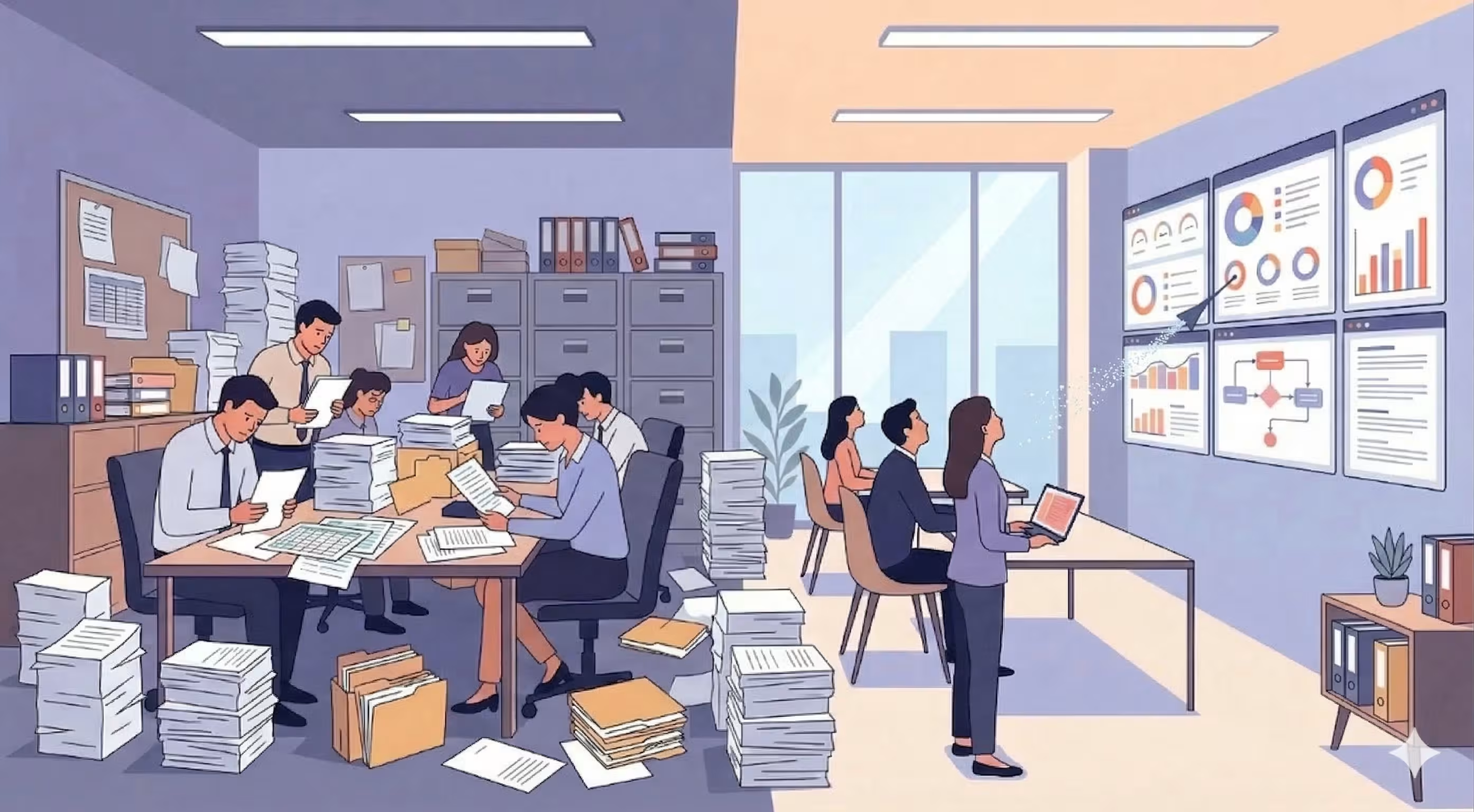
Ever tried managing risks by flying blind? Most organizations do exactly that—reacting to threats after damage is done instead of preventing them. GRC, short for Governance, Risk, and Compliance, is a structured way to bring clarity to this chaos by aligning decisions, risks, and regulations into one system.
Without it, companies operate in silos. Risks go unnoticed, compliance becomes reactive, and leadership lacks visibility into what’s actually happening. Teams scramble when issues arise, wasting time on problems that could’ve been avoided with better structure.
For technology companies, the stakes are even higher. Rapid growth, evolving regulations, and constant security threats make informal risk management unsustainable. When your operations scale faster than your controls, uncertainty becomes a real business risk.
That’s where a GRC framework comes in—bringing order, visibility, and control to how organizations manage risk.
What is a GRC Framework and Why Does It Matter
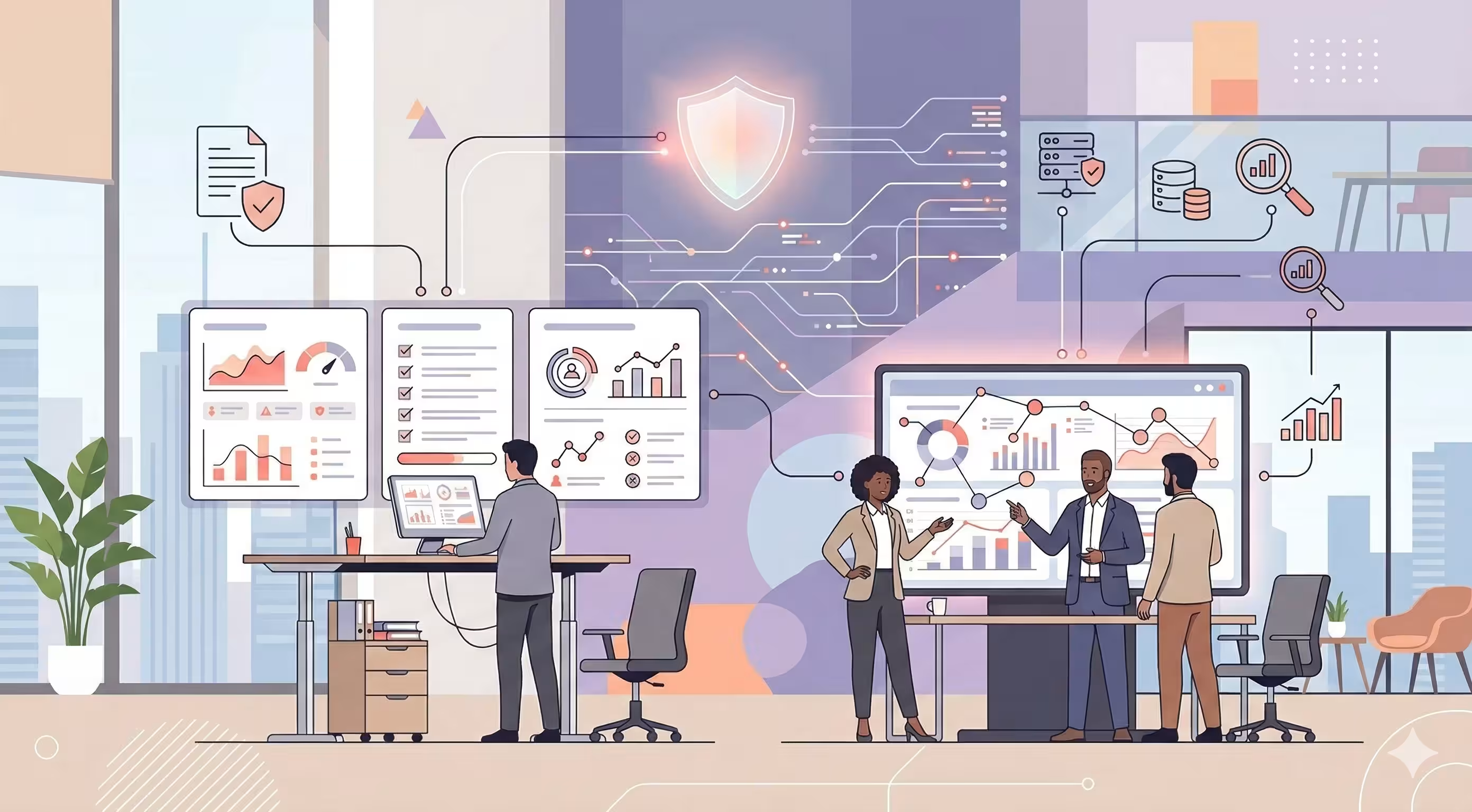
A GRC framework is a structured system that connects governance, risk management, and compliance into a single, coordinated approach. Instead of operating in silos, these functions work together to give organizations clear visibility into risks, responsibilities, and regulatory obligations.
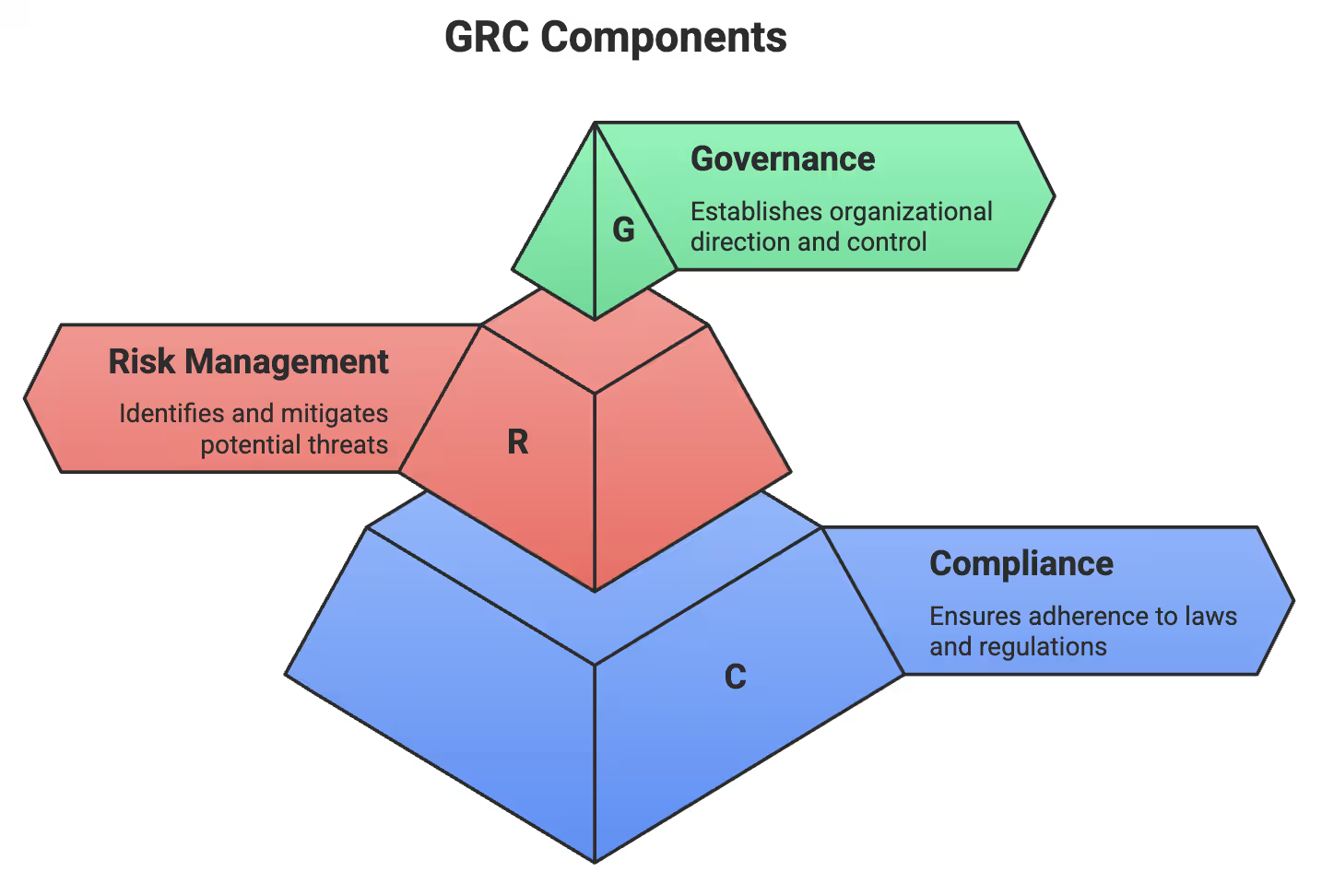
Governance defines who makes decisions and who is accountable. Risk management identifies potential threats, assesses their impact, and builds strategies to reduce them. Compliance ensures that all processes align with legal and regulatory requirements. When combined, they create a unified system that helps organizations move from reactive firefighting to proactive control.
Without a GRC framework, businesses face fragmented processes, unclear ownership, and delayed responses to risks. This often leads to regulatory penalties, security incidents, and operational disruption.
With the right framework in place, organizations gain clarity, improve decision-making, and stay ahead of risks—turning uncertainty into something manageable instead of something that controls them.
GRC Framework Components: Governance, Risk, and Compliance
Each part of a GRC framework has its own job. But here’s what most teams miss—they only work when they’re connected. Treat them separately, and you get silos, blind spots, and risks that go unnoticed until it’s too late.
Governance: Decision-Making, Policies, and Accountability
Governance defines who makes decisions, how they’re made, and who is accountable for the outcome. It’s not just about leadership—it’s about creating a structure where decisions are aligned with business goals and clearly owned.
When governance is weak, confusion takes over. Priorities clash, accountability disappears, and poor decisions slip through. Strong governance fixes that by bringing clarity, consistency, and direction across teams.
It ensures leaders have visibility into risks and performance, while employees understand their roles. The result? Decisions become deliberate, not reactive.
Risk Management: Identification, Assessment, and Mitigation
Risk management is about understanding uncertainty before it turns into damage. It’s not just about avoiding threats—it’s about making decisions with clear visibility into what could go wrong.
Organizations face risks across strategy, operations, finance, and cybersecurity. A strong process identifies these early, assesses their impact, and builds mitigation plans.
This isn’t one-time work. Risks evolve, and so should your response. Done right, it reduces surprises, prevents disruptions, and helps teams move forward with confidence.
Compliance: Regulatory Adherence and Internal Controls
Compliance ensures your organization meets regulatory requirements and follows internal policies. But it goes beyond avoiding penalties—it’s about maintaining trust and operational stability.
Internal controls act as safeguards, ensuring processes are consistent, data is accurate, and responsibilities are clearly defined. Without them, compliance becomes reactive and error-prone.
Because regulations change frequently, compliance must be continuous. Organizations that stay proactive can handle audits with confidence, avoid costly mistakes, and maintain credibility with stakeholders.
How Governance, Risk, and Compliance Work Together
Governance sets the direction and defines how much risk the organization is willing to take. Risk management operates within that boundary, identifying and mitigating threats before they escalate. Compliance ensures that all actions align with regulatory and internal requirements.
When these three functions are connected, they eliminate duplication, improve communication, and create a unified system for managing risk. Instead of reacting to problems, organizations gain clarity, move faster, and stay in control of both risks and opportunities.
Types of GRC Frameworks and When to Use Them
Choosing a GRC framework isn’t about what’s popular—it’s about what fits. Your risks, regulations, and business complexity decide that. Pick wrong, and you add friction instead of control.
COSO GRC Framework for Enterprise Risk Management
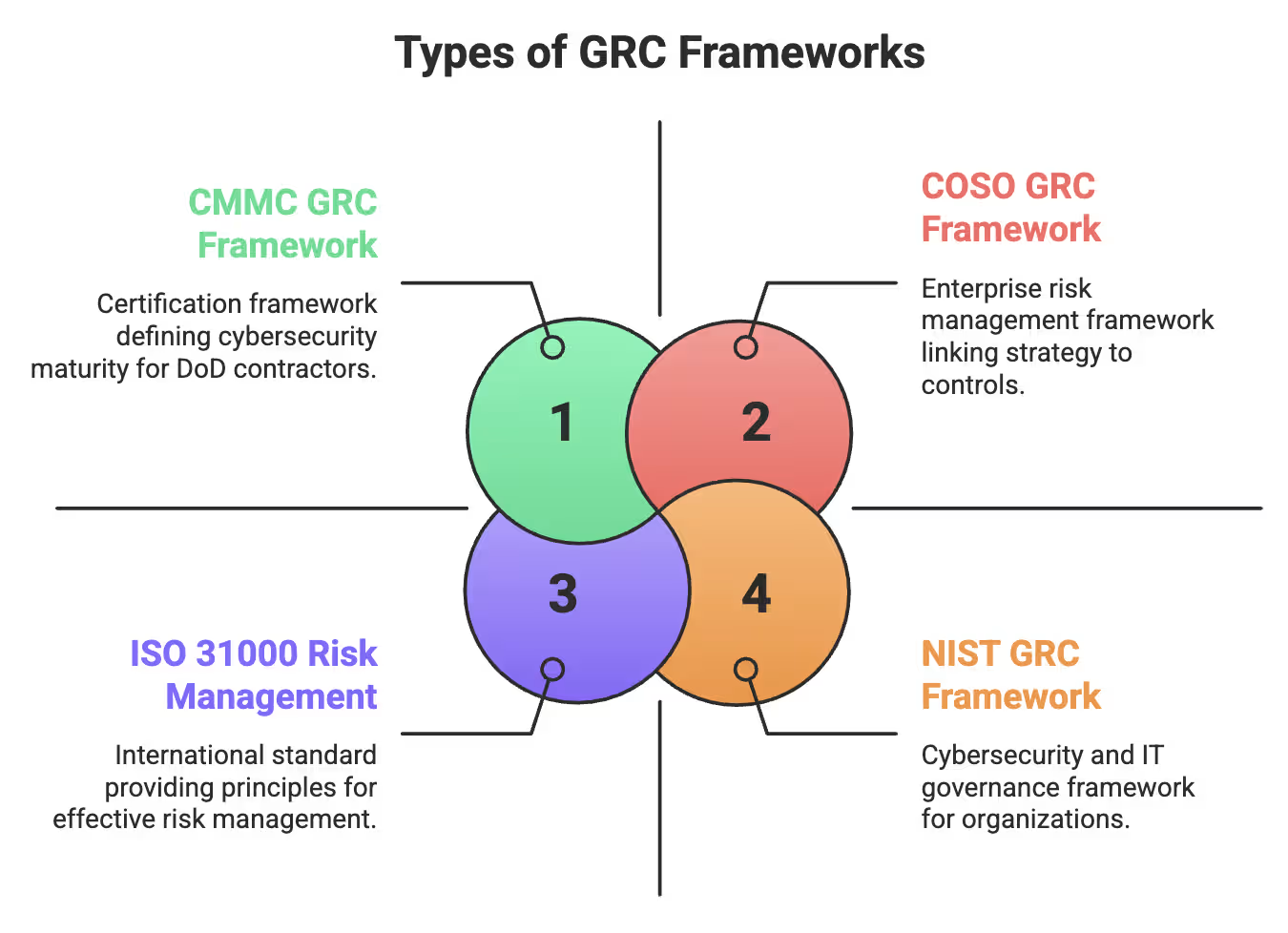
COSO connects risk management directly to business strategy, making it a strong choice for organizations that need enterprise-wide visibility.
Built around five areas:
- Governance & Culture
- Strategy & Objective-Setting
- Performance
- Review & Revision
- Information & Reporting
It helps organizations build strong internal controls, reduce fraud risks, and ensure risk management supports business goals—not works against them. If you need structure and alignment at scale, COSO delivers.
NIST GRC Framework for Cybersecurity and IT Governance
NIST focuses on managing cybersecurity risk while aligning it with business priorities. It bridges the gap between technical teams and leadership.
Structured around six functions:
- Govern
- Identify
- Protect
- Detect
- Respond
- Recover
It treats cybersecurity as a business issue, not just an IT task. That makes it ideal for organizations dealing with rising cyber threats and needing better visibility into security risks.
ISO 31000 Risk Management Principles and Guidelines
ISO 31000 takes a flexible approach to risk management. Instead of rigid controls, it provides guiding principles that can be adapted to any organization, regardless of size or industry.
It helps embed risk awareness into everyday decision-making rather than treating it as a separate function. This makes it a strong fit for organizations that want consistency and adaptability without adding unnecessary complexity.
CMMC GRC Framework for Defense Contractors
CMMC is designed for organizations working with the U.S. Department of Defense. It defines three levels of cybersecurity maturity based on NIST 800-171 requirements, setting clear expectations for contractors.
With compliance becoming mandatory for DoD contracts, this framework isn’t optional. Organizations in this space need to prepare early to meet requirements and avoid last-minute disruption to operations and contract eligibility.
Industry-Specific GRC Framework for Technology Companies
Technology companies operate in fast-moving environments where risks evolve constantly. Data privacy laws, cyber threats, and third-party dependencies create continuous pressure on teams.
Industry-specific frameworks help manage this complexity by aligning controls with real-world risks and operational needs. The goal isn’t to choose what looks good on paper—it’s to implement what actually works for your business.
How to Choose a GRC Framework for Your Organization
Choosing the right GRC framework isn’t about what looks good—it’s about what fits. Your risks, regulations, and business reality should guide the decision. Get it wrong, and it slows everything down.
Evaluate Industry Regulations and Compliance Requirements
Start with your regulatory environment and customer expectations. Enterprise buyers often require proof of compliance before engaging, especially in industries like finance, healthcare, and technology.
Your framework must align with these requirements from day one. Work backwards from what regulators and customers expect so you’re not scrambling later to meet compliance demands that should have been built in early.
Assess Organizational Size, Complexity, and Risk Exposure
Your framework should match how your organization actually operates. A small team with simple processes doesn’t need enterprise-level complexity, while a growing company can’t rely on informal systems for long.
Evaluate your structure, workflows, and risk exposure across the business. Identify key risks, estimate their likelihood, and understand their impact. This helps you choose a framework that’s realistic, scalable, and aligned with your operational maturity.
Align with Business Goals and Risk Appetite
GRC should support your business strategy—not block it. Define your risk appetite clearly so teams understand what’s acceptable and where caution is needed.
When alignment is missing, GRC slows decisions and creates friction. When it’s done right, it becomes a strategic enabler. Teams move faster with clarity, and leadership can make informed decisions without unnecessary delays or overcomplication.
Consider Integration with Existing Systems and Tools
A GRC framework shouldn’t create more work—it should simplify it. If your tools don’t integrate with existing systems, you end up with silos and duplicate effort.
Look for solutions that connect with your current platforms and support multiple frameworks. Seamless integration improves visibility, reduces manual work, and ensures teams aren’t switching between disconnected systems to manage risks and compliance.
Balance Scalability, Flexibility, and Cost
Cost goes beyond licensing. Training, process changes, and ongoing maintenance all add up. What seems affordable upfront can quickly become expensive if it doesn’t scale.
Choose a framework that grows with your business and adapts to new regulations without heavy rework. The right balance ensures long-term value, where cost, usability, and flexibility work together instead of creating new constraints.
Benefits of Implementing a GRC Framework
GRC frameworks don’t just improve processes—they deliver measurable business impact. This isn’t about compliance theater. It’s about reducing risk, saving time, and making better decisions.
Improved Risk Visibility and Decision-Making
A GRC framework gives leadership something most organizations lack—clear visibility into risks, compliance, and governance in one place. No more guesswork or reactive decisions. Teams can identify, assess, and act on risks with confidence, shifting from firefighting to prevention. With a unified view, decision-making becomes faster, more informed, and aligned with real business priorities.
Streamlined Compliance and Audit Readiness
Manual compliance work drains time and resources, with teams spending hours every week on audits, documentation, and evidence collection. GRC frameworks automate these processes, turning audits into structured, predictable workflows instead of chaotic exercises. This reduces errors, speeds up preparation, and allows teams to focus on higher-value work instead of repetitive tasks.
Stronger Governance and Accountability
GRC frameworks eliminate confusion around roles and responsibilities. Everyone knows what they own, and audit trails provide clear visibility into actions and decisions. Policies are enforced consistently, not randomly, while real-time dashboards keep leadership informed. This creates accountability across teams and removes the guesswork that often leads to miscommunication and delays.
Reduced Operational and Security Risks
Weak GRC leads to fines, breaches, and operational failures that can damage both finances and reputation. A strong framework helps identify risks early, close gaps proactively, and stay ahead of regulatory requirements. Instead of reacting to incidents, organizations stay prepared, reduce disruptions, and avoid costly consequences that could have been prevented.
Building a GRC Framework From Scratch
Building a GRC framework from scratch feels intimidating, but it’s manageable if you break it into clear steps, focus on priorities, and grow complexity gradually while tying everything to business goals.
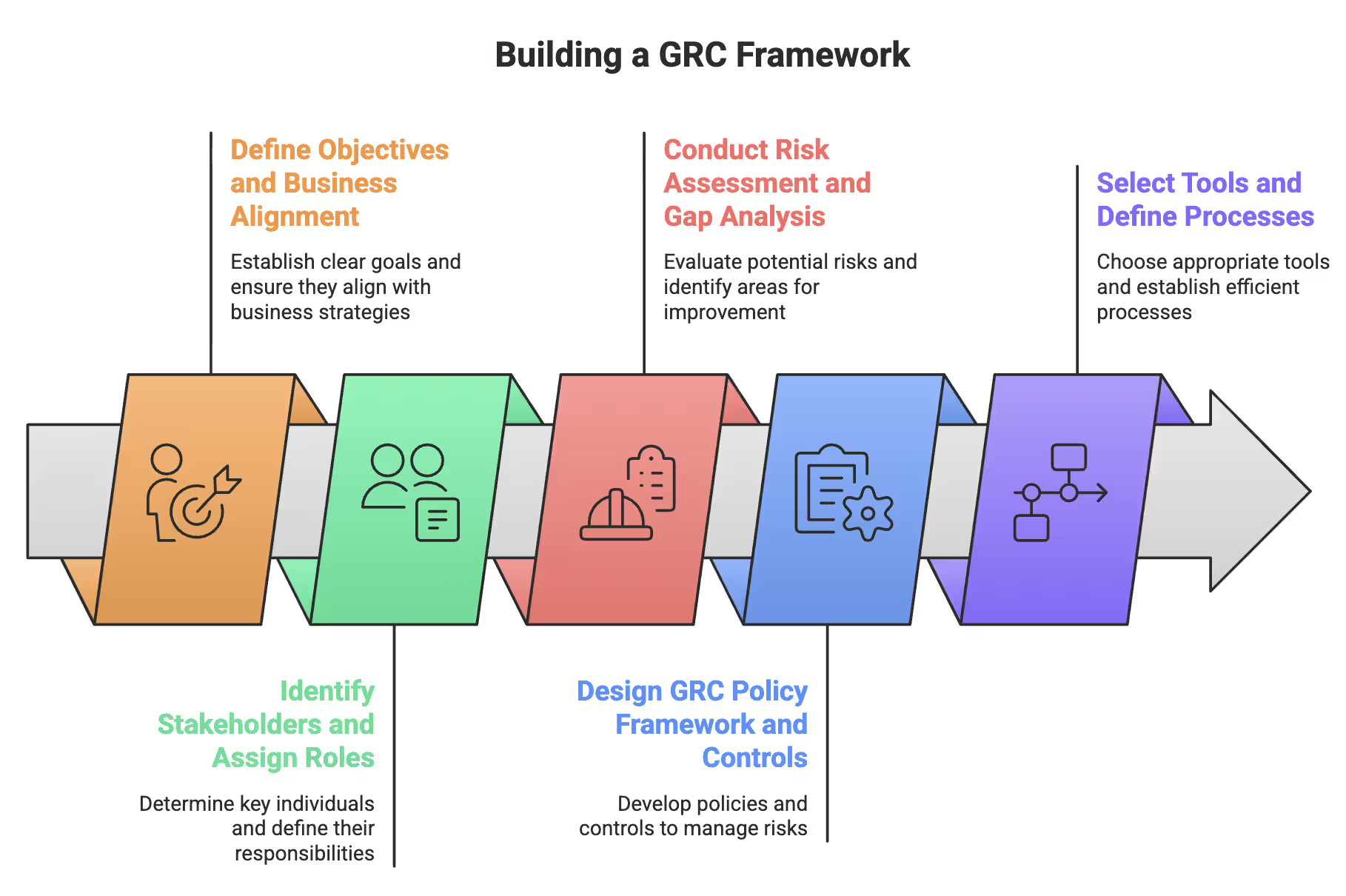
1. Define Objectives and Business Alignment
Start by defining what you want to achieve. “We need GRC” isn’t enough. Identify key risks, compliance pressures, and pain points. Ask which processes create the most headaches and which regulations demand immediate attention. Set SMART goals—Specific, Measurable, Attainable, Relevant, Time-bound. For example, cut manual audit prep time by 50% in six months. Clear objectives make GRC actionable, not just a checkbox.
2. Identify Stakeholders and Assign Roles and Responsibilities
GRC spans multiple teams, so clear ownership is essential. Engage IT, legal, operations, and other departments to uncover key pain points. Use a RACI model to define who is Responsible, Accountable, Consulted, and Informed. Early mapping ensures accountability, prevents delays and confusion, and helps everyone understand their role, how they fit into processes, and how their work supports the overall GRC framework.
3. Conduct Risk Assessment and Gap Analysis
Identify risks across strategy, operations, IT, finance, and reputation. Assess likelihood, impact, and priority to focus on what matters most. Compare your current state against the standards you aim to meet—ISO 27001, NIST CSF, or others—and document gaps honestly. This gap analysis becomes your roadmap, showing where policies, controls, and tools should be applied first to reduce risk efficiently and provide immediate value.
4. Design Your GRC Policy Framework and Controls
Policies define the rules your organization follows, control objectives link those policies to regulations, and controls enforce them through processes and systems. Structuring these layers ensures clarity, accountability, and alignment across teams. A well-designed framework turns abstract policies into actionable practices that manage risk and compliance effectively, making your GRC system operational, consistent, and easy to follow.
5. Select Tools and Define Processes
Choose tools that simplify, automate, and integrate smoothly with your existing systems. Evaluate multiple options, focusing on usability, alerts, evidence collection, and risk management features. The right tools reduce manual effort, improve visibility, and streamline processes. When tools address real problems and are easy to use, adoption becomes natural, and your GRC framework works effectively in practice, not just on paper.
GRC Framework Implementation Steps
Implementing a GRC framework isn’t just planning—it’s execution that counts. Focus on practical steps that deliver early wins, streamline processes, and create a system that scales as your organization grows and evolves.
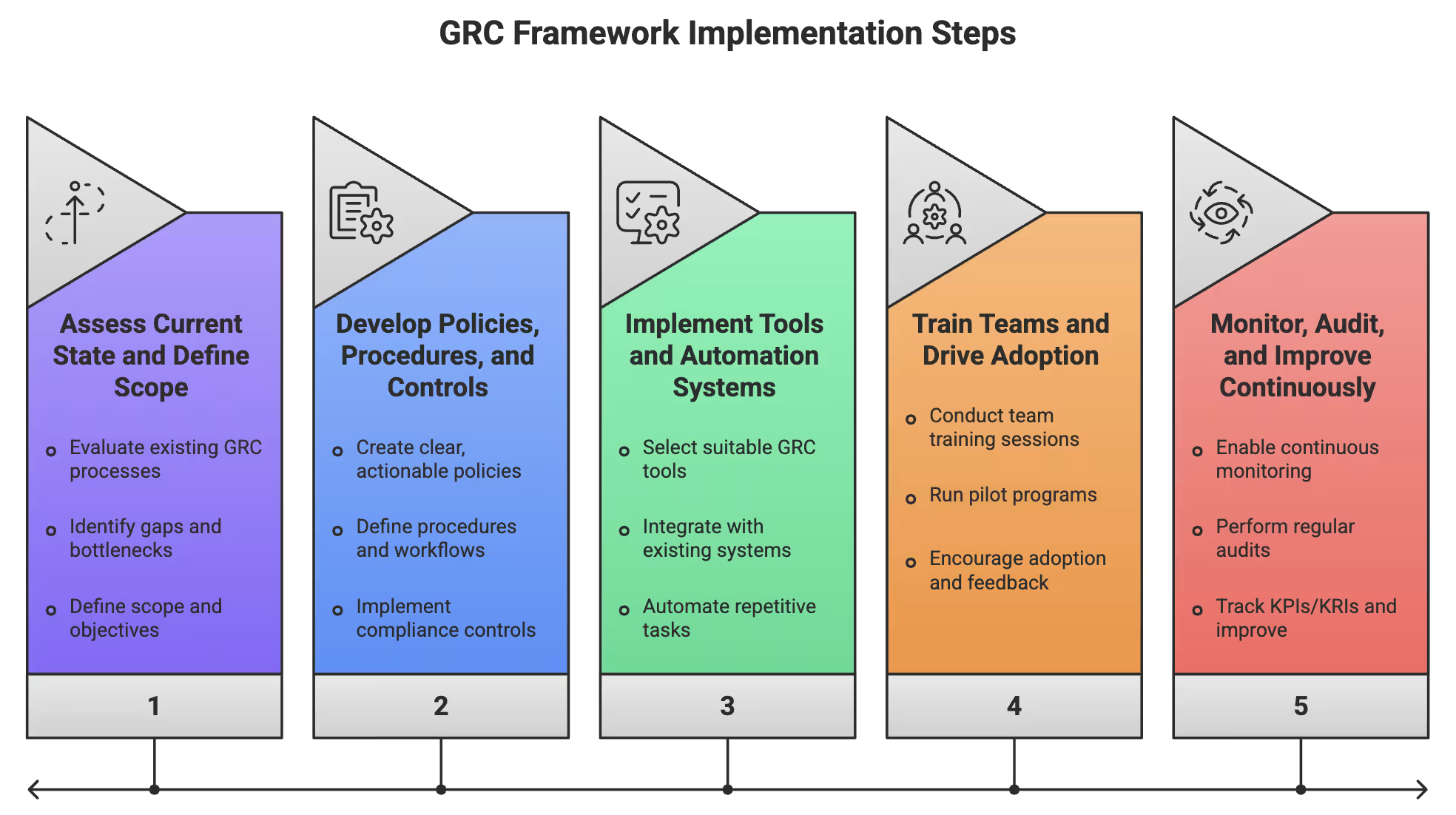
1. Assess Current State and Define Scope
Talk to the people actually doing the work. Map governance, risk, and compliance processes to find bottlenecks. Identify manual tasks wasting time and regulatory requirements causing stress. Build your scope around fixing these first. Document what “better” looks like clearly, so improvements are measurable. Start small, solve real problems, and prioritize actions that deliver immediate value without overcomplicating the system.
2. Develop Policies, Procedures, and Controls
Write concise, actionable policies covering behavior, risk response, and regulatory compliance. Include procedural, technical, and organizational controls that define who approves, accesses, or executes tasks. Standardize incident response, compliance reviews, and risk assessments for clarity. Policies and controls should be easy to follow, enforceable, and directly connected to regulations. Clear, practical guidance ensures your framework operates consistently across teams.
3. Implement Tools and Automation Systems
Choose tools that simplify, automate, and integrate with existing systems. Evaluate multiple platforms, focusing on usability, alerts, evidence collection, and risk management features. Proper tools reduce manual work and improve visibility. Ensure the solution solves real problems, not just adds complexity. Integration is key—automation only works if the team can use it easily and it truly supports your GRC processes.
4. Train Teams and Drive Adoption
Training isn’t a one-time task. Pilot the system with a small group, watch usage, gather feedback, and fix issues before full rollout. Teams need to see tangible value, not just hear instructions. Adoption depends on engagement, clarity, and reinforcement. Make sure staff understand how the framework helps them, reduces manual work, and supports decision-making, or the system risks becoming another ignored compliance exercise.
5. Monitor, Audit, and Improve Continuously
Establish review cycles, track KPIs and KRIs, and conduct regular audits. Embed continuous improvement, as risks evolve and processes change. Automation is most effective for repetitive tasks. A successful GRC framework adapts, reduces errors, and helps teams manage risk proactively, ensuring compliance, accountability, and operational efficiency without creating unnecessary overhead.
Key Takeaways: Making Your GRC Framework Work
Getting a GRC framework live is the easy part. Keeping it relevant and useful is where most teams struggle. Start small—focus on one high-impact problem like a manual process or a critical compliance gap. Early wins build momentum, prove value, and make it easier to get buy-in for bigger initiatives.
Automation is non-negotiable. Manual compliance work slows teams down and increases errors. The right tools can cut effort drastically and improve accuracy. But GRC isn’t just about ticking boxes—it should help leadership make better, risk-informed decisions that align with business goals.
Silos are where GRC fails. When governance, risk, and compliance teams operate separately, you get duplicate work and blind spots. Shared processes and connected systems create a single source of truth and better visibility.
GRC is never static. Risks evolve, regulations change, and businesses grow. Continuous improvement—and strong executive support—are what keep your framework effective long-term.
Take control of compliance, reduce risk, and build trust with UprootSecurity — where GRC becomes the bridge between checklists and real breach prevention.
→ Book a demo today
Continuous Compliance & GRC Ops