9 Cloud Compliance Tools That Actually Keep You Safe in 2025
Robin Joseph
Senior Security Consultant

Ever wonder why cloud security feels like playing whack-a-mole with compliance violations? Here’s the uncomfortable truth: data breaches now cost companies an average of $4.45 million per incident. And most of that damage traces back to preventable compliance failures—not elite hackers, not zero-days, just basic gaps left unchecked.
Cloud compliance tools change that equation. They monitor your cloud 24/7, catch misconfigurations before they become headlines, and generate audit-ready reports without the usual panic. The best ones even automate fixes, so your team isn’t stuck firefighting the same issues week after week.
But here’s the catch. Most companies aren’t living in a single cloud anymore. You’re running AWS here, Azure there, maybe GCP in the mix. Managing each platform separately is a guaranteed way to miss something important.
That’s why multi cloud compliance tooling matters. One dashboard. One set of rules. No blind spots. That’s the difference between reactive security—and security that actually scales.
What Are Cloud Compliance Tools?
Cloud compliance tools are the systems that keep your cloud environment aligned with security frameworks like SOC 2, GDPR, HIPAA, and PCI DSS—without drowning your team in manual checks. Think of them as the guardrails that make sure your cloud doesn’t drift into risky territory while you focus on actually building things.
At their core, these tools do three jobs exceptionally well. First, continuous monitoring: they watch your infrastructure around the clock and flag configuration issues the moment they happen. Second, automated remediation: they fix problems or guide your team step-by-step, turning guesswork into clarity. Third, streamlined reporting: they generate clean, audit-ready evidence without the end-of-quarter scramble.
Modern platforms take this further with AI that spots patterns humans miss—misuse, misconfigurations, drift, and subtle deviations from “normal.” And for teams juggling multiple cloud providers, they consolidate everything into one unified dashboard. These cloud security compliance tools act as guardrails, keeping your cloud infrastructure secure while streamlining audits.
In short: cloud compliance tools turn chaos into control, making compliance predictable instead of painful.
Need for a Cloud Compliance Tool in your Business
Think compliance is just paperwork? Not anymore. Nearly 40% of legal and privacy leaders now rank proactive compliance as a top-five business priority—and for good reason. GDPR fines can hit €20 million. HIPAA penalties cross $2 million per violation. And last year, 80% of companies were breached in their cloud environments. That’s not a warning—that’s a pattern.
Cloud compliance tools aren’t optional. They protect your wallet: multi-cloud breaches now average $4.75 million. They protect your reputation: one slip and customers walk. And they protect your business itself: regulators can literally halt operations for serious violations.
The problem keeps scaling. Companies now use 2.3 cloud providers on average. Vulnerabilities are exploding—up 589% year over year. Even Azure had critical flaws hiding in plain sight. With 60% of corporate data moving to the cloud by 2025, manual compliance is a fantasy.
The writing’s on the wall. The cloud compliance market is exploding to $59 billion by 2027. Why? Because manual compliance monitoring is basically impossible now.
Tools like AWS compliance suites, Datadog compliance monitoring, and multi-cloud platforms aren’t upgrades. Datadog security and compliance monitoring also helps teams detect misconfigurations, vulnerabilities, and maintain audit readiness across cloud environments. They’re survival gear.
Top 9 Cloud Compliance Tools in 2025
With 140+ cloud compliance platforms crowding G2, separating real capabilities from marketing noise is brutal. Most tools promise automation, visibility, and audit readiness—very few deliver. We evaluated the leaders, the newcomers, and the ones actually used in high-scale environments across AWS, Azure, and GCP. These include leading AWS compliance tools that integrate with multi-cloud environments for continuous monitoring and remediation.
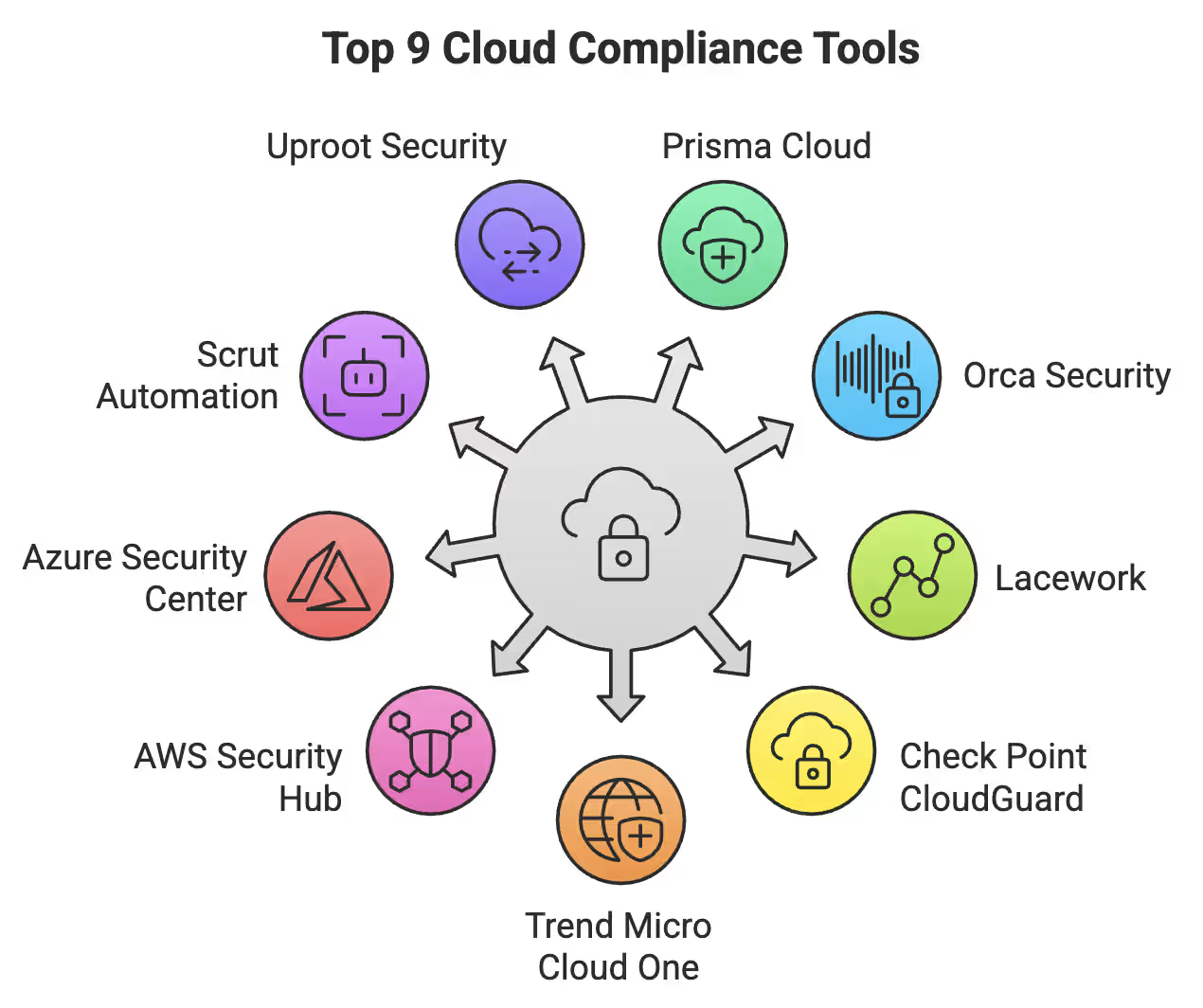
These are the top 9 Cloud Compliance Tools in 2025:
- Uproot Security
- Prisma Cloud by Palo Alto Networks
- Orca Security
- Lacework
- Check Point CloudGuard
- Trend Micro Cloud One
- AWS Security Hub
- Microsoft Azure Security Center
- Scrut Automation
Let’s break down each tool so you can see which one actually fits your cloud, your stack, and your compliance needs.
1. Uproot Security
Uproot Security helps cloud-first teams stay compliant across AWS, Azure, and GCP with automated monitoring, misconfiguration detection, and evidence collection. It maps risks to SOC 2, ISO 27001, GDPR, HIPAA, and CIS, integrating with CI/CD and developer tools to make compliance seamless and audit-ready.
Uproot Security Features
- Automated evidence collection
- Real-time configuration and drift detection
- Multi-cloud posture monitoring
- Pre-mapped SOC 2, ISO 27001, GDPR, HIPAA, CIS controls
- Risk scoring and prioritized remediation
- Integrations with Jira, Slack, GitHub, and AWS
Why Uproot Security Stands Out
It eliminates manual compliance tasks, offering continuous visibility, faster audits, and scalable automation for modern engineering teams.
Uproot Security Best For
Startups and cloud-native teams needing simple, fast, audit-ready compliance.
Uproot Security makes compliance effortless—automated, visible, and audit-ready, so your team can focus on building, not chasing checklists.
2. Prisma Cloud
Prisma Cloud gives teams unified security and compliance across AWS, Azure, and GCP. It monitors misconfigurations, vulnerable workloads, and identity risks, maps them to frameworks like CIS, NIST, PCI-DSS, and GDPR, and integrates IaC, CI/CD, and runtime protection—all in one platform to keep multi-cloud environments safe and compliant.
Prisma Cloud Features
- 1,000+ compliance checks
- IaC and CI/CD pipeline scanning
- Identity risk insights and privilege analysis
- Runtime protection for containers and workloads
- Multi-cloud posture monitoring
Why Prisma Cloud Stands Out
It combines infrastructure, identity, and workload risks into one clear compliance view with actionable insights for fast remediation.
Prisma Cloud Best For
Teams managing multi-cloud environments needing continuous, automated compliance with full visibility.
Enterprise-grade multi-cloud security that combines visibility, automation, and compliance in one platform—helping teams catch risks early, stay audit-ready, and scale efficiently.
3. Orca Security
Orca Security provides full, agentless visibility across AWS, Azure, GCP, and Kubernetes. Its SideScanning™ technology identifies misconfigurations, vulnerabilities, and identity risks while mapping them to frameworks like PCI-DSS, GDPR, HIPAA, and SOC 2. Teams get actionable insights to remediate issues quickly, maintain compliance, and prevent risks from reaching production.
Orca Security Features
- 100% cloud coverage with zero blind spots
- 180+ built-in compliance checks
- Smart risk scoring based on severity and impact
- Multi-cloud visibility from a single dashboard
- Integrations with Slack, JIRA, PagerDuty, and ServiceNow
Why Orca Security Stands Out
Agentless scanning provides complete coverage while AI-driven insights make threat detection and compliance monitoring proactive.
Orca Security Best For
Teams needing unified multi-cloud visibility and continuous compliance with minimal overhead.
Agentless, full-coverage cloud security that helps teams catch risks early, stay audit-ready, and maintain continuous compliance effortlessly.
4. Lacework
Lacework uses behavioral analytics to secure cloud environments across AWS, Azure, GCP, and Kubernetes. Its Polygraph Data Platform learns what “normal” looks like in your cloud setup, detecting anomalies, misconfigurations, and vulnerabilities while mapping them to frameworks like SOC 2, HIPAA, PCI DSS, and NIST. Teams get continuous visibility and actionable insights to prevent issues before they escalate.
Lacework Features
- Behavioral anomaly detection for cloud workloads
- Full-stack visibility across containers, workloads, and Kubernetes
- Automated compliance mapping to major frameworks
- Continuous configuration monitoring
- CI/CD security integration
Why Lacework Stands Out
Learns your cloud environment’s normal behavior to detect unknown threats and misconfigurations early, rather than relying solely on rule-based checks.
Lacework Best For
Teams needing behavioral analytics and continuous compliance across multi-cloud, container-heavy, or DevOps-driven environments.
Lacework turns cloud activity into actionable insights, helping teams stay secure, compliant, and proactive.
5. Check Point CloudGuard
Check Point CloudGuard automates cloud security and compliance across AWS, Azure, GCP, and Kubernetes. It detects misconfigurations, policy violations, and vulnerabilities in real time, helping teams enforce security policies consistently while reducing manual effort. CloudGuard integrates into CI/CD pipelines and runtime workloads to prevent issues before they impact production.
Check Point CloudGuard Features
- Intelligent automation for misconfigurations and policy violations
- Unified dashboard across multi-cloud environments
- CI/CD integration for DevSecOps teams
- 1,000+ ready-to-use security recommendations
- Runtime protection for workloads, containers, and serverless functions
Why Check Point CloudGuard Stands Out
Automatically fixes misconfigurations and enforces policies, reducing risk and operational overhead for busy security teams.
Check Point CloudGuard Best For
Teams managing multi-cloud environments with compliance-heavy workloads that need proactive security enforcement.
CloudGuard ensures policies are consistently applied, helping teams stay compliant, secure, and efficient.
6. Trend Micro Cloud One
Trend Micro Cloud One provides multi-cloud security across AWS, Azure, and GCP. It protects workloads, containers, serverless functions, and storage while continuously monitoring for misconfigurations, vulnerabilities, and compliance issues. With integrated threat intelligence, Cloud One helps teams stay ahead of new threats and maintain regulatory compliance without slowing development workflows.
Trend Micro Cloud One Features
- Workload and container security
- File storage and application protection
- Network security with virtual patching
- Real-time misconfiguration detection
- CI/CD integration for DevOps workflows
Why Trend Micro Cloud One Stands Out
Combines decades of cybersecurity expertise with modern cloud protections, offering comprehensive, proactive security across multiple environments.
Trend Micro Cloud One Best For
DevOps teams, multi-cloud operations, and regulated industries needing continuous protection and compliance.
Cloud One delivers proactive security and compliance, keeping teams protected and audit-ready across complex cloud environments.
7. AWS Security Hub
AWS Security Hub is a comprehensive AWS audit and compliance tool that centralizes security and compliance monitoring across AWS accounts. It aggregates findings from GuardDuty, Inspector, Macie, and other AWS services, continuously checking workloads against frameworks like CIS AWS Foundations, PCI DSS, and AWS best practices. Teams get a single, integrated view of security posture and actionable insights for remediation. It ranks among the top AWS security compliance tools for centralized monitoring and automation.
AWS Security Hub Features
- Automated compliance checks across AWS accounts
- Integration with GuardDuty, Inspector, Macie, and third-party tools
- Cross-account visibility and unified dashboard
- Security scoring to track posture
- Automated remediation via AWS Systems Manager
Why AWS Security Hub Stands Out
Provides centralized visibility and continuous compliance within AWS, reducing noise and simplifying security operations.
AWS Security Hub Best For
Organizations fully invested in AWS seeking integrated, native compliance and security monitoring.
Centralizes AWS security and compliance, helping teams detect issues early and maintain consistent, audit-ready posture.
8. Microsoft Azure Security
Microsoft Azure Security (Azure Defender for Cloud) provides unified security management and compliance monitoring across Azure, on-premises, and some AWS workloads. It continuously detects threats, misconfigurations, and compliance gaps while mapping to frameworks like NIST, HIPAA, and ISO 27001, helping teams maintain a strong security posture across hybrid and multi-cloud environments.
Microsoft Azure Security Features
- Unified security management dashboard
- Intelligent threat detection with AI
- Regulatory compliance tracking
- Security recommendations with priority scoring
- Workload protection for VMs, containers, and Kubernetes
Why Microsoft Azure Security Stands Out
Seamless integration with Azure services provides a coherent security ecosystem, simplifying threat detection and compliance for hybrid environments.
Microsoft Azure Security Best For
Teams heavily invested in Microsoft technologies or managing hybrid cloud deployments.
Azure Security delivers proactive protection and compliance insights, keeping teams secure and audit-ready.
9. Scrut Automation
Scrut Automation is designed for startups and small teams needing SOC 2, ISO 27001, GDPR, or HIPAA compliance without heavy overhead. It automates evidence collection, control mapping, risk assessments, and workflow integrations, helping teams monitor compliance, quickly identify gaps, remediate issues efficiently, and stay fully audit-ready while minimizing operational complexity and effort.
Scrut Automation Features
- Smart compliance dashboard
- Automated evidence collection
- Control mapping across frameworks
- Risk assessment with actionable insights
- Integrates with Slack, Jira, and GitHub
Why Scrut Automation Stands Out
Built for lean teams, it reduces complexity, speeds up audit readiness, and eliminates the need for dedicated compliance personnel.
Scrut Automation Best For
Startups and small teams preparing for their first compliance certification.
Scrut Automation streamlines compliance, helping teams stay audit-ready while focusing on growth without operational stress.
With so many options available, it helps to see how these tools compare side by side—so you can quickly identify which one fits your team’s cloud security and compliance needs.
| Tool | Highlights / Key Features | Best For |
|---|---|---|
| Uproot Security | Multi-cloud compliance, misconfig detection, SOC 2/GDPR/ISO mapping, CI/CD integration | Cloud-first teams seeking seamless compliance |
| Prisma Cloud | Multi-cloud security with IaC & CI/CD integration, 1,000+ compliance checks, full lifecycle protection | Teams managing AWS, Azure, GCP |
| Orca Security | Agentless scanning with SideScanning™ technology for zero blind spots, 180+ compliance checks | Multi-cloud ops & compliance-heavy teams |
| Lacework | Behavioral analytics and anomaly detection, learns normal behavior to detect unknown threats | DevOps and container-heavy environments |
| Check Point CloudGuard | Automated remediation, runtime protection, 1,000+ ready-to-use recommendations | Multi-cloud teams needing proactive security |
| Trend Micro Cloud One | Workload, container, and file security, integrated threat intelligence | DevOps teams & regulated industries |
| AWS Security Hub | Centralized AWS-native monitoring, continuous compliance scoring, automated remediation | AWS-only organizations |
| Microsoft Azure Security | Unified hybrid and Azure security, AI-driven threat detection | Microsoft-centric or hybrid cloud setups |
| Scrut Automation | Startup-friendly, automated evidence collection, workflow integration | Startups & small teams |
Choosing the right cloud compliance tool can transform security from reactive chaos into proactive control. With these platforms, teams gain visibility, automation, and audit-ready compliance—making breaches, misconfigurations, and compliance headaches a thing of the past.
How to Choose the Right Cloud Compliance Tool
Choosing a cloud compliance tool doesn’t have to be rocket science. Most buyers get distracted by flashy demos and buzzwords. Here’s what actually matters.
Start with regulatory coverage—your tool must support frameworks that can shut you down, like GDPR, HIPAA, PCI DSS, and ISO 27001, and offer real-time AWS compliance checks across your cloud workloads. Multi-cloud visibility isn’t optional anymore; blind spots are where breaches happen. Automated evidence collection is essential—manual documentation is a nightmare.
Not all compliance violations are equal. Smart tools prioritize risks based on data sensitivity, exposure, and impact, so you focus on what truly matters. Pre-built templates are fine, but cookie-cutter compliance rarely fits real workflows—you need customization that aligns with your processes.
Integration is critical. Your compliance tool should work with your SIEM, CI/CD pipelines, and other systems; isolated tools are useless. Deployment matters too: cloud-based solutions get you running fast, while on-premises offers control but is slower.
Bottom line: pick a tool that solves your real problems, not the one with the prettiest interface.
Wrapping Up Cloud Compliance: Protect, Scale, and Simplify
Choosing the right cloud compliance tool is about more than dashboards or fancy demos. It’s about protecting your data, reducing risks, and keeping your business audit-ready. The right platform gives unified visibility across AWS, Azure, GCP, or hybrid setups, automated evidence collection, and actionable insights to remediate issues before they become incidents.
Compliance isn’t just a regulatory checkbox—it’s a business advantage. Frameworks like GDPR, HIPAA, PCI DSS, and SOC 2 demand constant attention. With the right tools, your teams can scale securely, maintain continuous compliance, and satisfy auditors without slowing down development or operations.
Multi-cloud environments, containers, serverless workloads, and DevOps pipelines require continuous monitoring and intelligent remediation. The right solution makes these complex setups manageable, turning manual, error-prone compliance work into streamlined, automated processes.
Investing in a cloud compliance platform shifts your security posture from reactive to proactive. It protects your business, safeguards your reputation, and gives your teams the confidence to innovate without fear—making compliance a foundation, not a burden.
Continuous Compliance & GRC Ops