SOC 2 Audit Process: A Step-by-Step Walkthrough
Robin Joseph
Senior Security Consultant

A SOC 2 audit proves your company protects data and keeps systems secure. The SOC 2 audit process examines policies, processes, and technology, showing clients, partners, and regulators that your controls actually work.
SOC 2 audits measure performance against the AICPA's Trust Services Criteria, which define principles rather than specific technologies. Type 1 captures a snapshot of your controls at a single point in time. Type 2 evaluates how those controls operate consistently over three to twelve months, providing stronger assurance since auditors verify evidence across the whole window.
SOC 2 has become a crucial standard for anyone selling into security-conscious markets, even though it's technically voluntary. Audit fees typically run $5,000 to $50,000, with total compliance cost, including readiness work and internal time, usually landing between $10,000 and $100,000 depending on company size.
Understanding the SOC 2 Audit Framework
SOC 2 evaluates whether service organizations protect data, secure systems, and maintain reliable operations, measured against the AICPA's Trust Services Criteria. The framework assesses five categories:
- Security: mandatory; protects systems and data from unauthorized access
- Availability: ensures systems are operational and accessible
- Processing Integrity: verifies data is accurate, complete, and timely
- Confidentiality: safeguards sensitive information
- Privacy: governs personal data collection, retention, use, and deletion
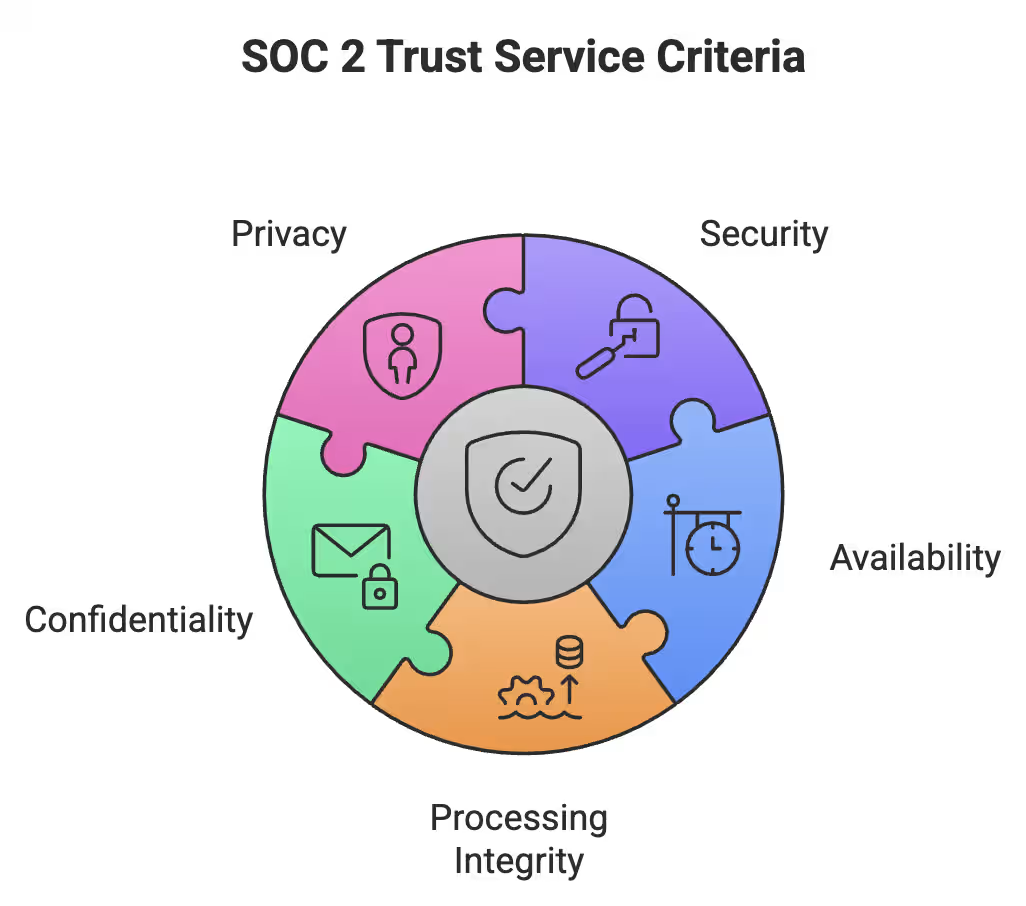
Security forms the foundation, while the other categories are selected based on your services, customer expectations, and data commitments.
What Happens During a SOC 2 Audit
A first SOC 2 audit usually lasts 6-12 months. Three phases structure it. Pre-audit preparation runs 2 weeks to 9 months depending on your security maturity, and covers selecting report type, defining scope, gap analysis, remediation, and documentation. The audit window applies only to Type 2 (Type 1 skips it), typically 3-12 months, first-timers often choose 3 months, established organizations may select 12. The formal audit itself takes 1-3 months: auditors issue an Information Request List, perform fieldwork over 2-6 weeks, and deliver draft and final reports in 3-5 weeks.
Vendors promising two-week audits are overselling, experienced CPAs confirm proper audits take months. Renewal audits move faster, often 6-8 months, benefiting from lessons learned during the first audit.
Pre-Audit Preparation: Your SOC 2 Audit Checklist
Skipping preparation isn't optional, organizations that cut corners face delays and remediation cycles that add months. Work through this in order.
Scope first. Scoping determines which systems, services, and Trust Services Categories auditors review. Cloud-only setups average 60 controls; complex, multi-location environments may face 100. Catalog assets, map data flows, and justify why any criteria don't apply, get this wrong and you're adding months of work.
Then documentation and risk. SOC 2 audits demand thorough, current policies covering access control, incident response, change management, vendor management, encryption, disaster recovery, and risk assessment, reviewed annually with formal employee acknowledgment. Outdated documentation is one of the most common audit gaps. Alongside that, run a risk assessment at least annually: document business objectives, identify threats, score them by likelihood and impact, and assign mitigation plans with clear owners.
Finally, a gap analysis. A readiness assessment, typically $10k-$17k, maps existing controls to Trust Services Criteria and pinpoints gaps before the audit. Fix high and medium severity issues beforehand, organizations that do this thoroughly reduce total compliance time by 30-40%.
The Formal Audit Process: SOC 2 Audit Steps Explained
Once preparation ends, auditors review evidence, test controls, and validate your systems against the Trust Services Criteria in five steps.
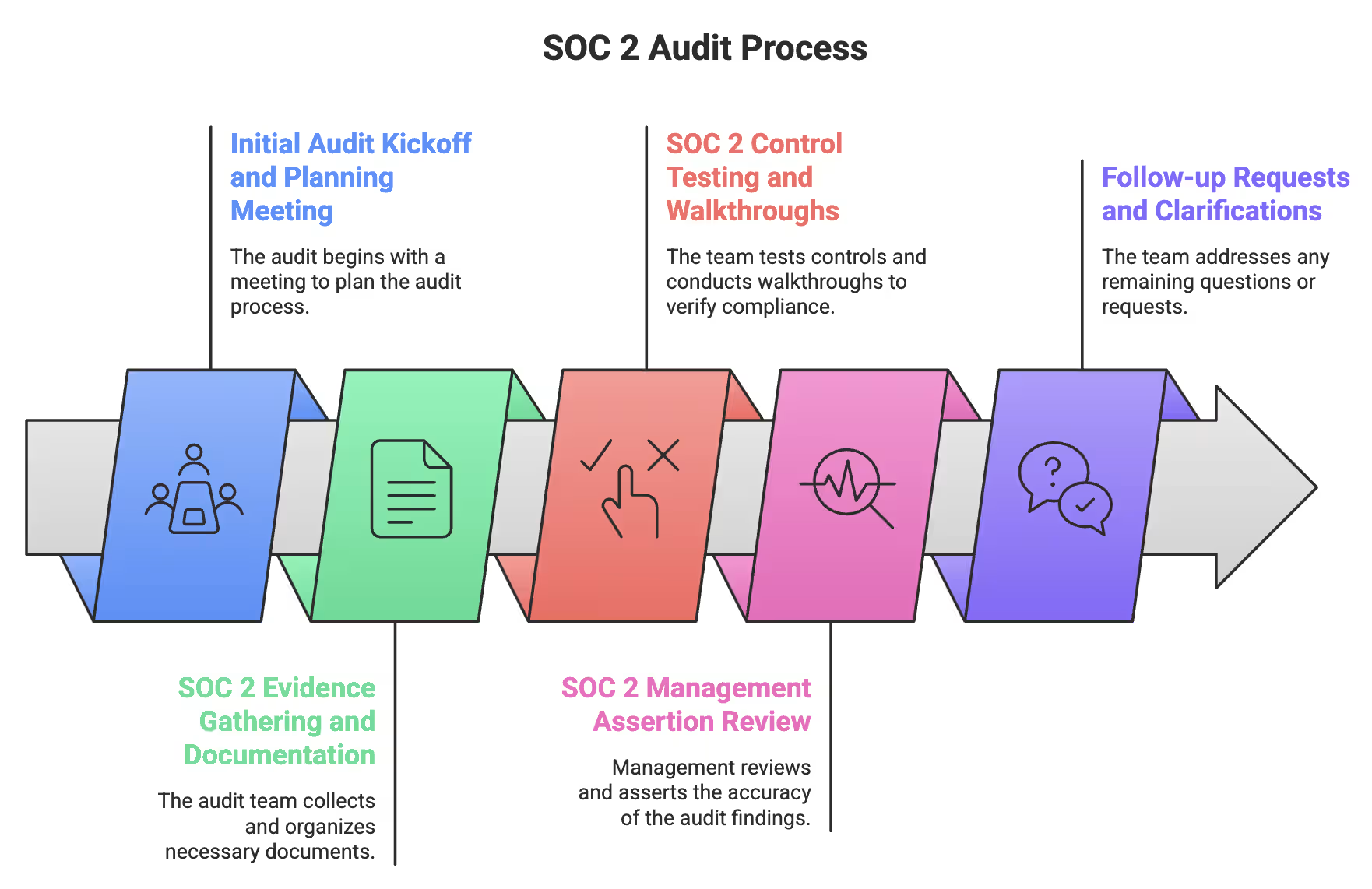
1. Kickoff and Planning. About a week before testing, your SOC 2 auditor aligns with compliance leaders and system owners on timelines and evidence collection, then sends an Information Request List within two to three business days.
2. Evidence Gathering. Often the most time-intensive stage. Type 1 needs point-in-time documentation, system configurations, policies, governance records. Type 2 needs proof controls worked consistently over three to twelve months: audit logs, access reviews, monitoring records, risk assessments, vendor management documentation, and security training evidence.
3. Control Testing and Walkthroughs. Your SOC 2 auditor tests to confirm controls actually operate as described, through document reviews, configuration checks, staff interviews, and sample-based testing. Cloud-only organizations typically see testing across roughly 60 controls; complex environments may involve around 100.
4. Management Assertion Review. Management assertion is your formal statement confirming controls operate as described. The auditor compares real control activity against it; if they match, it becomes a validated part of the final report.
5. Follow-up Requests. Common as the auditor identifies gaps needing clarification. Organizations that respond within 48 hours typically complete the audit faster.
How to Choose a SOC 2 Auditor
Picking the wrong SOC 2 auditor is like building a house on quicksand, months of preparation can crumble if your report isn't trusted by customers. Only licensed CPA firms accredited by the AICPA can perform SOC 2 audits, verify active state board registration via NASBA and confirm they're in the AICPA Peer Review Program, anything less offers no real assurance.
Beyond credentials, look at experience: auditors familiar with cloud platforms, DevOps, and modern IT infrastructure work faster and avoid repeated evidence requests. Favor firms with 10+ years' experience and prior work with companies similar in size and industry, so your third-party auditor already understands your environment. Beware "14-day SOC 2 audit" claims, that usually covers only evidence collection, not the full audit or final report, ask for a complete timeline from kickoff to final report.
A few questions cut through the sales pitch: How many SOC 2 audits have you completed recently? Experience with companies our size and industry? Full timeline from kickoff to final report? The right SOC 2 auditor answers confidently, hesitation is a red flag.
Understanding Your SOC 2 Audit Report
Your SOC 2 report is your credibility on paper, structured in five sections: the independent auditor's opinion, management assertion, system description, tested controls with results, and management responses to findings.
The opinion comes in four flavors. Unqualified means controls met all criteria, the ideal outcome. Qualified means one or more controls fell short but the report is still manageable. Disclaimer means insufficient evidence prevented an opinion. Adverse means fundamental control failures, the worst case.
Exceptions appear in Section 5 alongside management's response, which needs acknowledgment, root cause analysis, and a corrective plan with a timeline. Handle them by priority: systemic failures first, then isolated issues, then documentation gaps. A transparent, efficient response matters more than a perfect record.
Post-Audit: Staying Compliant
Reports last 12 months, so compliance doesn't end at delivery. Employees need annual security awareness training covering passwords, MFA, and incident reporting, they're your first line of defense. Automated platforms that pull evidence from your existing tools save teams roughly 10 hours a week and catch control failures before they escalate.
Plan your next audit cycle before your current report expires. Since SOC 2 reports hold sensitive information, share them only under NDA through secure portals with access controls and audit logs, never by email. For public-facing assurance without exposing internal control detail, a SOC 3 report is the right fit.
Key Takeaways
With 87% of customers refusing business over security concerns, passing your audit isn't optional for growth. Start preparations six months ahead, assign a capable owner, and run quarterly internal assessments using a compliance checklist. Train employees on their specific control responsibilities, and choose your SOC 2 auditor on expertise, not just price. Most companies that fail their first audit skip at least three of these steps.
Frequently Asked Questions
Yes. An adverse opinion means the auditor found fundamental control failures. A qualified opinion or disclaimer of opinion are less severe but still signal real problems. Most organizations that fail skipped a proper readiness assessment or gap analysis beforehand.
A first audit typically runs 6 to 12 months end to end. Type 1 audits take 3 to 6 months since they only assess a single point in time. Type 2 audits run 6 to 12 months because the auditor needs to observe controls operating over that full window. Renewal audits are faster, often 6 to 8 months.
Audit fees typically range from $5,000 to $50,000, with total compliance cost, including readiness work, remediation, and internal time, usually landing between $10,000 and $100,000 depending on company size and scope.
Only a CPA firm licensed by a U.S. state board of accountancy and accredited by the AICPA can issue a valid SOC 2 report. Verify active registration through NASBA and confirm the firm participates in the AICPA Peer Review Program.
At minimum: chosen report type, defined scope, documented policies and procedures, a completed risk assessment, and a gap analysis with remediation tracked to closure. Treat the pre-audit preparation section above as that checklist, in order.
Exceptions appear in Section 5 of the report alongside management's response. A single exception rarely sinks a report, what matters is whether the response shows root cause analysis, a corrective plan, and a realistic timeline.
Ensure SOC 2 compliance, reduce risk, and build customer trust with UprootSecurity, turning audits from a checkbox into verified data protection.
→ Book a demo today
SOC 2