SOC 2 Compliance Checklist for SaaS Companies [2026]

Robin Joseph
Senior Security Consultant
![SOC 2 Compliance Checklist for SaaS Companies [2026]](https://s3.us-east-1.amazonaws.com/static-production.uprootsecurity.com/website/strapi-content/uploads/SOC_2_Compliance_Checklist_b233540e47.avif)
Enterprise clients rarely sign contracts without proof that your SaaS platform can protect their data. That’s where a SOC 2 compliance checklist for SaaS companies becomes essential. It helps teams identify required controls, create security policies, document processes, and organize the evidence needed before a SOC 2 audit begins.
SOC 2, created by the American Institute of Certified Public Accountants (AICPA), evaluates how service organizations protect customer data through structured, testable controls. It isn’t a legal requirement, but it has become a standard expectation for SaaS companies selling to enterprise clients or handling sensitive information.
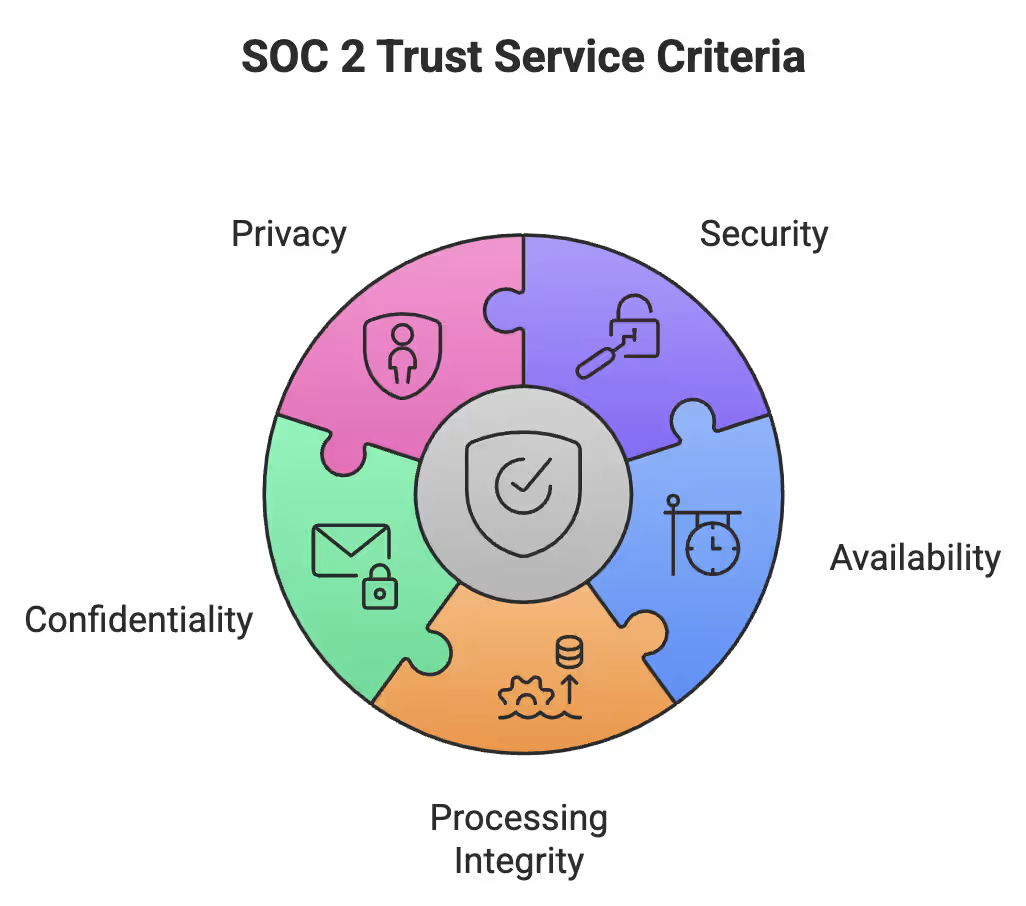
The framework revolves around five Trust Services Criteria: Security, Availability, Processing Integrity, Confidentiality, and Privacy. Security is mandatory for every audit. The other criteria depend on how your platform operates and the type of data you manage.
SOC 2 reports come in two forms. Type 1 verifies that controls are designed correctly at a specific point in time. Type 2 shows those controls actually worked over several months of real operation. A clear checklist helps SaaS teams prepare for both stages.
Understanding SOC 2 Requirements for SaaS
Before creating a SOC 2 compliance checklist, SaaS companies must understand the framework. SOC 2 protects customer data with structured controls, with exact requirements depending on your infrastructure, services, and data type.
SOC 2 Framework and Trust Services Criteria
SOC 2 is built around five Trust Services Criteria, but not all apply to every company. Security is mandatory for every audit; the others depend on your business model and customer commitments.
- Security (Common Criteria): 33 requirements covering access control, system operations, risk management, monitoring, and change management
- Availability: Disaster recovery, backups, and capacity planning
- Processing Integrity: Ensures accurate and reliable system processing
- Confidentiality: Data classification and secure handling
- Privacy: Management of personal data collection, use, and protection
These 64 requirements form the SOC 2 framework and translate into your SOC 2 controls list.
Key Security and Compliance Requirements for SaaS
The exact number of SOC 2 controls depends on your environment and audit scope. Cloud-native SaaS platforms often implement around 60 controls, while organizations with complex infrastructure may need close to 100 controls.
Auditors typically evaluate controls across the nine Common Criteria areas, which include risk assessment, access management, monitoring, and change management. Evidence such as security logs, multi-factor authentication policies, risk assessments, and system monitoring reports helps demonstrate that these controls operate effectively.
How SOC 2 Applies to Cloud and SaaS Environments
Cloud infrastructure significantly influences SOC 2 compliance for SaaS companies. Platforms hosted on major providers such as Google Cloud or Microsoft Azure often inherit parts of the provider’s security posture.
For SaaS platforms, availability and processing integrity often become key focus areas. Customers rely on uptime, accurate data processing, and reliable system performance—especially when those guarantees appear in service level agreements (SLAs).
SOC 2 Policy and Documentation Requirements
Strong policies and thorough documentation are the backbone of SOC 2 compliance. Without them, audits fail, evidence is incomplete, and your controls can’t be properly verified. SaaS teams that skip this step waste months fixing avoidable gaps.
SOC 2 Policy Requirements for SaaS Businesses
Policies are where most companies trip up. Auditors will test whatever you document. Annual policy reviews are non-negotiable. Your policies should cover acceptable use, access control, business continuity, change management, confidentiality, encryption, incident response, logging and monitoring, risk assessment, vendor management, data classification, backups, passwords, remote access, and more.
Write policies that reflect actual operations. Aspirational policies that don’t match reality get flagged. Smaller organizations should keep policies general—no need for enterprise-level SDLC policies or change boards your team doesn’t have.
SOC 2 Documentation Requirements for Audit Readiness
Three documents make or break your audit: management assertion, system description, and control matrix.
-
Management assertion explains how your system meets service commitments and Trust Services Criteria.
-
System description gives auditors enough detail to understand risks and controls without exposing vulnerabilities. Include company overview, infrastructure, incidents, control environment, vendor responsibilities, and criteria coverage.
-
Control matrix maps each control to SOC 2 criteria, noting control owner, activity, and risk level.
These documents interlock—skipping even one creates audit gaps, causes delays, triggers findings, and risks undermining your entire SOC 2 compliance readiness.
Risk Assessment and Governance Documentation
SOC 2 risk documentation covers objectives, risk identification, fraud considerations, and change assessment. Many organizations limit assessments to IT—leadership, finance, and HR must also participate.
The risk register is the biggest bottleneck. First-time clients struggle to capture strategic, operational, technical, and financial risks. A structured approach ensures your register reflects real business threats, not guesses. Proper risk documentation reduces audit surprises and strengthens your SOC 2 compliance foundation.
SOC 2 Compliance Checklist for SaaS Companies
A clear SOC 2 compliance checklist helps SaaS companies plan, implement, and document controls efficiently. It reduces audit surprises, keeps teams aligned, and ensures customer trust during Type 1 and Type 2 audits.

Defining Your Audit Scope and Trust Service Criteria
Scoping sets your audit costs and timeline. Define five key components: infrastructure (servers, databases, hosting), software (apps, monitoring tools, SIEM), people (developers, stakeholders, support), procedures (control operations), and data (capture and processing methods). Type 1 validates control design at a single point in time. Type 2 tests 6–12 months of operational effectiveness, giving stronger customer assurance but requiring more internal effort.
Establishing SOC 2 Security Policies
Match your policies to operational reality. Small teams need simplified SDLC rules, while larger engineering departments require detailed policies. Always document what you actually do, not aspirational goals—auditors will catch discrepancies. Annual reviews and formal employee acknowledgment are mandatory to ensure compliance and avoid audit findings.
Implementing the SOC 2 Controls List
Control volume depends on your environment. Cloud-native SaaS averages 60 controls, complex infrastructures may need 100, and security-only Type 2 audits often cover 80. Map each control to criteria, owners, frequency, and evidence. Skipping steps or taking shortcuts creates audit headaches and increases the risk of findings that slow down compliance.
Implementing Encryption and Access Control Measures
Use AES-256 for data at rest and TLS 1.3 for data in transit. Implement role-based access control and multi-factor authentication for administrative accounts. Centralize key management via HSMs or cloud KMS platforms, rotate keys every 90 days, and document the full lifecycle.
Conducting a SOC 2 Vendor Assessment Checklist
SOC 2 CC9.2 requires formal vendor risk management. Secure privacy commitments from any vendor handling personal data, assess their compliance regularly, and review SOC 2 Type II reports annually. Focus on actual testing results and control exceptions, not just ticking boxes—thorough vendor oversight protects your audit and keeps customer data safe.
Establishing Evidence Collection for SOC 2 Controls
Automate evidence collection throughout the audit period. Map each piece to specific controls with timestamps and authentication, organized by Trust Services Criteria, control number, collection date, and owner. Well-structured evidence reduces audit stress, speeds review, and ensures nothing is overlooked—future you will thank yourself for staying organized and thorough.
SOC 2 Evidence Collection and Documentation
Proper evidence collection and documentation are critical for SOC 2 compliance. Without organized, verifiable records, audits stall, findings multiply, and your Type 2 validation can fail entirely.
Mapping Evidence to SOC 2 Controls
Every control requires explicit evidence connections—no assumptions. Build structured mappings linking control descriptions, evidence sources, collection frequency, and storage locations. MFA policies? Map to Okta configurations and monthly audit logs. Production changes? Connect to GitHub pull request approvals per release. Type 2 audits examine evidence across 3–12 months to verify continuous operation. Your evidence must prove controls worked consistently—not just when auditors arrive. Continuous monitoring is essential; gaps between audits put compliance at risk.
Maintaining Logs, Screenshots, and Reports
System timestamps separate legitimate evidence from questionable submissions. Screenshots must show: source system URL, relevant control info (backups, user access lists), and the timestamp of capture. Logs require tamper-proof storage, encryption, and access control. Centralized logging ensures clean, error-free records with traceable audit trails. When extracting user listings or system data, verify record counts match source systems. This proves data integrity and prevents manipulation—critical for Type 2 coverage.
Storing Evidence in a Central Repository
Centralized repositories solve the scattered evidence problem. Store policies, procedures, system logs, change records, and security alerts in version-controlled platforms accessible to relevant stakeholders. Version control tracks every update, creating the transparent audit windows auditors demand. Organized, centralized storage simplifies audits and reduces stress.
Reviewing Evidence Before the Audit
Pre-audit reviews catch gaps before auditors arrive. Validate schedules, completeness, and quality to ensure audit-ready evidence. Type 1 audits span weeks; Type 2 covers months of data. Organized, structured, and continuously monitored evidence proves your controls work, builds client confidence, reduces findings, and strengthens your SOC 2 compliance—don’t wait until the last minute to review and correct issues.
Preparing for the SOC 2 Audit
Preparing for a SOC 2 audit requires planning, continuous control monitoring, and readiness assessments. Start early, stay organized, and prevent surprises during Type 2 audits.
Reviewing the SOC 2 Type 2 Checklist
Your Type 2 checklist requires 6–12 months of continuous control operation before audit fieldwork. Starting the reporting period before controls work properly leads to exceptions from day one. Wait until every control functions correctly, then begin tracking. Rushing the timeline backfires—gathering evidence alone can take 2–4 weeks without automation platforms. Continuous monitoring is non-negotiable; it prevents last-minute chaos and audit delays.
Conducting a Pre-Audit Readiness Assessment
Begin readiness assessments 12–18 months before your final report is due. Professional assessments may cost $10,000–$17,000, but they pay off: organizations spending 4–6 weeks on thorough gap analysis cut total compliance time by 30–40%. These assessments simulate real audits, catching non-compliant controls before the stakes are real. Think of it as a dress rehearsal for your team and systems.
Working with an External SOC 2 Auditor
Choose auditors familiar with your industry and company size. Interview at least three firms with identical questions. Verify they undergo peer reviews every two years to ensure their practices meet standards. Geography, team structure, and task allocation between CPA and non-CPA staff affect pricing. Ask upfront about their approach to avoid surprises later.
Addressing Common SOC 2 Audit Findings
Access control failures are the most frequent audit findings—delayed access removal, missing quarterly reviews, and shared credentials top the list. Change management often fails when production changes lack approval or testing evidence. The key: maintain controls year-round, monitor consistently, and catch breakdowns early. Staying proactive beats scrambling last minute and keeps your SOC 2 audit smooth and stress-free.
Maintaining Continuous SOC 2 Compliance
SOC 2 compliance isn’t a one-time achievement. Continuous monitoring, policy updates, automated evidence collection, and proactive audit preparation keep controls effective, prevent findings, and ensure long-term trust. The work never stops.
Monitoring Controls Throughout the Year
Controls must be verified consistently, not just annually. Quarterly access reviews, system checks, and key control assessments generate evidence for auditors. Miss a review? It’s documented, showing frequency, impact, and remediation. Smaller, periodic monitoring covering all controls throughout the year is more effective than a single massive review. Regular checks catch gaps early and prevent audit surprises.
Updating Policies and Documentation
Policies aren’t set-and-forget. Review them annually, covering security training, risk assessments, vendor audits, configuration standards, data classification, and asset inventories. Assign ownership, set calendar reminders, and embed updates into daily routines. Staying current reduces audit friction, shows auditors your controls are active, ensures compliance, and prevents last-minute scramble. Regular updates keep your SOC 2 program effective, reliable, and audit-ready throughout the year.
Automating Evidence Collection
Manual evidence collection drains time and invites errors. Automate repetitive tasks like document tracking, evidence logging, and real-time monitoring. Set alerts for configuration changes to catch issues early. Automation not only saves time and reduces mistakes but also keeps your SOC 2 program scalable, efficient, and stress-free. Without it, compliance becomes chaotic, error-prone, and much harder to maintain consistently.
Preparing for Annual SOC 2 Audits
SOC 2 audits occur annually, covering 3–12 months of control operation. Schedule responsibilities and key dates immediately after each audit. Continuous preparation ensures evidence is ready, controls operate effectively, and audits run smoothly. Think of it as a cycle: monitor, update, automate, prepare, repeat. Staying proactive keeps your compliance program healthy, reliable, and audit-ready year-round.
Completing Your SOC 2 Compliance Checklist
SOC 2 compliance isn’t a quick sprint. It usually moves through four phases: scoping, self-assessment, gap remediation, and final readiness checks. For most organizations, the full journey—from kickoff to final report—takes 12–18 months.
Skipping the self-assessment step often leads to trouble. This stage helps teams identify control gaps before auditors review your systems. Fixing those issues early prevents audit findings that could delay deals or weaken customer trust.
Gap remediation is where the real effort happens. Teams update security policies, fix risky workflows, implement stronger access controls, and train employees to follow new processes. Even well-designed controls fail if teams don’t follow them consistently.
Before the audit begins, a final readiness review helps confirm that controls are working and evidence is properly documented. Companies that spend 4–6 weeks on detailed gap analysis often reduce overall compliance timelines significantly.
SOC 2 may take effort, but it’s also what enables SaaS companies to win enterprise customers and close larger deals with confidence.
Ensure SOC 2 compliance, streamline audits, and build client trust with UprootSecurity — turning your checklist into verified data protection.
→ Book a demo today