Top 11 Sprinto Alternatives in 2026 for Compliance Automation

Robin Joseph
Senior Security Consultant

Ever been stuck chasing audit evidence at 2 AM? That’s the kind of frustration that inspired Sprinto. Founders Girish Redekar and Raghuveer Kancherla ran straight into the chaos themselves after selling Recruiterbox. Compliance work felt like digital archaeology—spreadsheets everywhere, screenshots with no context, and evidence scattered across tools.
So they built Sprinto to remove that chaos. Instead of manually tracking controls and collecting audit evidence across dozens of systems, the platform focuses on automation, visibility, and continuous monitoring.
Today, thousands of companies use Sprinto to streamline security certifications and stay audit-ready. Sprinto is part of a broader shift toward automated compliance platforms, helping teams replace spreadsheets with continuous monitoring and real-time visibility. But even with its growing adoption, the platform isn’t always the perfect fit. As companies scale or compliance needs change, many start looking for alternatives.
What Is Sprinto?
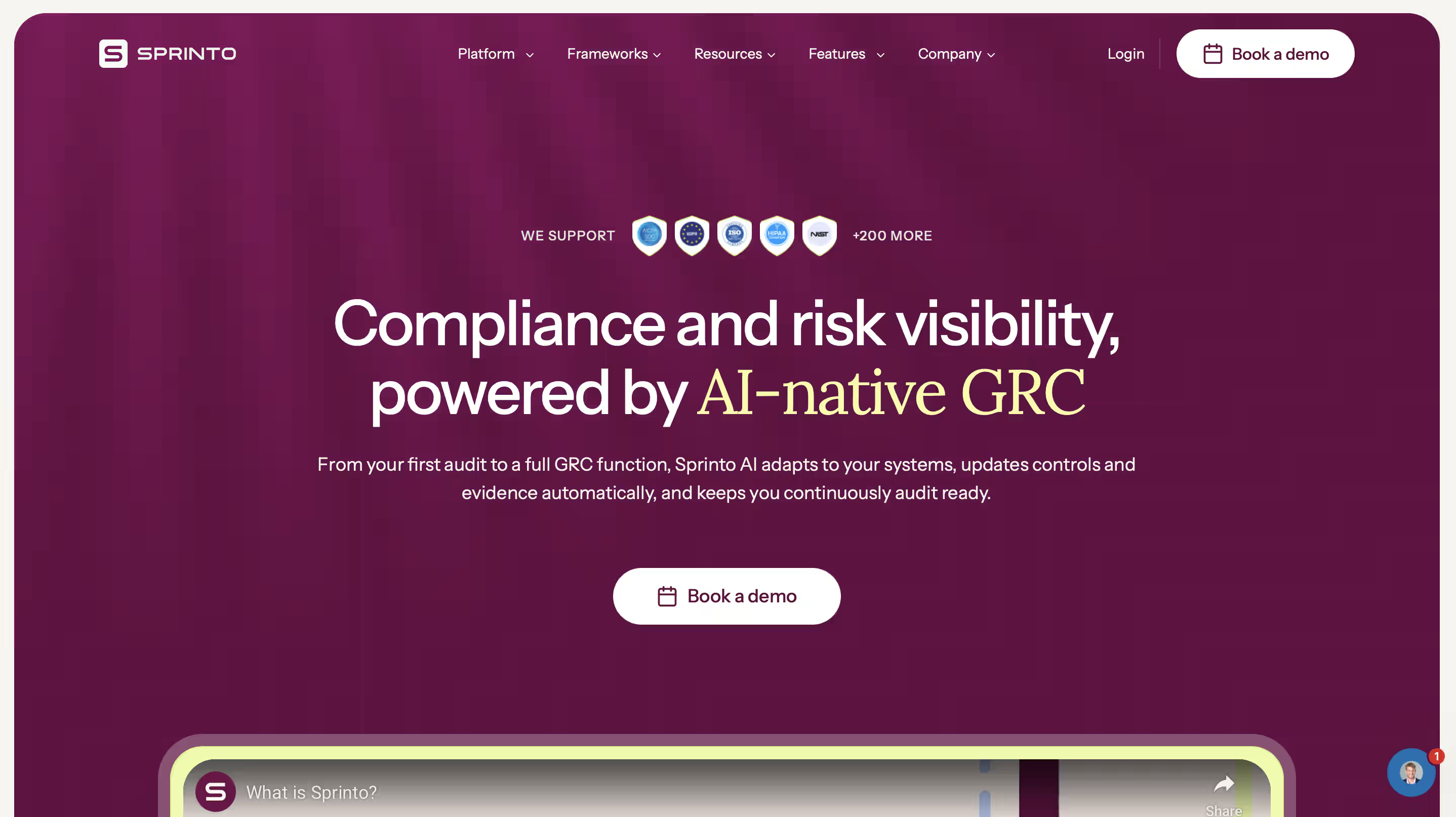
Sprinto is a compliance automation platform built for cloud-first companies that need to meet frameworks like SOC 2, ISO 27001, and General Data Protection Regulation. Instead of managing compliance through spreadsheets and screenshots, the platform connects directly to your systems to automatically collect and organize audit evidence.
It integrates with widely used tools such as Amazon Web Services, Google Workspace, Okta, and GitHub. These integrations allow Sprinto to continuously monitor controls, flag potential compliance gaps, and keep documentation ready for audits.
The goal is simple: reduce manual work and speed up certifications. In practice, this means streamlined audit management, where evidence, controls, and documentation stay organized automatically instead of scattered across tools. By combining automation, integrations, and compliance expertise, Sprinto gives SaaS teams a centralized place to manage security frameworks and prepare for audits without the usual operational chaos.
Why Some Teams Seek Sprinto Alternatives?
G2 named Sprinto one of 2025’s top 50 GRC products. Impressive, right? Yet many teams still hunt for alternatives. Here’s why:
-
Customization limits: Sprinto’s predefined frameworks work well for standard SOC 2 or ISO 27001 setups. But companies with unique risk models or custom policy workflows quickly hit a wall. Non-standard security setups struggle to map onto Sprinto’s rigid controls.
-
Unpredictable pricing: Starting around USD 7,000–10,000 per year for a single framework, Sprinto’s real cost varies based on infrastructure and integrations. Two similar-sized companies can get vastly different quotes, making budgeting tricky.
-
Integration complexity: While 300+ system connections sound impressive, anything beyond basic setups often needs extra engineering effort. Platforms like Jira or ServiceNow may require manual intervention, and advanced API capabilities are usually locked behind higher-tier plans.
-
Interface overload: The dashboard is dense. New users can feel buried under alerts, complex navigation, and steep learning curves. Workflows feel rigid, especially for teams tackling their first compliance certification.
-
Scalability concerns: Growing businesses sometimes face limitations with complex compliance programs. Support delays, limited reporting customization, and workflow rigidity can frustrate larger teams.
-
Device agent requirement: Not every organization wants software installed on every employee machine, and Sprinto’s agent mandate can be a sticking point.
These aren’t deal-breakers for everyone, but they’re enough friction to make teams explore alternatives that better fit their workflows, budgets, and scaling needs. Many startups begin researching other SOC 2 compliance tools for startups that offer clearer pricing, simpler workflows, or more flexible integrations.
Top 11 Sprinto Alternatives for Compliance Automation
Compliance automation tools promise to save time, but results vary. Some shine in speed, others in framework coverage, integrations, or user experience. The right platform depends on your team size, compliance maturity, and the frameworks you manage, not just flashy features or marketing claims.
These are the top 11 Sprinto alternatives for 2026:
- Uproot Security
- Scytale
- Vanta
- Drata
- Secureframe
- Hyperproof
- Strike Graph
- Scrut Automation
- Thoropass
- AuditBoard
- MetricStream
Let’s get into each of these and see what makes them stand out.
1. Uproot Security
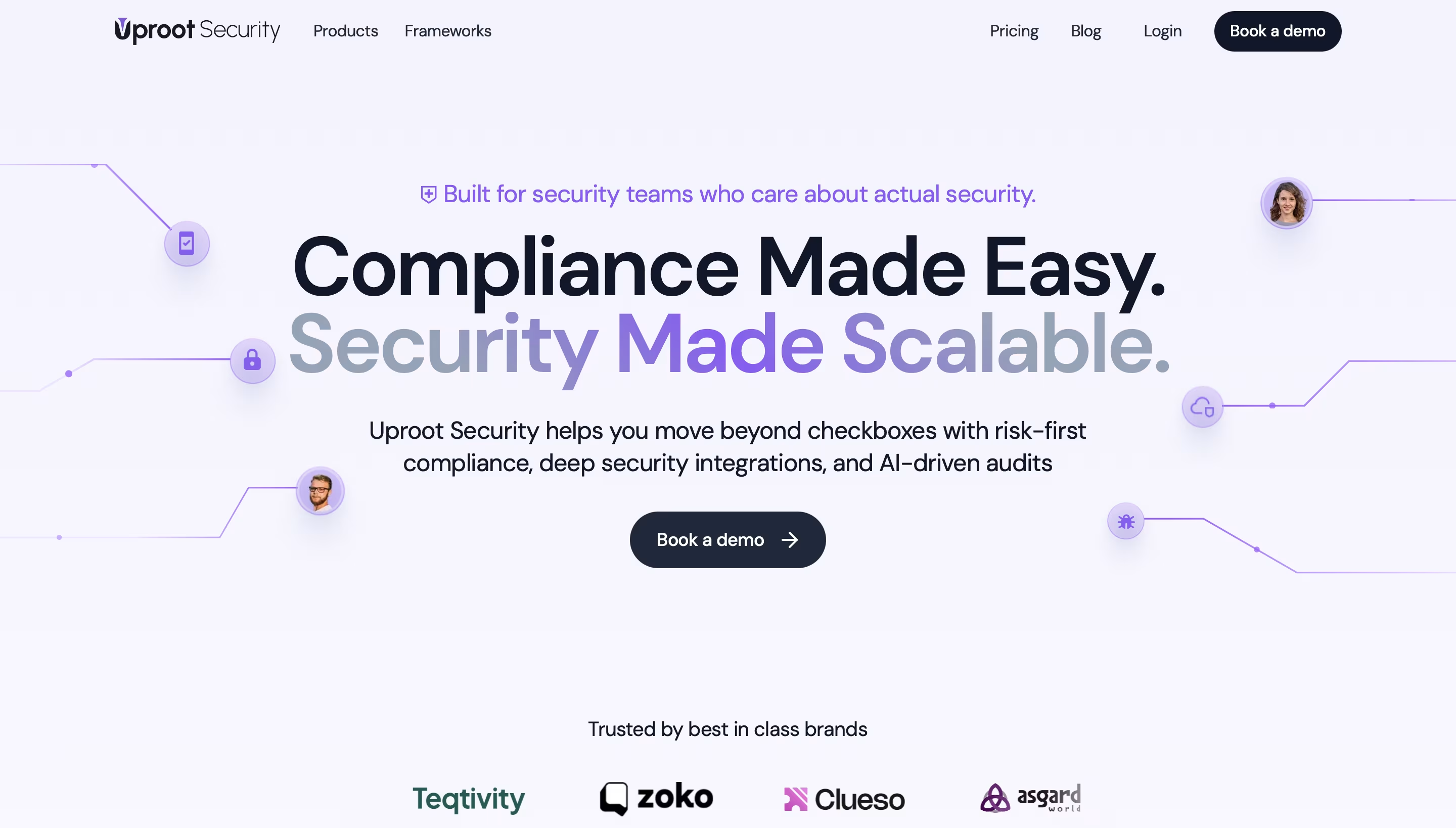
Uproot Security flips compliance on its head, focusing on real security risks while keeping teams audit-ready. Continuous monitoring and AI-driven insights make it more than just a checklist platform.
Features
- Live Risk Register with pentest and cloud findings
- Automated evidence collection
- AI-generated remediation playbooks
- Attack surface monitoring
Best For
Startups and growing teams wanting compliance and real security visibility without extra manual work.
Pricing
- Starter: USD 10,000/year – 1 framework, 30 employees
- Growth: USD 20,000/year – 3 frameworks, 100 employees
- Enterprise: USD 30,000/year – 5 frameworks, 500 employees
Uproot combines audit-readiness with actual security, all in one platform.
2. Scytale
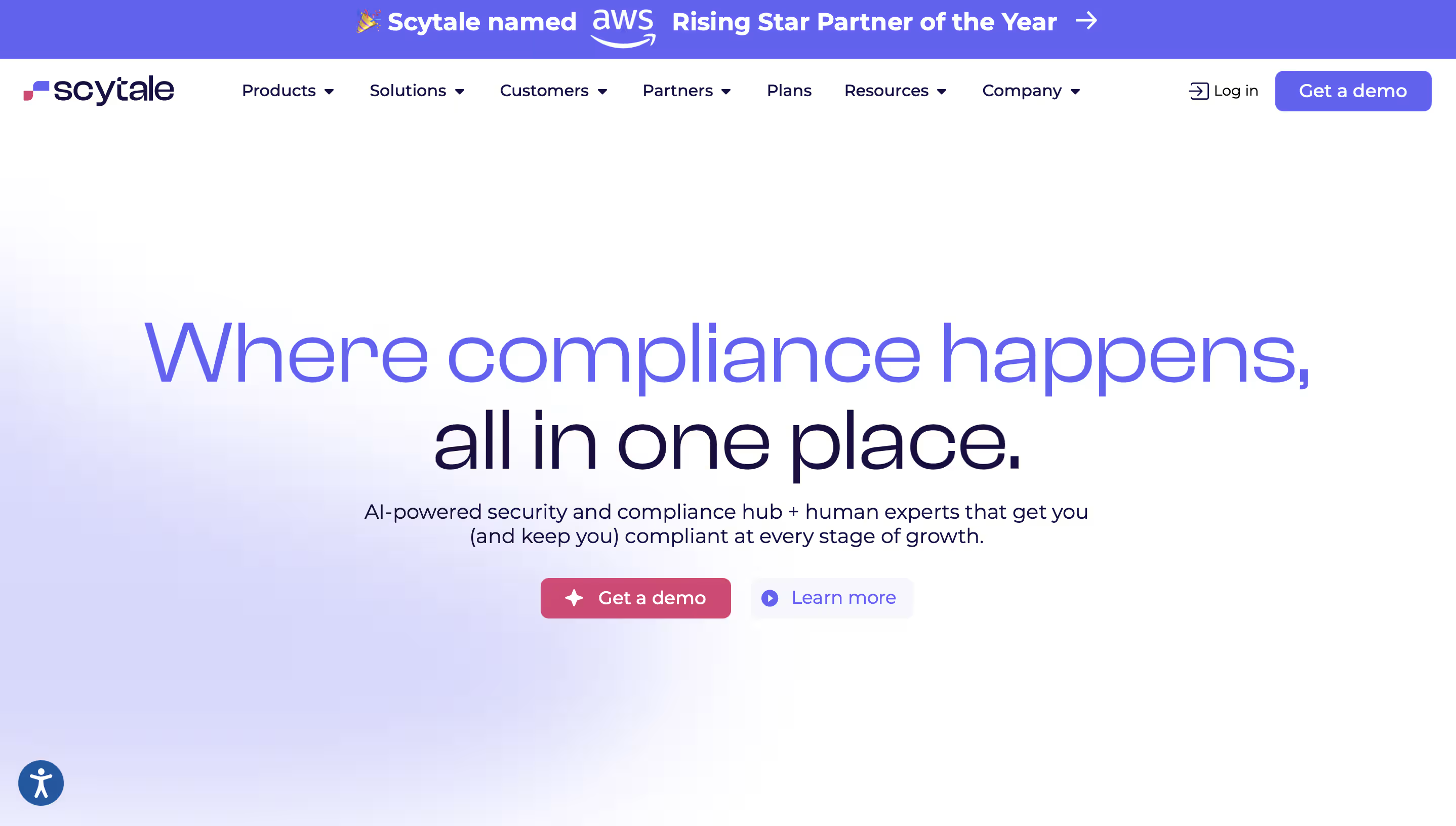
Scytale pairs AI automation with real compliance experts, helping teams navigate frameworks without drowning in manual tasks. It’s designed to simplify multi-framework management while keeping evidence accurate and audits smooth.
Features
- Dedicated compliance expert per team
- AI GRC agent for 24/7 monitoring
- Cross-framework control mapping (SOC 2, ISO 27001, PCI DSS, GDPR)
- 100+ integrations pulling live evidence
- Automated security questionnaires
Best For
First-time compliance teams and companies managing multiple certifications wanting guided support.
Pricing
Scytale does not publish standard pricing. Costs vary based on company size, frameworks, and whether managed compliance services are included.
Scytale combines human guidance with AI to streamline compliance.
3. Vanta
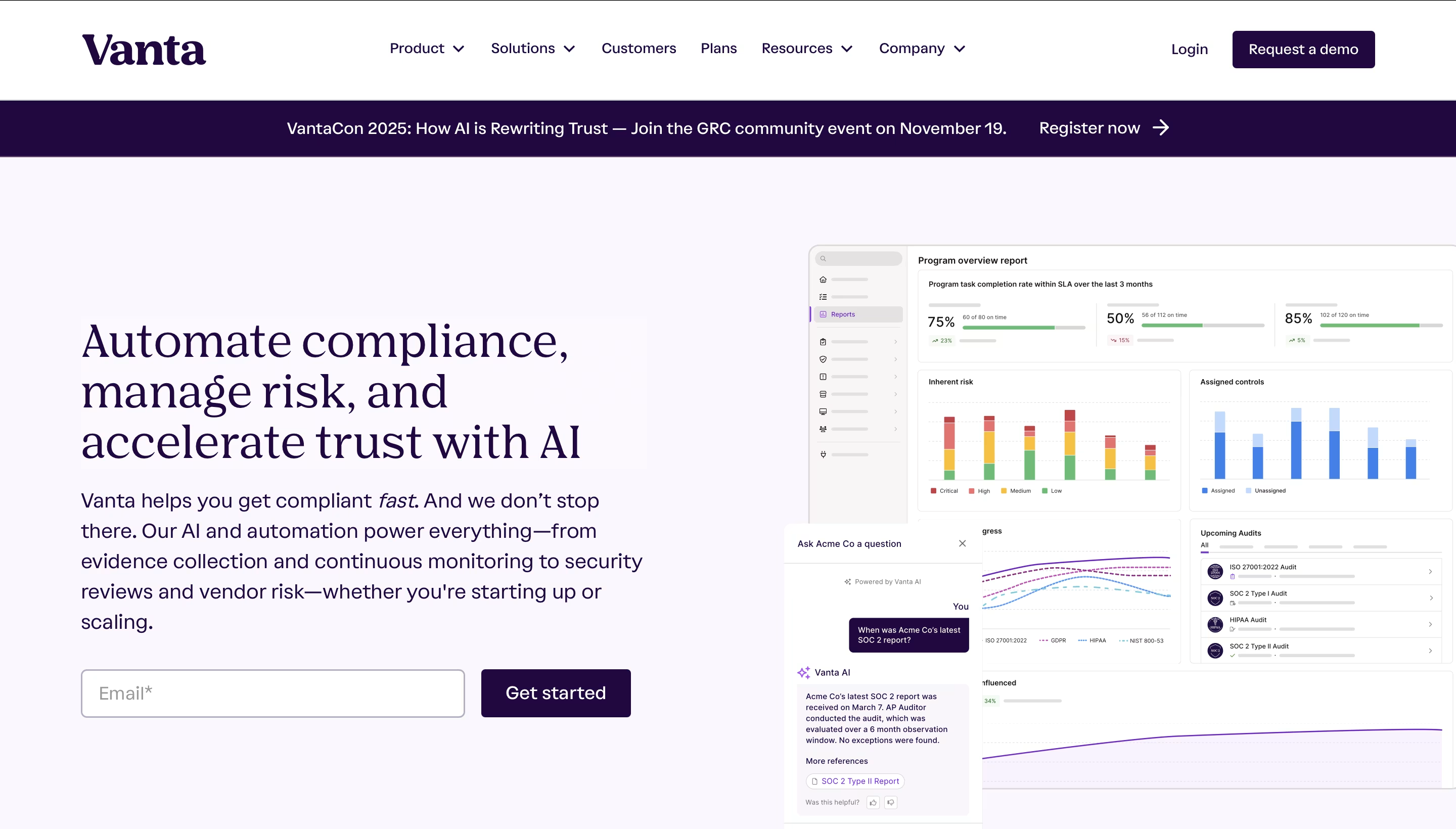
Vanta automates compliance work at scale, reducing audit prep time and boosting team productivity. It’s built for speed, coverage, and visibility across multiple frameworks, letting companies focus on security instead of paperwork.
Features
- 1,200+ automated tests across 400+ integrations
- Cross-framework mapping (SOC 2, ISO 27001, HIPAA, GDPR)
- AI policy builder and compliance agent
- Real-time Trust Center for audits
- Continuous monitoring of cloud and dev tools
Best For
Teams seeking rapid SOC 2 readiness and multi-framework automation without manual overhead.
Pricing
- Small teams: USD 7,500–11,500/year
- Mid-market: USD 15,000–25,000/year
- Enterprise: USD 30,000–80,000+/year
Vanta delivers measurable ROI by cutting audit times and boosting compliance efficiency.
4. Drata
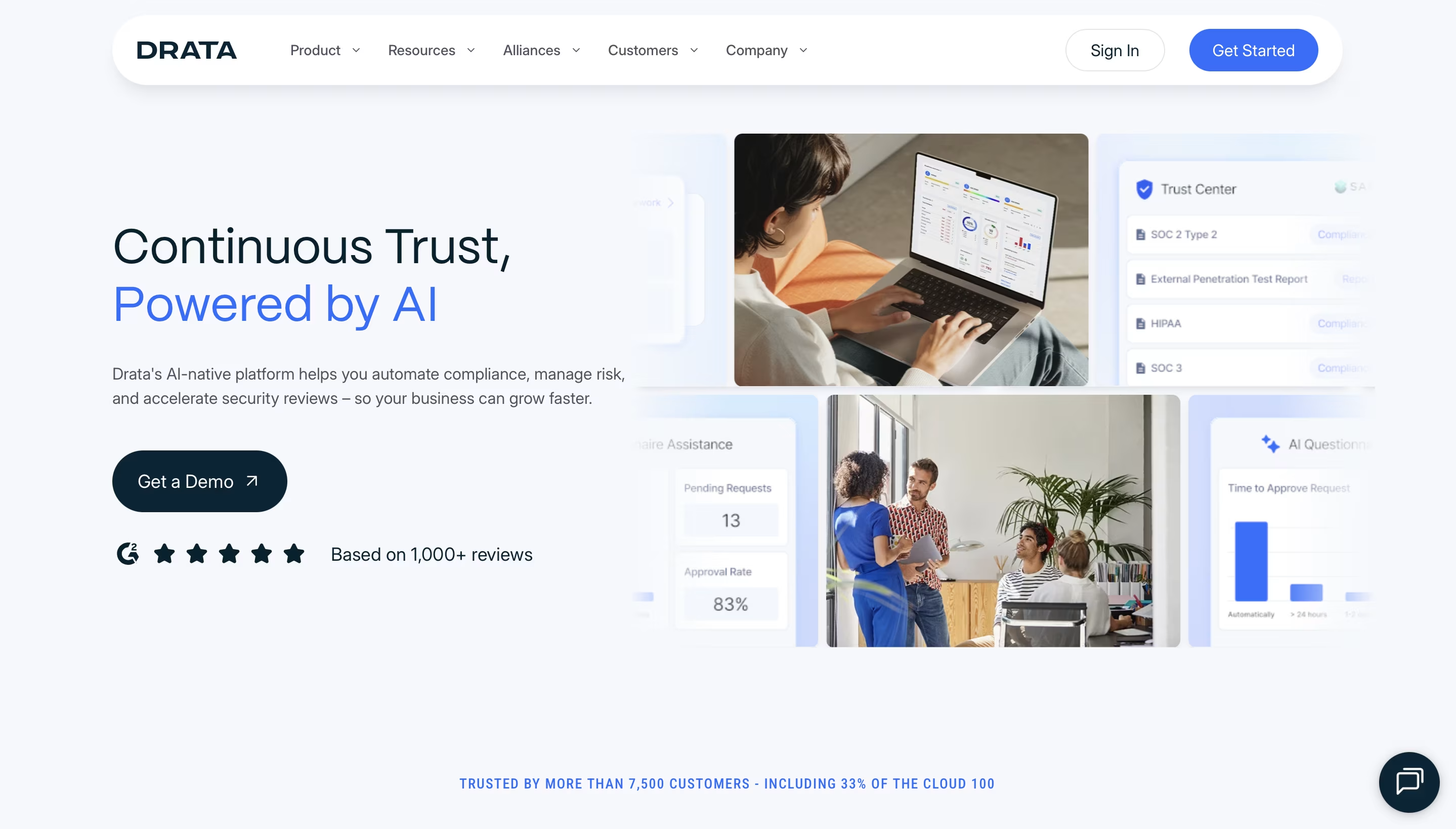
Drata makes compliance effortless by automating evidence collection and continuous monitoring. It’s ideal for teams tired of manual audits and looking for speed, reliability, and multi-framework coverage.
Features
- 300+ system integrations for automated evidence
- 26+ frameworks supported (SOC 2, ISO 27001, HIPAA, GDPR)
- Real-time dashboards and Audit Hub
- AI-driven misconfiguration and policy alerts
- Automated remediation tasks sync with Jira, Slack, GitHub
Best For
Growing teams seeking hands-off compliance and multi-framework readiness.
Pricing
- Foundation: USD 7,500–15,000/year
- Advanced: USD 15,000–50,000/year
- Enterprise: USD 50,000–100,000+/year
Drata streamlines audits, saves hundreds of hours, and keeps teams compliant with minimal manual effort.
5. Secureframe
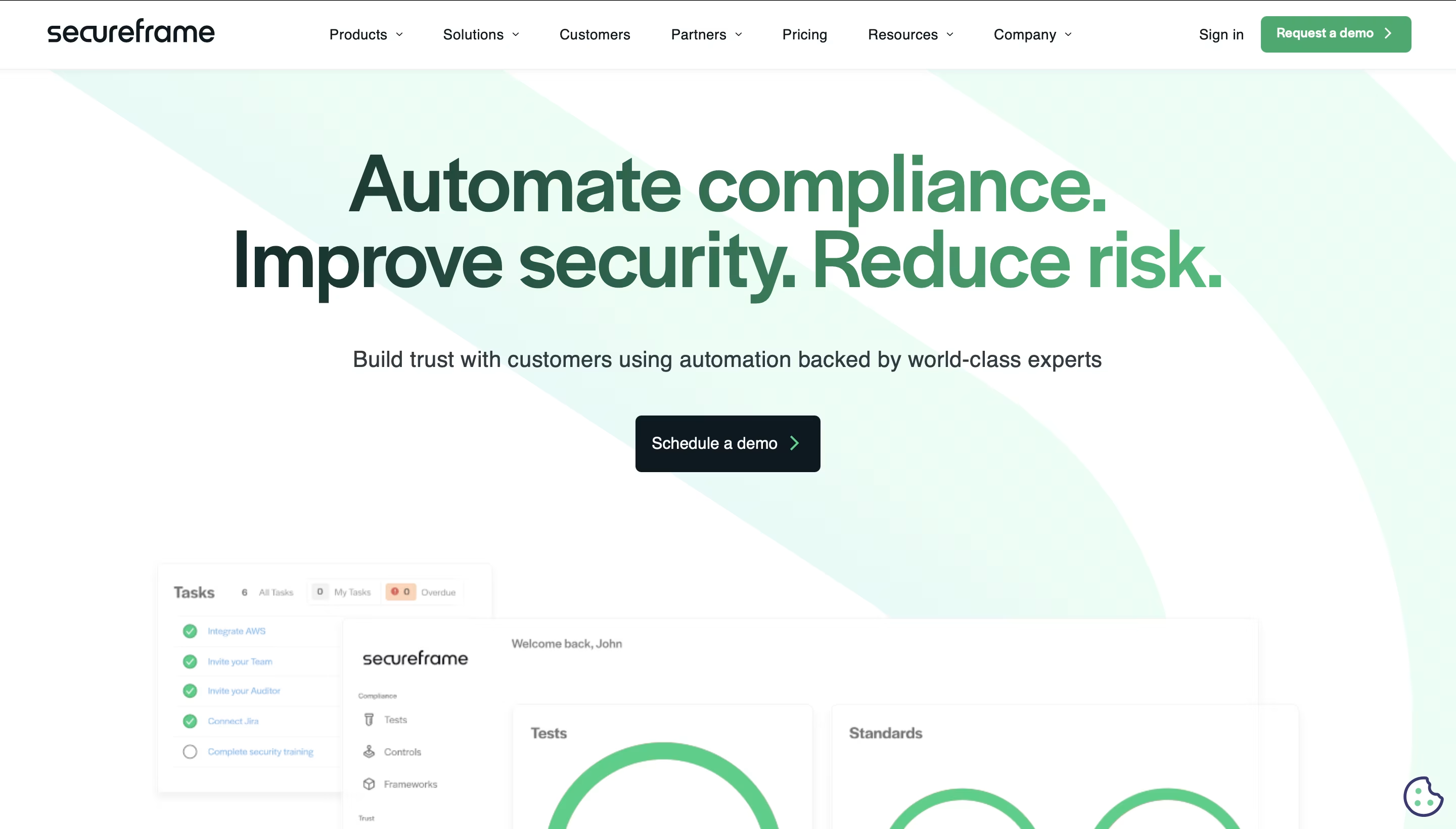
Secureframe is built by former auditors to simplify audit prep and strengthen security posture. It automates evidence collection and policy management, letting teams focus on compliance, not spreadsheets.
Features
- Automatic evidence collection across 300+ integrations
- Supports SOC 2, ISO 27001, HIPAA, PCI DSS, GDPR, NIST
- AI drafts policies and fills questionnaires
- Continuous monitoring and control mapping across frameworks
- Trust Center for real-time compliance visibility
Best For
Teams needing audit-ready compliance guidance with expert-designed workflows.
Pricing
- Fundamentals: Around USD 20,000/year
- Additional frameworks: ~USD 7,500 each
- Setup: ~2 months
Secureframe combines automation with auditor-grade design to make compliance predictable and efficient.
6. Hyperproof
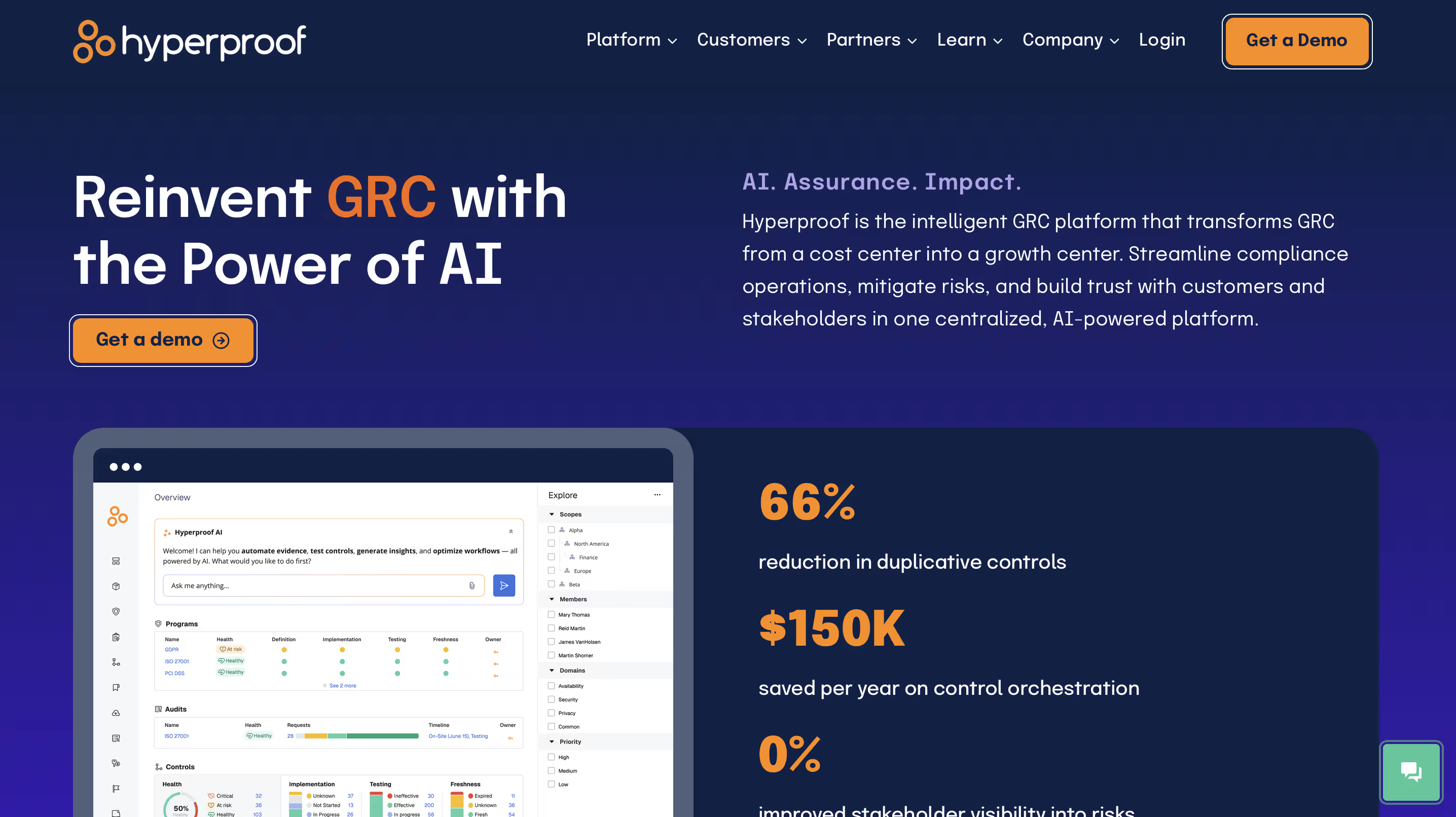
Hyperproof simplifies multi-framework compliance with automation and configurability. It’s designed for mid-market and enterprise teams managing complex programs without duplicating effort.
Features
- 140+ pre-built frameworks (SOC 2, ISO 27001, HIPAA, PCI DSS, GDPR, CMMC)
- 70+ integrations for automated evidence collection
- Cross-framework control mapping to eliminate duplicate work
- Real-time dashboards for compliance visibility
- Policy management with custom fields by department or region
Best For
Organizations scaling across multiple certifications and needing centralized control.
Pricing
- Starting Point: USD 12,000/year
- Median Contract: ~USD 40,355/year
- Typical Range: USD 22,928–54,000/year
Hyperproof streamlines audits, reduces manual work, and ensures compliance scales with business growth.
7. Strike Graph
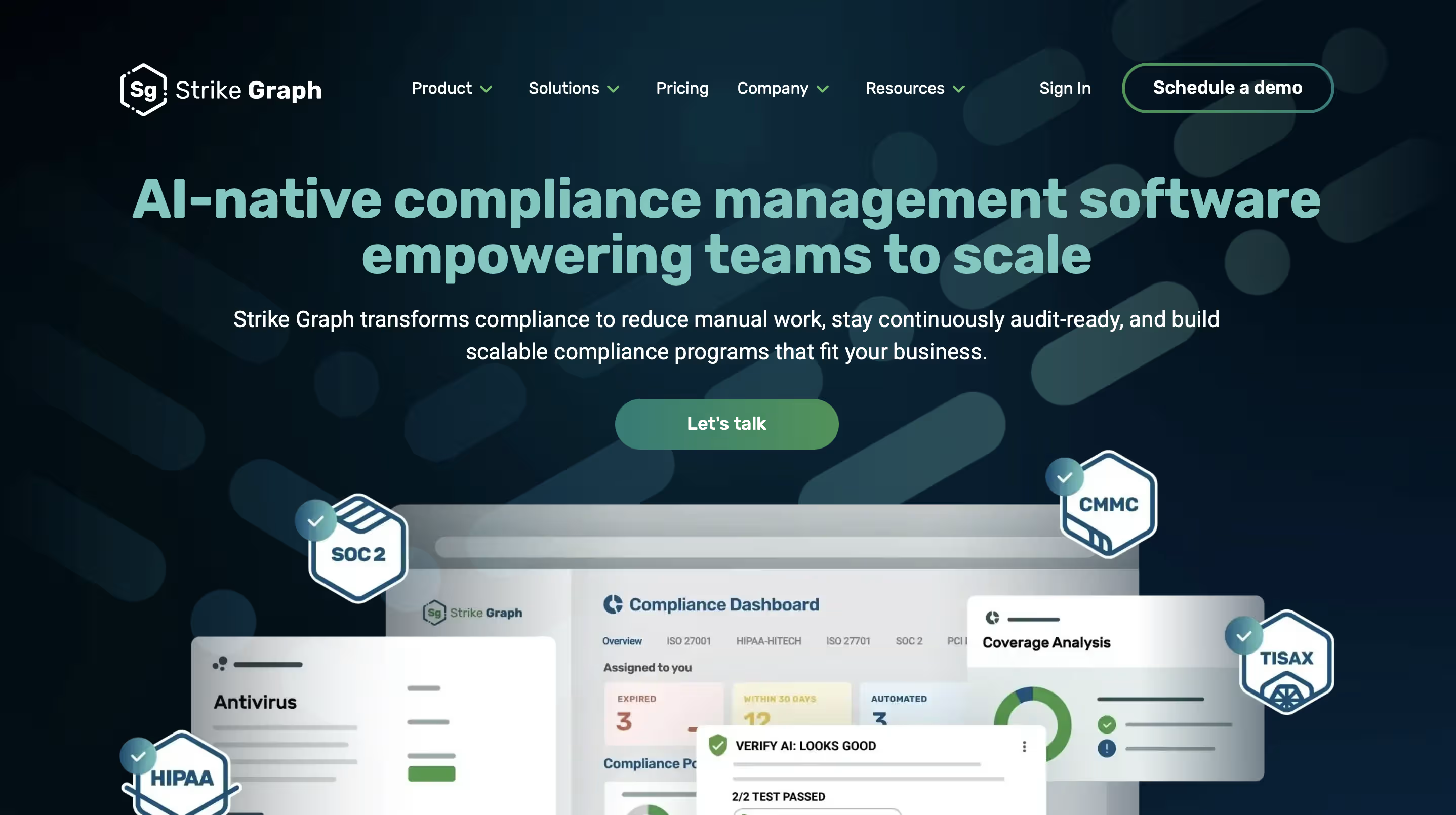
Strike Graph combines AI automation with a graph-based model to streamline compliance. It validates evidence continuously, flags gaps instantly, and reduces manual auditing overhead.
Features
- Verify AI monitors evidence 24/7
- AI Security Assistant guides setup and integrations
- Enterprise Workspaces allow local customization for subsidiaries
- Cross-framework mapping across 30+ frameworks
- Supports 50+ cloud integrations with unlimited users
Best For
Teams seeking fast, accurate compliance with multi-entity or multi-framework setups.
Pricing
- Launch: Free (SOC 2 TSC)
- Certify: USD 9,000/year
- Scale: USD 18,000/year
- Enterprise: USD 27,000+/year
Strike Graph accelerates audits while keeping compliance precise and scalable.
8. Scrut Automation
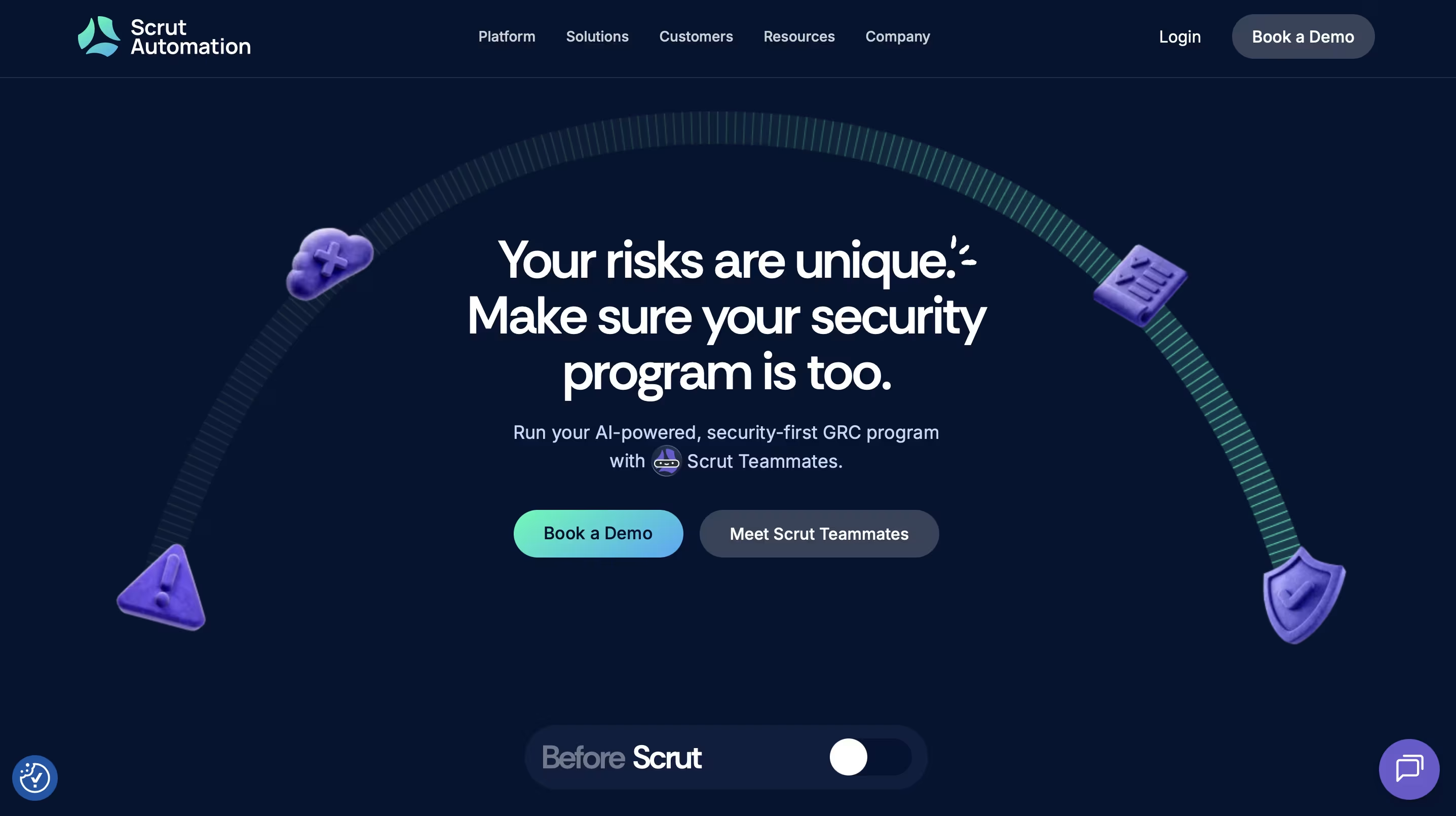
Scrut Automation streamlines compliance for mid-sized teams, reducing duplicate work and manual effort. Its Unified Control Framework maps one control across multiple frameworks automatically.
Features
- Unified Control Framework maps controls across 50+ frameworks
- 230+ CIS benchmarks tested daily
- 70+ integrations for automated evidence collection
- Real-time dashboards for audit visibility
- Pre-built policy library with 100+ templates
Best For
Teams needing structure and automation without endless setup or manual tracking.
Pricing
- Starting Point: USD 10,000/year (single framework)
- Mid-market: USD 15,000–30,000/year (multiple frameworks)
- Add-ons: USD 1,000–5,000 for onboarding
Scrut saves hundreds of hours per audit cycle, letting teams focus on compliance outcomes instead of busywork.
9. Thoropass
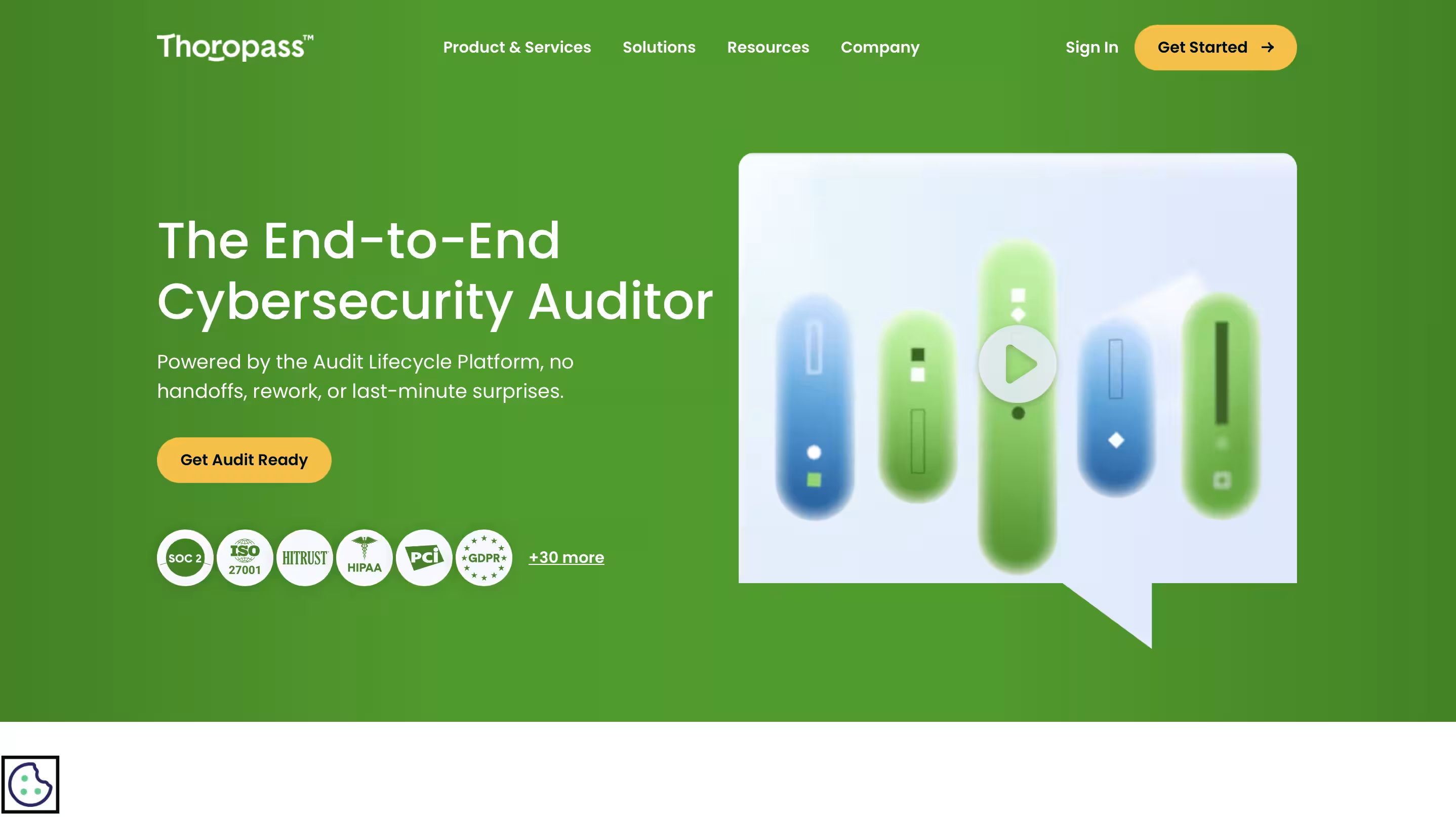
Thoropass bundles compliance software with auditors, eliminating handoffs and audit surprises. Its “connected audit” model ensures auditors know the platform from day one.
Features
- First Pass AI catches evidence mismatches early
- Automates evidence collection, task assignments, and reminders
- Supports 19 frameworks including SOC 2, ISO 27001, HIPAA
- Connects to 100+ tools like AWS, Okta, GitHub
- CREST-accredited pentests with 90-day retesting
Best For
Teams wanting integrated audit and automation, minimizing manual oversight.
Pricing
- Platform + SOC 2 audit packages typically start around USD 20,000/year
- Final pricing varies based on frameworks, audit scope, and organization size
Thoropass saves 25–50% compared to traditional setups while keeping audits smooth and connected.
10. AuditBoard
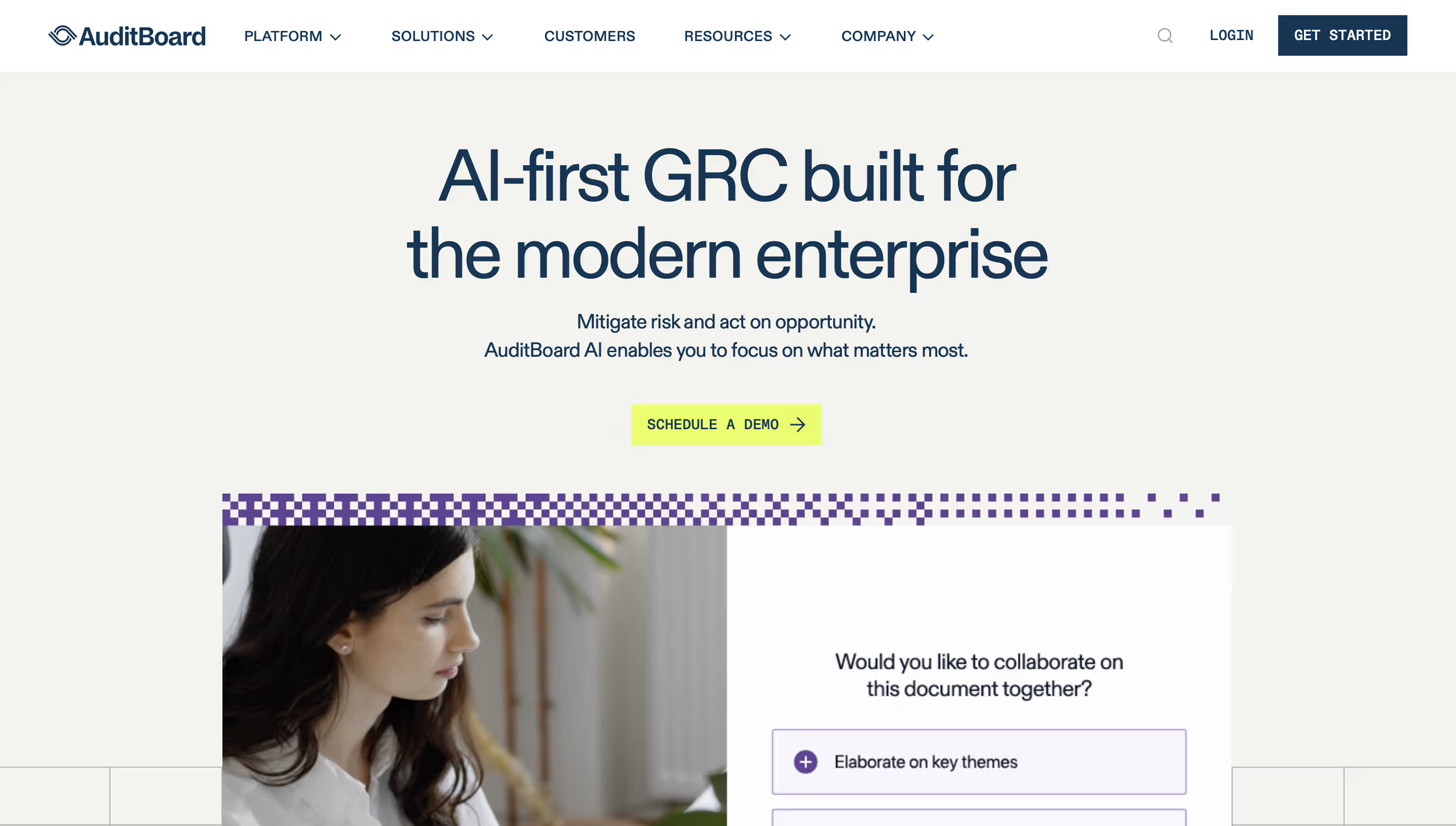
AuditBoard is built for large enterprises, connecting risks, controls, and audit teams across multiple frameworks. It automates workflows while supporting complex compliance needs.
Features
- Integrates with 200+ external applications
- Automates testing, document requests, and issue tracking
- Supports SOC 2, ISO, NIST, PCI, HIPAA, GDPR, CMMC, FedRAMP, HITRUST
- AI collects evidence and generates control descriptions
- Four modules: SOXHUB, OpsAudit, RiskOversight, CrossComply
Best For
Enterprises managing multi-framework programs with sophisticated compliance requirements.
Pricing
AuditBoard doesn’t publish standard pricing. Costs vary based on modules, deployment scale, and enterprise requirements, so organizations typically receive custom quotes.
AuditBoard is ideal for large teams needing enterprise-grade automation and oversight, not small startups.
11. MetricStream
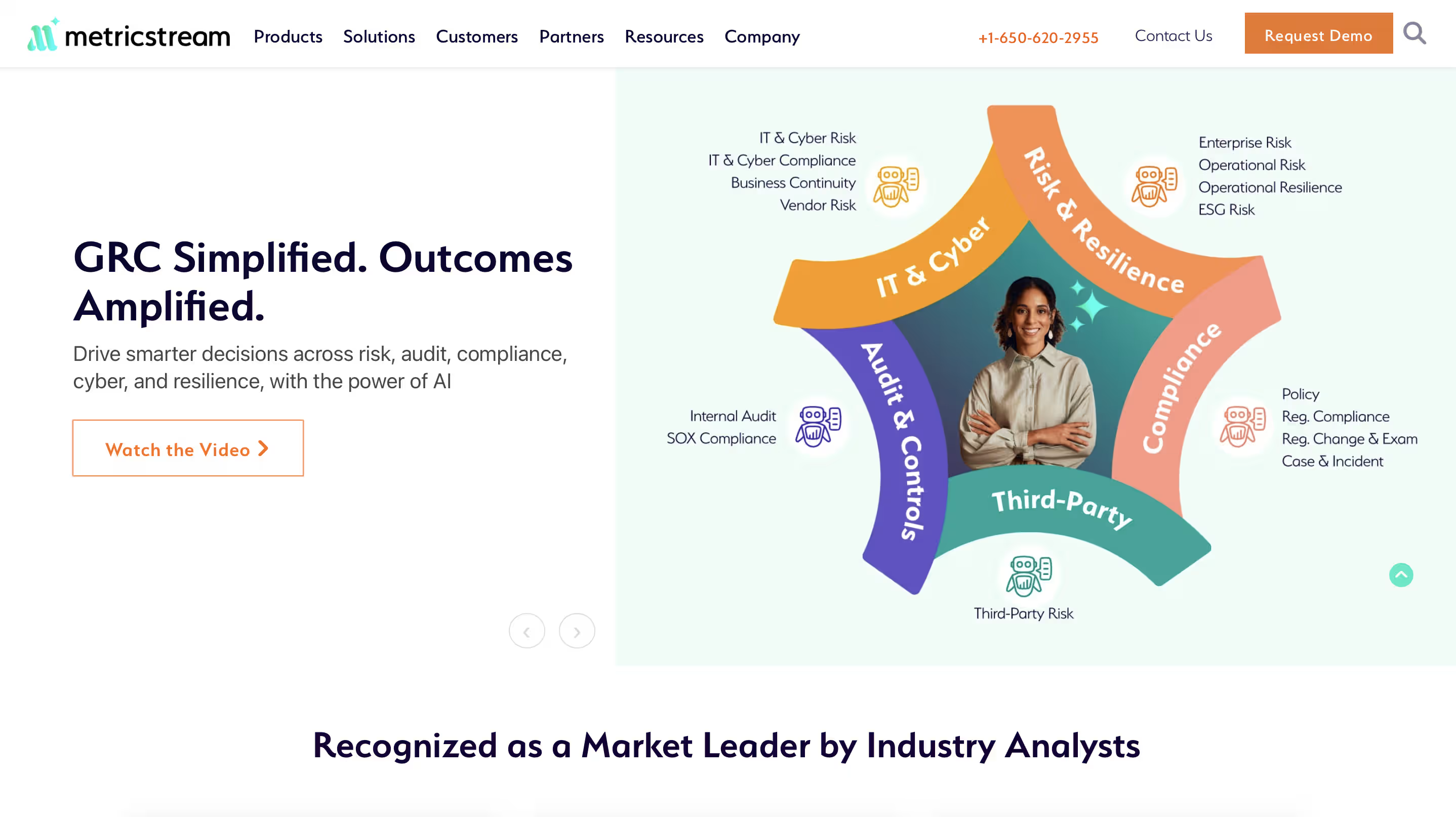
MetricStream serves global enterprises, managing complex compliance and risk across heavily regulated industries. It centralizes controls and continuously monitors risks.
Features
- Centralized Risk Repository linking incidents, assets, processes, regulations
- AppStudio for configuring and extending applications without vendor dependency
- Continuous Control Monitoring with AI-driven predictive analytics
- Handles multi-jurisdictional compliance requirements
- Pre-built dashboards and reporting for enterprise teams
Best For
Large organizations in finance, healthcare, energy, or other highly regulated sectors.
Pricing
MetricStream pricing isn’t publicly disclosed. Costs depend on deployment size, modules, and regulatory scope, with enterprise implementations typically requiring custom quotes.
MetricStream excels where compliance scale, complexity, and predictive insights matter most for global enterprises.
Here’s a quick snapshot of features, ideal users, and pricing to compare all 11 platforms at a glance:
| Platform | Key Features | Best For | Pricing (USD/year) |
|---|---|---|---|
| Uproot Security | Live Risk Register, Pentesting, AI Vendor Assessment, Automated Evidence | Startups & Growth Teams | $10,000–$30,000 |
| Scytale | Dedicated Compliance Expert, AI GRC Agent, Cross-Framework Mapping | First-time compliance teams | $10,000–$25,000 |
| Vanta | 1,200+ Automated Tests, Trust Center, Vendor Reviews | Startups to Mid-market | $7,500–$80,000+ |
| Drata | Automated Evidence, 300+ Integrations, Audit Hub | SMBs & Enterprises | $7,500–$100,000+ |
| Secureframe | Audit Prep, AI Policy Drafting, Multi-Framework Support | Audit-focused teams | $20,000+ |
| Hyperproof | 140+ Pre-built Frameworks, Hypersync Integrations | Mid-market & Enterprise | $12,000–$54,000 |
| Strike Graph | Verify AI, Enterprise Workspaces, Cross-Framework Mapping | Mid-market teams | $0–$27,000+ |
| Scrut Automation | Unified Control Framework, Continuous Monitoring, 230+ CIS Benchmarks | Mid-sized teams | $10,000–$30,000 |
| Thoropass | Connected Audit, First Pass AI, Vendor Tracking | Multi-framework audits | $20,000+ (platform + audit packages) |
| AuditBoard | 200+ Integrations, AI Evidence Collection, Real-Time Insights | Large enterprises | Custom enterprise pricing |
| MetricStream | Centralized Risk Repository, AppStudio, Continuous Control Monitoring | Complex, global enterprises | Custom enterprise pricing (typically $75,000+) |
How To Find Your Ideal GRC Platform for Continuous Compliance Monitoring
Here’s the truth: choosing a compliance platform isn’t about picking the flashiest features or the longest integration list. It’s about where your team is today, the frameworks you manage, and the resources you actually have. The wrong choice adds friction; the right one removes it. Many modern GRC platforms for startups focus on automation and simplicity, helping smaller teams manage compliance without dedicated risk or audit departments.
Here are the key factors to consider when evaluating a GRC platform:
-
Team experience and support: First-time SOC 2 teams benefit from platforms like Scytale, which pairs you with a dedicated compliance expert, or Strike Graph, which offers a free tier to test the waters.
-
Framework scalability: Scaling across multiple certifications? Hyperproof’s 140+ templates and Drata’s cross-framework mapping let you update once and apply controls everywhere.
-
Enterprise readiness: For complex, multi-jurisdictional programs, AuditBoard and MetricStream handle the scale, compliance complexity, and reporting needs of large organizations.
-
Automation depth: Choose a platform that reduces manual work and matches your team’s bandwidth.
-
Integration ecosystem: Ensure the platform connects to your existing tech stack without creating more headaches.
-
Budget and ROI: Annual costs range from USD 7,500–150,000+. Don’t chase features alone—pick a platform your team will actually use.
The best GRC platform streamlines compliance, saves time, and lets your team focus on real security risks instead of audits.
Compliance Without the Chaos
Compliance automation won’t make you a compliance expert overnight. But it will stop you from drowning in spreadsheets at 2 AM. These platforms handle the repetitive work — collecting evidence, tracking controls, and organizing documentation — so teams can focus on real security risks instead of manual tasks.
More companies are moving away from spreadsheet-driven compliance, especially startups and growing teams without dedicated GRC staff. Modern cloud compliance tools connect directly to infrastructure and productivity apps, automatically collecting evidence and monitoring controls across environments. Automation keeps audits organized, reduces last-minute panic, and helps teams stay prepared throughout the year instead of scrambling before deadlines.
The right platform also brings clarity. Stakeholders can check audit readiness anytime, controls stay centralized, and evidence lives in one place instead of scattered across inboxes and folders. Compliance becomes something you manage continuously, not something you survive once a year.
Choose carefully. The right tool reduces friction and supports growth. The wrong one creates more operational headaches. The tools exist — now it’s about picking the one that actually works for your team.
Build trust and prevent breaches with UprootSecurity — making GRC the key to good security.
→ Book a demo today
Vendor Evaluation & Alternatives
![Top 5 Secure Alternatives to Delve for Compliance [2026]](https://s3.us-east-1.amazonaws.com/static-production.uprootsecurity.com/website/strapi-content/uploads/delve_alternatives_2026_2b0ff79510.png)